


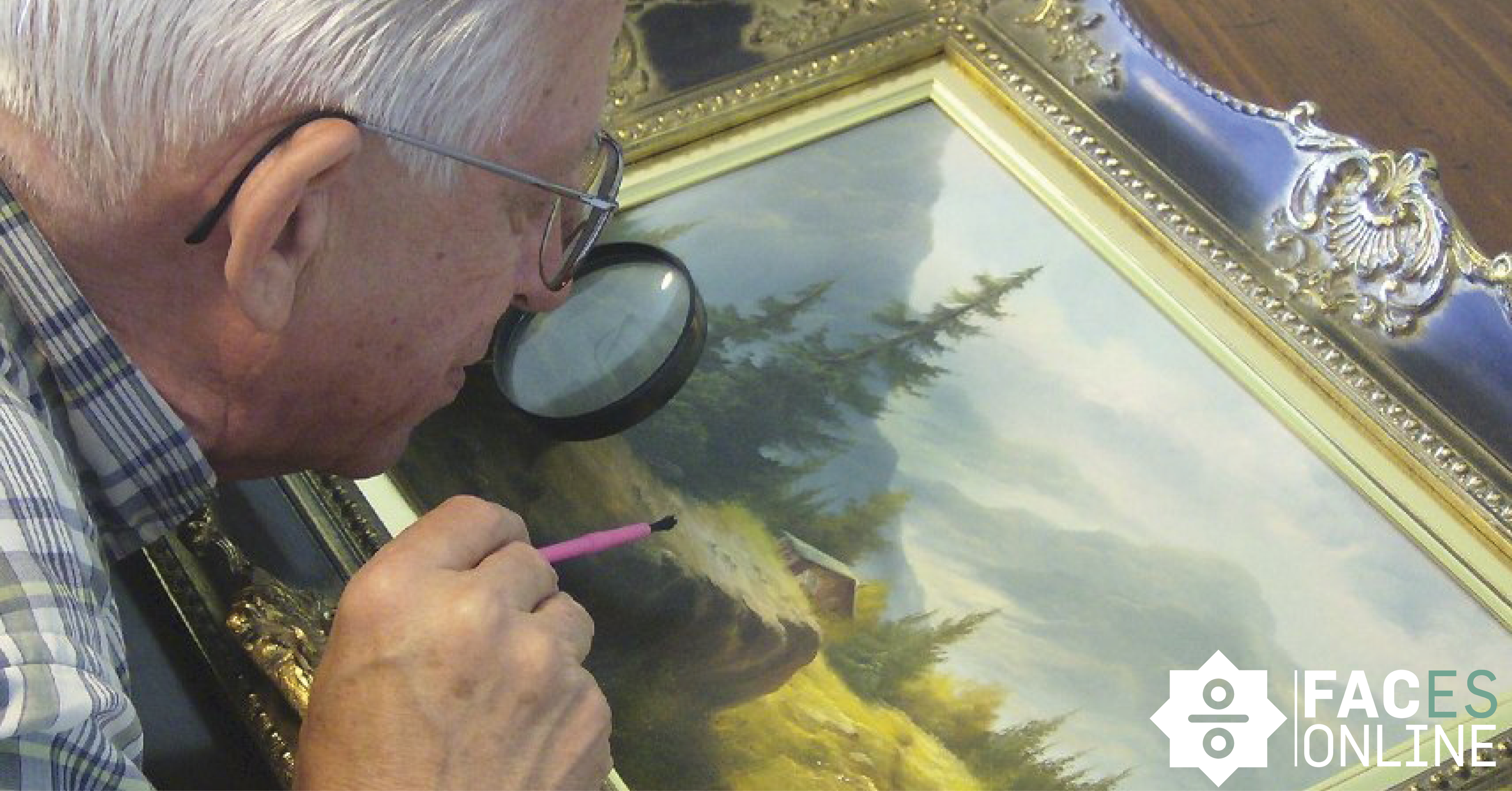
For the Dutch version, click here. Is art even a considerable asset class? In 2020, the total value of global art auctions reached $50 billion, with the auction sector contributing 42% ($21 billion) and the remaining 58% ($29 billion) handled by dealers and galleries. Notably, digital sales accounted for approximately $12.5 billion, representing around one-fourth of the total art auction value. So, the art market is not small but, is it a worthwhile asset class to consider investing in? This article provides basic information about the art market in order to try to answer this question. Why Invest in Art? How to calculate the returns of Artworks? The art market is an illiquid market, this refers to a market where there is a limited number of buyers and sellers, making it difficult to buy or sell assets without significantly impacting their prices. That is why art performance is typically measured using two methods: the repeat sales method (RSM) and the hedonic regression method (HRM). The RSM tracks the prices of artworks that have been sold multiple times, allowing for the calculation of price appreciation over time. The HRM, on the other hand, analyses the characteristics of artworks and their corresponding prices to estimate the value of specific attributes. Diversification and Portfolio Enhancement The Sharpe ratio measures the risk-adjusted return of an investment (subtracting a risk-free rate like US Treasury bills) divided by the standard deviation of the return, which represents the volatility of the portfolio’s value over time. A higher Sharpe ratio indicates a better risk-adjusted return, while a lower ratio suggests a worse performance. A ratio above 1 is generally considered good, but it should be compared to similar investments for a meaningful assessment. When evaluating the investment performance of art in comparison to other asset classes such as gold, equities, and bonds using the Sharpe ratio (return/risk), it is evident that paintings have lower Sharpe ratios than gold, equities, and bonds. However, they outperform commodities and real estate in terms of risk-adjusted returns. Therefore, including investments in paintings can be considered beneficial for constructing an optimal investment portfolio. Including art in a diversified portfolio can be advantageous due to the negative correlation between art returns and those of equities and bonds. This negative correlation implies that art prices tend to move in the opposite direction to the prices of equities and bonds, providing a potential hedge against market volatility. A suggested allocation for an optimal risk-adjusted portfolio consists of 50% Dow Jones corporate bonds, 25% S&P500 stocks, 15% gold, and 10% art. This allocation aims to balance risk and maximize potential returns by diversifying across different asset classes. Potential for Capital Appreciation According to the findings presented in ‘The Price of Art and the Art of Pricing,’ paintings and drawings have demonstrated an annual real return of 2.5% after adjusting for inflation. When transaction costs are excluded, the nominal return reaches 6.25%. Notably, higher returns are observed at the upper end of the price distribution (more expensive paintings tend to generate higher returns). Key Drivers and Risks of Art Investment Drivers of Artwork Returns Influence of colour The paper “Colors, Emotions, and the Auction Value of Paintings” (EER, 2022) conducted experiments using both field and auction data to investigate the impact of colours on the prices of paintings. The study analysed 12,906 art pieces sold between 1994 and 2017, focusing on 5,482 non-figurative abstract paintings by 66 artists to minimize contamination effects. The research found that a one standard deviation increases in the percentage of blue and red hues corresponded to premiums of 10.6% and 4.20%, respectively, in auction prices. Laboratory experiments with student participants from China, the Netherlands, and the United States confirmed that blue and red colours elicited higher bids and stronger intentions to purchase, with blue paintings commanding 18.6% premium and red paintings generating a 17.3% premium. Pleasure was found to be the dominant emotional response, increasing both bid amounts and purchase intentions across all three cultural contexts. Overall, the study concluded that colour attributes significantly influence the price of paintings, primarily through their ability to evoke specific emotions, and this effect is consistent across different cultures. Gender Female artists tend to sell their artwork at a discount compared to male artists, and this can be attributed to pricing bias rooted in gender culture. Analysing a dataset of 1.9 million auction transactions across 49 countries, the study finds that paintings by female artists sell at an unconditional discount of 42.1%. The gender discount is influenced by country-level gender inequality, indicating that more gender-equal cultures tend to exhibit less of a discount. Even when controlling for artist fixed effects, such as the UN gender inequality index and labour participation rate, the gender discount remains significant. The study also includes two experiments to further explore the issue. In the first experiment, participants were asked to guess the gender of the artist by looking at paintings, but the results showed that guessing correctly was no better than random chance. The second experiment focused on the effect of perceived gender on participants’ appreciation of artwork. The findings suggest that participants who more closely resemble typical art auction participants may value art by women 6% less. These analyses and experiments shed light on the gendered pricing disparities in the art market. Death of a master When a master artist dies, it has a positive impact on prices, returns, and turnover in the art market. The death of an artist represents a negative shock to their future production, resulting in a permanent decrease in their artistic output. Similar to the findings of Hong et al. (2006), where an increase in float reduces turnover and price, the premature death of an artist leads to an increase in both price and turnover. The death effect is more pronounced when the artist passes away at a young age (below age 65) and has achieved significant fame during their lifetime. The analysis, however, faces a challenge in that it lacks a counterfactual comparison

Investing in classic cars
For the English version, click here. Disclaimer: This article does not contain investment advice and only aims to entertain and inform. In a previous article several alternative investment options were named, in a short series these will be further elaborated with first: Investing in classic cars. Value Many people think it is just excessive, spending a capital on a car. Especially since cars decline in value between 10 and 20 percent per year on average. Yet not every car is a bad investment, as there are plenty of cars that increase in value. For example, we go back to Italy in 1977. A proud owner of the 1962 Ferrari 250 GTO was told by his wife that the car was making too much noise and was forced to sell it, the market value was around $71,000. Meanwhile, the same car is being auctioned for $50,000,000. Another example is the 1955 Mercedes-Benz 300 SLR Uhlenhaut Coupe, which was auctioned last year for $149,000,000 (Harshvardhan, A, 2023). Furthermore, Jay Leno purchased a McLaren F1 over 20 years ago for $800,000. The value of this car, which is still in his possession, is currently estimated at $20,000,000. The best-known example of cars increasing in value are classic cars. Although experts still debate this, a car is called classic when it is at least 20 years old and of historical importance. These can still be divided into vintage and antique cars. Vintage refers to cars made between 1919 and 1930. Antique cars were made just before 1919, during the so-called “Brass era,” which refers to the large amount of metal used to make these cars. To give just one example, vintage cars have increased 185% over the past decade ( Piovaccari, G & Za, V, 2023). In addition, according to the British company Vanarama, classic cars have increased in value by 97% over the past 10 years. This is a substantial increase, especially when compared to gold (45%), art (49%) and real estate in Britain (50%). This large difference between the increase in value of classic cars and other investments shows that this type of investment should be taken seriously. Auctions The most common way to purchase a classic car is through an auction. In the Netherlands, auctions regularly take place where the owner parks his classic car. Visitors can make a bid and the highest bid gets the car. Furthermore, there is often an appraiser present, this is someone specialized in the valuation of classic cars. Nowadays there are also online auctions. A well-known example is carandclassic.com. Here there are numerous cars for sale that can be bid on, including cars that cost “only” a few thousand euros. The main difference between online and physical auctions is that physical auctions take place more quickly, so that it is usually known within an hour who has bid the most. Online auctions can take as long as weeks. In addition, it is possible to see the condition of the car during a physical auction, this is not possible in an online auction. However, documents describing the car’s condition are displayed. Still, at first it seems difficult to determine the market price of a car. Fortunately, Hagerty, an insurer in classic cars, has the solution for this. The firm keeps track of the value of classic cars in an easy-to-read guide. Each model is given a figure based on its condition. Nevertheless, there is a lot of uncertainty involved in buying a classic car. Although Hagerty’s gives a good indication, there is no guarantee that the guide is completely accurate. In addition, unlike stocks or bonds, a car is physical. Therefore, a garage, for example, must be considered, which entails additional costs, and insurance for classic cars is quite expensive. In addition, this makes the investment a lot less liquid, since it remains to be seen how quickly a buyer can be found. Also, a relatively large capital is needed to profit from possible price increases. However, there is now the possibility of investing in classic cars without physically buying them. There are several funds where investors can invest in classic cars. One example is Azimut, however, investors must put in a minimum of $140,000. Investing in classic cars is an interesting option, in fact, look at the potential past returns. Nevertheless, this type of investment involves above-average risk. Material damage and limited liquidity are some examples. Therefore, it is wise to consider investing in classic cars only as a hobby and not as a means to get rich. While there are certainly examples of situations where serious money has been made from this type of investment, the chances are slim and uncertain that the same will be successful for you. However, the advent of online auctions does make it easier for individuals with relatively little liquid assets to purchase classic cars.

Explore the lucrative world of sports betting: Why it’s more than just a gamble
For the Dutch version, click here. In this article, Dhiraj talks more about the world of sports betting and the opportunities/risks in this industry. Disclaimer: This article does not contain investment advice and is intended to entertain and inform only. What is sports betting and why is it popular? Betting on sports games, also known as sports betting, is becoming increasingly popular among young people between the ages of 18 and 23. Most bets are placed on football matches because many young people play this sport themselves. Betting on specific results can increase involvement in watching matches and also offers the opportunity to earn money. However, it is important to emphasize that the industry also has a downside. In recent years, several scandals have come to light involving rich gamblers bribing players to get the desired result for their bets. Even in our own city of Tilburg, a match-fixing scandal was discovered in 2009 at Willem II, where several players were involved in match fixing. Current situation in the Netherlands On April 1, 2021, the Dutch gambling market was opened with the Remote Gaming Act (Koa), which regulates online gambling activities. Domestic and foreign gambling operators could from then on apply for a license to offer online sports betting to Dutch players. The new law requires player identification and player protection with information on responsible gambling. After the opening of the market, a fuss arose over the use of well-known (former) football players such as Wesley Sneijder and Andy van der Meijde in advertisements. Research showed that the use of these well-known football players made it difficult for young players to assess the risks of gambling. The use of well-known people in gambling advertisements has therefore been banned since July 2022, and from 2025 sponsorship of football teams by gambling companies will also be prohibited. Professional athletes are also showing interest in gambling on sports matches. Former ADO player Tom Beugelsdijk was suspended for betting on matches in his own league. The English striker Ivan Toney of Brentford FC violated as many as 232 English gambling rules, resulting in an 8-month suspension. Investing in sports betting Sports betting offers several investment opportunities. With the growing popularity of gambling on sports games, it can be interesting to buy shares in companies active in sports betting, such as gambling companies and platforms for online betting. There are also specific exchange-traded funds (ETFs) that focus on the sports betting industry, such as the RoundHill Sports Betting ETF. This fund contains shares of various companies in the sports betting industry to ensure diversified risk. The increasing availability of data and the application of artificial intelligence (AI) are also making it easier to profit from the sports betting industry. AI can be used to develop sophisticated prediction models that take into account various variables, such as historical performance of teams/players, injury data and playing styles. These models can help predict the outcome of sports games more accurately than traditional methods. In addition, AI can be used to analyze and compare the odds of different bookmakers, allowing investors to detect odds that do not match the true probability of an outcome. This offers valuable betting opportunities. Risks The biggest risk of betting on sports games is losing your investment. Unpredictable results and surprising victories by underdogs make predicting sports results uncertain. There is no guarantee of success, so you may lose your bet. Irresponsible gambling can lead to financial problems if you lose more money than you can afford. Moreover, sports betting can be addictive, especially for people prone to gambling addiction. The constant desire to bet and the thrill of winning or losing can lead to problematic gambling behavior. This has serious negative consequences for finances, relationships, work and well-being. The Dutch government has taken several measures to protect young adults in particular from excessive gambling, such as mandating limits and banning bonuses and promotions for players under the age of 24. Success Stories There are some success stories of investors in the sports betting industry, but it is important to note that they are the exception and most investors do not make a profit by gambling on sports games. Still, it is interesting to take a look at one of the successful investors in this risky industry. A well-known example is Matthew Benham, a British businessman who owns two football clubs (Britain’s Brentford FC and Denmark’s FC Midtjylland). Benham founded Smartodds, a company that uses advanced statistics and algorithms to predict sports matches. He is estimated to have made millions from sports betting, and Smartodds has become a leading sports analytics company. Benham has applied his data-driven approach to sports betting to both of his football clubs. He has invested in sophisticated scouting methods to identify promising players who fit the club’s style of play. This strategy has helped Brentford FC be remarkably successful in English football. Under Benham, Brentford FC promoted to the English Championship and eventually reached the Premier League. Last season, Brentford even finished 9th in the Premier League and missed out on European football by just 2 points. Future of sports betting The future of sports betting is promising, with numerous developments and opportunities for investors. Many countries are currently revising their laws regarding sports betting, opening up new markets and allowing investors to participate in a growing and legal industry. This creates opportunities for the creation of new gambling companies and provides room for technological innovations. Regulation also strengthens the reliability of companies, allowing investors to make better decisions. In addition, technological developments may play a crucial role in the future of sports betting. Improvements in mobile technology, data analytics, artificial intelligence and virtual reality will enhance the betting experience and provide new opportunities for both operators and investors. Think real-time live betting, personalized recommendations based on user data and innovative ways to follow and bet on sporting events. As a result of these developments and prospects, the future of sports betting looks set to usher in an
Working at Rembrandt | Mergers & Acquisitions
For the Dutch version, click here. Who are you? My name is Tim Foesenek. I grew up in Rijsbergen and have lived in Tilburg since the beginning of my student days, where I have continued to live ever since. After completing the masters in Finance and Supply Chain Management, I started working at Rembrandt M&A (after traveling for a month). How did you come into contact with M&A? Initially, I had never looked into M&A specifically. Towards the end of my studies it started to become somewhat clear which aspects I found interesting. Figures is an important one of these, but in doing so I wanted to be in contact with the business world. After many introductory meetings with different types of companies (including corporates, the big 4 and smaller business service providers), it turned out that M&A suited my preferences very well , because of the dynamic work and the combination of business and personal aspects. I started to look into this further and it turned out that M&A in the midmarket appealed to me the most, as it involves a lot of contact with clients. Rembrandt is a big player in this market. With 45 employees it is a small company, but within this specialized market you are one of the largest with such a group. The culture, working methods and training appealed to me the most. To what extent are the aspects of your studies reflected in your work? Although it is often said that you only really start learning in practice, I still use a lot of knowledge I gained during my Master’s in Finance. General knowledge about balance sheets, results and cash flow comes back daily. Subjects like Corporate Governance & Restructuring and Corporate Valuation even show directly what some of our work involves. The more quantitative subjects come back less, but have shown me how the market views risk thinking. That helps when there is a financial buyer candidate, for example. In addition, it is also common to work with negotiated options, so knowledge about these types of aspects comes in handy. The M&A profession Rembrandt’s role can best be summarized as process support for mergers and acquisitions. In the majority of our assignments we are on the sales side, where we can guide and advise our clients from preparation to closing. The preparation phase consists of valuing the company. This helps us get a good feel for the business and also gives the sellers an indication of the value. Based on this, if the client decides to pursue the process, we prepare an information memorandum and start identifying potential candidates. Once we start approaching candidates, the sales phase has begun. In it, we maintain contact with candidates, coordinate contracts and often conduct negotiations. This phase is very challenging both in terms of content and planning. What is your role in the process? As a consultant, I work with a manager and possibly a second consultant on a potential transaction. In the preparation phase, I take on most of the work and often spar with the manager about my progress and questions I have. In the sales phase, we work more closely together. In this, my role varies per project, but I am involved in every phase and also get a lot of space to make an active contribution. Typically, I have about 5 active projects as well as several projects that are in the preparation phase or temporarily paused. What is the most challenging part of your work at Rembrandt? The most positive thing is the variety and dynamics my job brings me every week. I talk to a lot of people and almost every project has one or (many) more surprising twists and turns. Very challenging, but this makes me go home feeling fulfilled. Besides the content, there is also a lot of challenge on a personal level. I communicate with many different people with diverse backgrounds. And although we often share positive news, of course it sometimes happens that the client had different expectations. It can be tough to deal with this, but these are the moments when I develop myself and learn a lot. What parts of your work are different from what you expected beforehand? The steps of the process largely match my initial assessment. During my first year, I found out a few things that are a little different in practice. For example, the negotiations are often less hands-off than I thought and are usually based on good substantiation. This makes it interesting, because in that case I can have a big impact with my preparations. By the way, this does not exclude the occasional heated negotiations. Working in the office is also much more fun than I had envisioned. We are all in an open space, so you get a good sense of what everyone is doing. We make a lot of phone calls, so you often hear challenging conversations from colleagues, which I learn a lot from. In addition, it is very nice to be able to ask a quick question and it is fun to help others. What do you like about Rembrandt? Rembrandt has both the advantages of a large and a small company. With 45 colleagues there is an incredible amount of knowledge and experience in house and you get to know many interesting people internally. In addition, we are part of Rabobank and have the advantages of a large, professional organization. At the same time, Rembrandt is small enough for you to know everyone and be able to keep up with what is happening within the organization. The culture is accordingly. Everyone is very ambitious and professional and this goes very well together with fun, interest and humor. We do fun activities together, but it is also paramount at Rembrandt that everyone has enough time for their own friends, hobbies and interests.
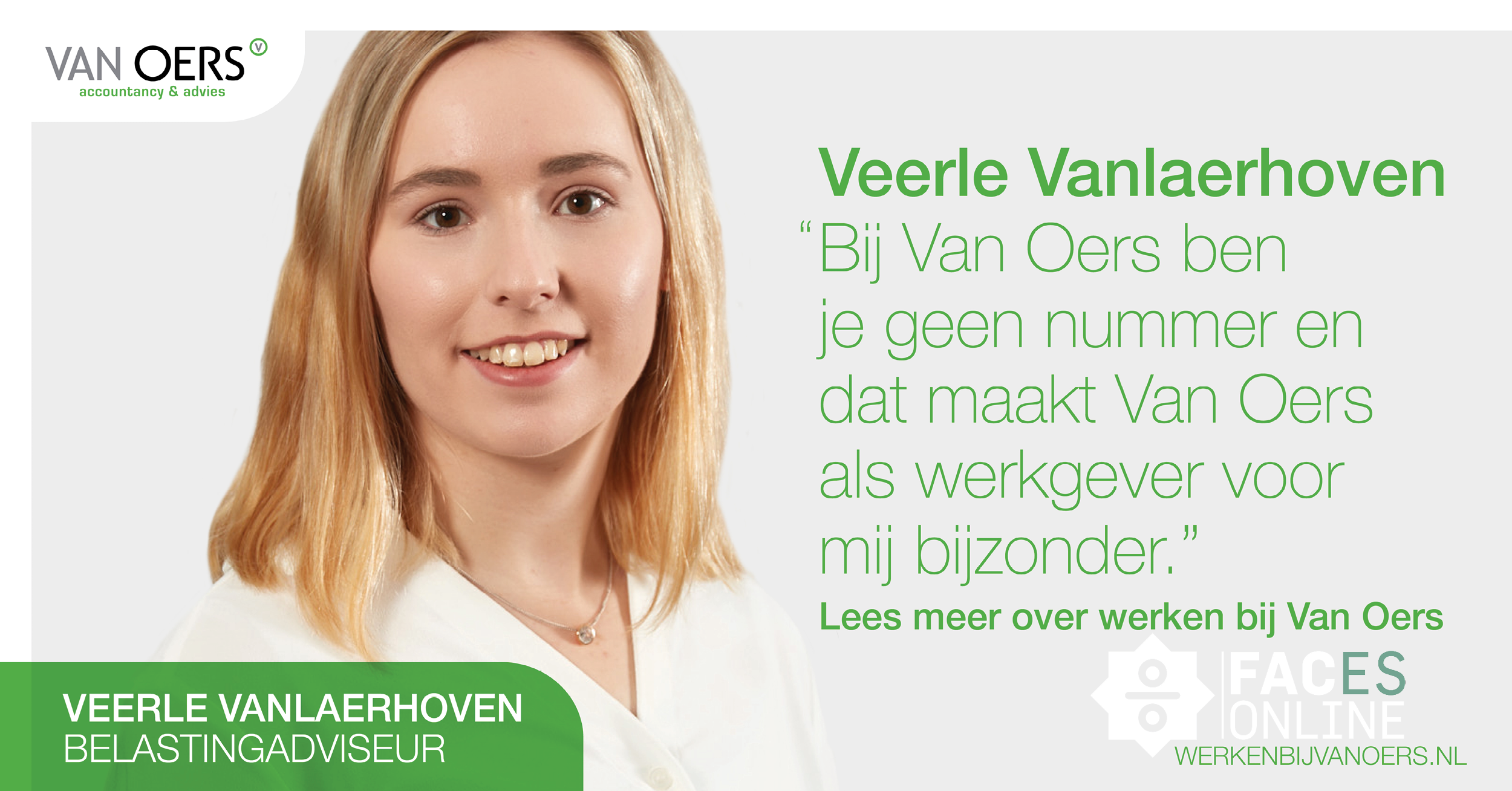
Working at Van Oers
For the Dutch version, click here. Veerle Vanlaerhoven started working at Van Oers Accountancy & Advies in 2020 as a work student tax. After she completed her Master Fiscal Economics in 2022, she decided to continue working full-time at Van Oers as a Junior Tax Advisor. What made her choose Van Oers and how does she experience working at Van Oers? We talked to her. Difficult choices Choosing the right education doesn’t happen overnight, as Veerle found out. In high school she already had a strong preference for subjects such as Economics and Management & Organization. On the other hand, she was also interested in Law. In her fifth year of high school, she went to the open day at Tilburg University to look for an education in which she could combine these interests. Veerle: “I found the Business Economics program a bit too economic and the Law program a bit too static. Fiscal Economics was a nice balance of both and that’s actually how I ended up with the Fiscal Economics program.’ Fortunately, she found the choice for a work-study at Van Oers somewhat easier. On this she says, ‘I myself was born and raised in the region where Van Oers is located. Therefore, I was familiar with the company from childhood. During my studies, I also participated several times in the formal and informal activities of study association De Smeetskring, where Van Oers was also often present. When Van Oers employees then talked about the atmosphere within Van Oers, this immediately appealed to me. In addition, Van Oers has a nice and diverse client portfolio where the work is diverse and there is a lot to learn. That made me apply.’ A good balance ‘Brabant sociability is a term we often use at the office to describe the atmosphere. We work hard, but at the same time there is also plenty of room for a nice chat, a Friday afternoon drink, a good party or a sporting activity.’ She also names the close involvement with the customer and among each other as a big plus: ‘Even as a Junior, you are quickly given responsibility and are immediately a full member of the team. You get many opportunities and there is always someone ready to help. At Van Oers you are not a number and that makes Van Oers as an employer special to me.’ Sticking around After her Master’s, Veerle didn’t feel the need to look elsewhere. She feels right at home at Van Oers and gets plenty of opportunities. She is currently taking her NOB training and will soon start the Personal Development program. This allows her to continue to grow both professionally and personally. Is she planning to look elsewhere any time soon? Absolutely not. Veerle sees herself working at Van Oers for some time to come and hopes to make great strides: ‘I hope to be able to trade in the Junior position for the next step. I also hope to be able to develop myself even more in the tax world in order to help clients even better.’ Peaks and troughs Growth and development naturally comes with peaks and valleys. On this she says: ‘Fortunately, at Van Oers there is also room to make mistakes, as long as you are alert to them and come up with solutions. Besides, the highs win out over the low days.’ She finds it difficult to choose her favourite moment at Van Oers, but she does list a few: ‘the tax outings, the big Van Oers party, my first day as a tax graduate and receiving my first salary. Advice for students As her final advice to students, Veerle has, ‘Especially the atmosphere and the click you feel with a company is very important. The work or the customers at different companies are not going to make the difference. If the atmosphere is not good, you will also go to work with less pleasure. I also recommend that students do a work-study or internship in addition to studying to get a feel for the business world. But above all … still enjoy your student time!
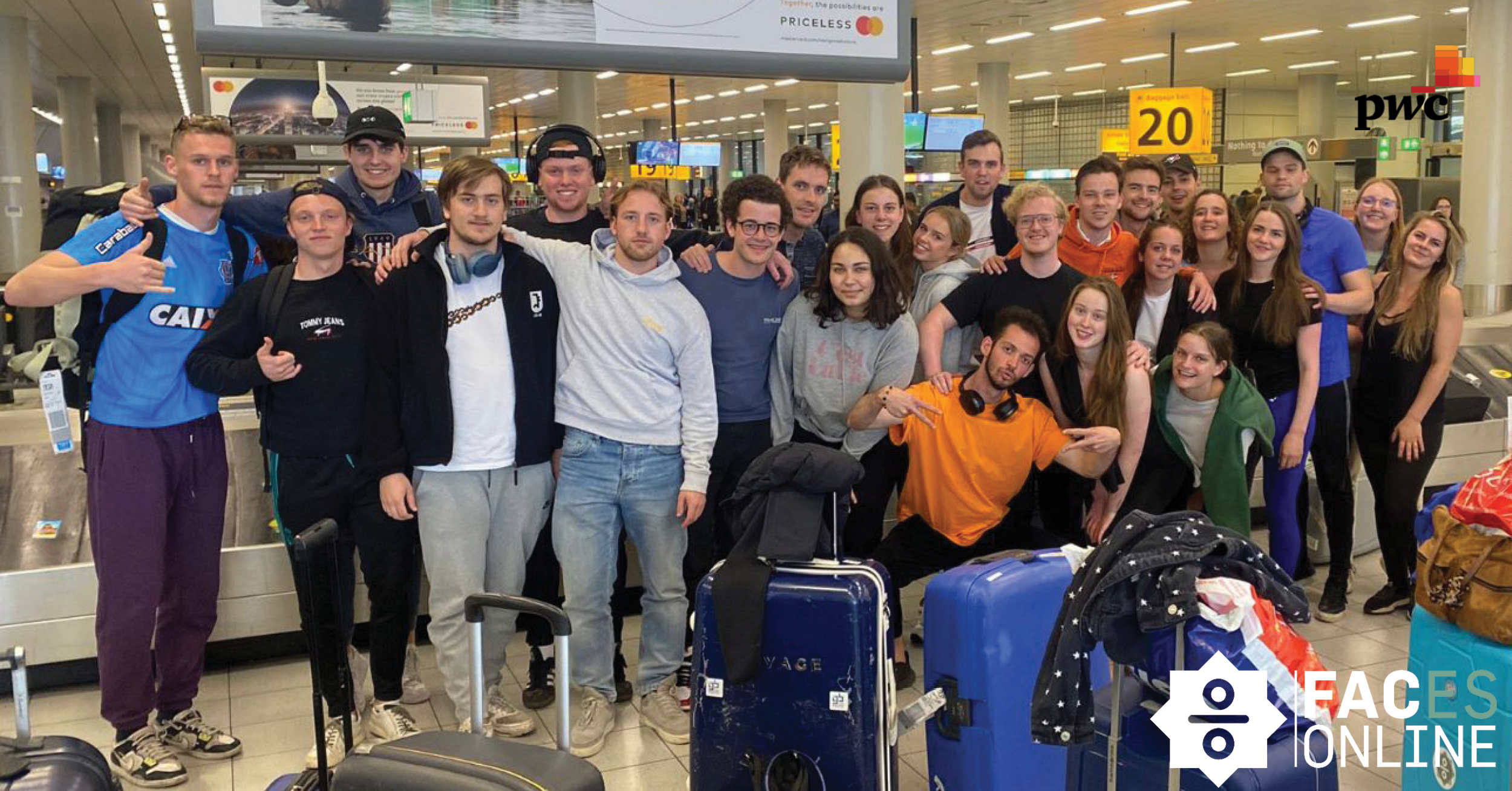
StudyTour 2023, Brazil: Looking back
For the Dutch version, click here. On May 5, we gathered with our group of 25 people at Tilburg University. From here we would take the bus to Schiphol Airport where a plane would take us halfway around the world, because after all those years of Covid-19 and lockdowns we could finally go on our annual StudyTour again! In addition to the company visits, we thoroughly enjoyed the cultural and natural highlights that Rio de Janeiro and São Paulo had to offer. After arriving at the São Paulo Guarulhos airport, we were immediately confronted with the immensity of Sao Paulo. As we drove to our hostel we saw skyscraper after skyscraper, in addition we also saw the less beautiful parts of Brazil, as we also drove past some favelas while some cab drivers told us what to look out for during our stay in Brazil. After this, we arrived at our hostel in the northern part of São Paulo. During our first full day in Brazil, we immediately did some fun things, as we went all the way to one of São Paulo’s southernmost attractions. We did this via a 1.5-hour subway trip that cost us only 80 cents per person and took us to the famous F1 circuit: Autódromo José Carlos Pace. There we watched both the free practice of a GP and the Sao Paulo cup karting race. We also had lunch there, where we walked over a buffet and paid a certain amount based on the weight of your plate (something quite normal in Brazil). After this, we walked through one of the wealthier areas in Brazil that led us to a large lake where we sat on the waterfront with some caipirinhas, local beers and live music. The next day we would see a completely different side of São Paulo and understood why the cab driver had warned us. After arriving in the old city center, we immediately caught sight of all the homeless people there to collect their free meal for the day. Since there was a somewhat less pleasant atmosphere here, we quickly walked on through the neighborhood. While walking, we came across a large skyscraper with a viewpoint over the city, and upon arrival on the 26th, we were again confronted with the immensity of the city. Skyscrapers were visible as far as the eye could reach! After satisfying ourselves with lunch while enjoying this view, we visited the Minhocas closure, a highway that is closed to motor traffic every Sunday, so that the population (and mostly tourists) could travel on it and admire the city from a different perspective. We ended the evening at a restaurant called Bar Brahma where we had a delicious meal. The following days had more free time planned for the participants, where they went in different smaller groups to different places, such as local shopping malls, neighborhoods with lots of street art, beautiful parks, and other fun sights. We also had some simple formal activities, and organized a fun evening with a games tournament that we christened the “buddy games” and finally left for Rio de Janeiro by night bus when it finally showed up after a 3-hour delay. When we arrived in Rio de Janeiro, we immediately recognized a city that was very different from Sao Paulo in terms of culture and nature. The city was much prettier and greener, and much more centered around the waters there, so it naturally attracted many more tourists. After checking into the apartments, we immediately began our planning as we headed to FGV Ebape, a smaller university in Rio. After a brief presentation about the university, a quick tour of the buildings, and a discussion about ESG in Brazil, we headed back to Copacabana for dinner and finally to bed early as the ride on the night bus had taken its toll on the sleep of the participants. The next day would begin with another formal activity as we had an additional university visit at the Pontifical Catholic University of Rio de Janeiro. After most spent the afternoon at the beach as the weather was lovely, we made our way to Sugarloaf Mountain with the whole group towards the end of the afternoon, to enjoy the beautiful view this gave over the city and the bay with the sunset. We started Saturday with a great tour of downtown Rio de Janeiro. During this tour we visited all kinds of beautiful places like the famous Selaron steps, the city’s cathedral, the city’s oldest park and several other highlights and historical sites. Also, at each point our tour guide managed to tell us interesting stories about the city that belonged to the locations where we were at that time. On the same day, we also visited a soccer match between Rio’s Fluminense and Cuiaba and enjoyed the atmosphere of the bustling Maracanã stadium (the same stadium where the 2014 World Cup final was played). The evening ended fairly split, where some decided to go to sleep in time, and some decided to explore Rio’s nightlife at one of the larger local clubs. Sunday started the day again nice and early with a nice boat ride across the Guanabara Bay where Rio de Janeiro is located, where we could enjoy some drinks and the beautiful view of the city from the perspective of the sea. After we were able to rejoice some of the participants with some solid ground under their feet again, we made our way with the group to a nice beach bar that we had picked out in advance. Here we all had a delicious meal and made our way bit by bit to the beach we were right next to to try the water. After spending some time here and enjoying the wonderfully warm water, we decided to make our way to a nearby beach where apparently the most beautiful sunset in the world would be visible. Unfortunately, we found out too late that we had gone
