

For the Dutch version, click here. Success of the dutch ecosystem The dutch startup ecosystem has been steadily growing over the previous 5 years. Currently the Netherlands has 1.4 unicorns – private companies exceeding a €1 Billion valuation – per million citizens, placing itself fourth in the world after the UK (1.7) and in front of Germany (0.7). This success has been mainly driven by both the fintech and healthtech sectors within the Netherlands, boasting a scaleup ratio of 38% and 31% respectively. This reflects a greater success rate within these sectors compared to others. In the future, the greatest potential of Dutch startups lies within the deeptech sector. Commonly, technologies such as photonica, robotics, and quantum computing are included under the definition of deeptech, characterized by both taking a long time until commercialization and being capital intensive ventures. These startups are driven by the researchers at Dutch universities and are an example of the great societal value of these institutions. While the Dutch startup ecosystem has a lot to boast about, a great amount of potential is left on the table due to challenges with regards to access to capital and talent, but also a nationally interconnected community. Lacking Capital The main challenge for Dutch startups is a lack of capital. Compared to its peers, the Netherlands has less funding available per startups. E.g. both the UK and France have almost triple the funding available per startup. While capital alone does not make a startup successful, capital allows talent to become successful and scale their startups. This is especially true for startups within the deeptech sector, often needing funding in the hundreds of millions and years until turning break-even. They therefore need investors with patience and deep pockets, which currently are lacking within the Dutch ecosystem. Currently these types of investors can be counted on one hand, e.g. BOM, Invest-NL and Innovation Industries. While these set a great example, others are yet to follow. One cause for this is the limited allocation of funds to VC by Dutch pension funds. Dutch pension funds are the largest in the world yet invest a negligible amount into Dutch VC, while in contrast, the Nordic pension funds are smaller yet are consistently investing more into VC. If the Dutch startup ecosystem wants to reach it’s potential, the Dutch pension funds will have to step up their game. Talent At the moment, the Dutch startup ecosystem features multiple challenges regarding talent. First, attracting talent remains the main bottleneck for startups. Often job openings stay open for more than 60 days, and the percentage of hard to fill jobs keeps rising. Secondly, female founders remain rare within the startup ecosystem in general, but the Dutch ecosystem sees even less female founders compared to other EU countries. Lastly, too few employees of successful tech companies are founding their own startups or funding the next generation of startups. The challenges may be the result of a risk-adverse mindset of Dutch citizens, often choosing the safer options compared to other cultures. However, there is more at play. When looking at capitalization tables of Dutch startups, we see that foreign investors own more equity within Dutch startups resulting in a lower share for both the founders and employees of the startup compared to American startups. As a result, more capital flows out of the ecosystem leaving little for reinvestment, but more importantly Dutch startup employees enjoy very little of the profits of startups, removing any incentives for risk taking within the ecosystem. Community In the Netherlands, there is already a large amount of institutions ready to support the startup ecosystem. On a national level, Techleap supports the ecosystem as a whole, including collaborating with the government to make changes to it’s startup policy. Regionally, development agencies such as the Brabantste Ontwikkelings Maatschappij can be found, who provide government funds to both startups and VC funds, acting as a pillar within the region. Futhermore, there are collaborations such as Braventure, who try to connect the community within the region. However, the Dutch startup ecosystem is still too fractured. Each startup community is centered around the local universities, allowing access to the talent pools of these universities, but each communities remains too focused on their own region. There is too little collaboration between each region, and despite the small size of the Netherlands, other startup hubs seem too far away to work with. Once again this may be due to the Dutch culture, but for the Dutch startup ecosystem to thrive, we need strong connections between each region. This will have to start with collaborations between universities which allow students to make connections outside of their own university, which would disrupt the fractured nature of the Dutch startup ecosystem. Looking Forward All in all, the Dutch startup ecosystem faces major challenges in both available funding and talent, however it shows a great potential for growth and success. In the near future, policy changes learning from our peers in Sweden, the UK and Isreal will allow us to bridge the gap towards them. However, we will need a change in mindset, including risk taking, sharing profits with employees, and giving back to the next generation of startups in capital, knowledge, and experience to truly enable the potential of the Dutch startup ecosystem.
Alternative investments
For the Dutch version, click here. Disclaimer: This article does not contain investment advice and aims only to entertain and inform. Traditional investments such as stocks, bonds and real estate are not the only options available to investors. Alternative investments are emerging as an interesting and versatile way to build an investment portfolio. This article will examine different types of alternative investments and discuss their benefits and risks. Classic Cars Many people think that spending a capital on a car is excessive. Especially since cars depreciate in value on average between 10 and 20 percent each year. Still, not every car is a bad investment, as there are plenty of cars that increase in value. For example, we go back to Italy in 1977. A proud owner of the 1962 Ferrari 250 GTO was told by his wife that the car was making too much noise and was forced to sell it, the market value was around $71,000. Meanwhile, the same car is being auctioned for $50,000,000. Another example is the 1955 Mercedes-Benz 300 SLR Uhlenhaut Coupe, which was auctioned last year for $149,000,000 (Harshvardhan, A, 2023). The best-known example of cars increasing in value is classic cars. Although experts still debate this, a car is called classic when it is at least 20 years old and of historical importance. These can still be divided into vintage and antique cars. Vintage refers to cars made between 1919 and 1930. Antique cars were made just before 1919, during the so-called “Brass era,” which refers to the large amount of metal used to make these cars. To give just one example, vintage cars have increased 185% over the past decade ( Piovaccari, G & Za, V, 2023). Still, determining the market price of a car seems difficult at first. Fortunately, Hagerty, an insurer in classic cars, has the solution to this. The firm tracks the value of classic cars in a clear guide. Each model is given a figure based on its condition. Nevertheless, there is a lot of uncertainty involved in buying a classic car. Although Hagerty’s gives a good indication, there is no guarantee that the guide is completely accurate. In addition, unlike stocks or bonds, a car is physical. Therefore, a garage, for example, must be considered, which entails additional costs, and insurance for classic cars is quite expensive. In addition, this makes the investment a lot less liquid, since it remains to be seen how quickly a buyer can be found. Also, a relatively large capital is needed to profit from possible price increases. However, there is now the possibility of investing in classic cars without physically buying them. There are several funds where investors can invest in classic cars. An example is Azimut, however, investors must put in a minimum of $140,000. “Where should I start if I want to invest in art?” Art In addition, investing in art is an interesting option that is becoming increasingly popular. In general, art is seen as a fairly safe investment, as its value has gradually increased over the past few decades. The chart below shows that “Contemporary Art” is rising at an average annual rate of 14%, which is considerably higher than the S&P 500. “Contemporary Art” includes works of art where the artist is still alive. This positive growth is also noticeable among wealth managers, where only 55% in 2014 thought art should be part of an investment portfolio, this percentage to 78% (Deloitte, nd). Nevertheless, art makes up only 2% of all investment portfolios. Thus, there is still plenty of room for growth. The most logical reason that art performs above average is because of scarcity This is also the main reason why the original is (and always remains) worth more than fakes. This also explains why a certificate of authenticity often accompanies the original of famous paintings. Furthermore, there are also other factors that determine the value of a painting. For example, the quality of the canvas is essential and an artist’s signature on the artwork further increases the value. Still, of course, the question remains: where should I start if I want to invest in art? As Warren Buffett always says, “Invest only in what you understand.” Try to gather as much information as possible about the art world, read books and do online research. Furthermore, it is wise to visit museums and expand your network in this world as much as possible and view it as a long-term investment (Atelier, 2022). One of the drawbacks, however, is that works of art, like cars, are not liquid. Should a work of art have increased in value and you, as an investor, want to profit from this, it remains to be seen whether a buyer can be found in the short term. Fortunately, you can also invest in art through funds, such as Masterwork. This does not require a minimum deposit. Another disadvantage is that most of the return comes from the relatively expensive works of art, but these are traded through large auction houses. The problem with this is that the transaction costs are comparatively high and therefore the returns are generally low. Watches Investing in watches can also be an interesting option for people interested in collectibles and valuable items. Watches can increase in value over time, especially if they are produced by reputable watch brands in a limited quantity. When investing in watches, it is important to pay attention to the quality of the watch, its condition and the demand for the brand and model. Material of the watch, the completeness of the set (original box and papers) and the condition of the watch are also important. Some collectors prefer vintage watches, which in many cases are rarer and thus can fetch higher prices. It is also important to invest in watches released by reputable brands, such as Rolex, Omega, Patek Philippe and Audemars Piguet. These brands have a long history of producing quality watches and have built a strong reputation over
Accounting Expedition 2023: Looking back
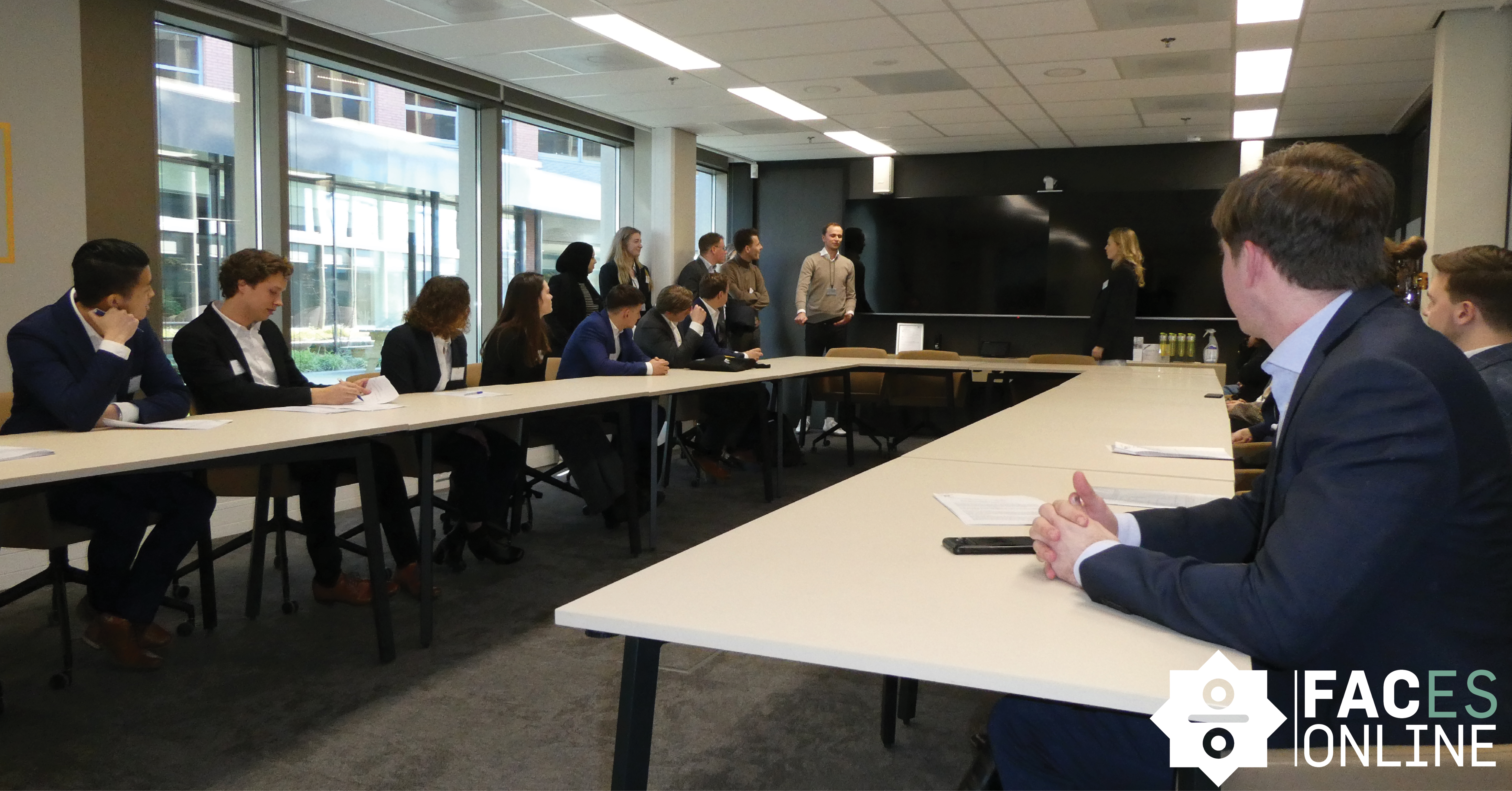
For the Dutch version, click here. On March 1 and 2, 2023, the Accounting Expedition took place. This event allowed a large group of motivated students to visit the Big Four in Accountancy. This way they could discover if a future as an accountant was for them and if so, which firm of the Big Four appealed to them the most. EY On Wednesday morning Ernst & Young, better known as EY, was allowed to kick off the Accounting Expedition. We received a warm welcome at their office, a ten-minute walk from Eindhoven station. There we were welcomed by campus recruiter Lisanne and her colleagues. During the opening, the question “What is your favorite series/movie?” quickly caught our attention. As it turned out, this partner had pretty much played Netflix and thus knew a lot of series. So besides hard work there is definitely time left to relax by watching a good series, was the conclusion. Then we moved on to an audit case. A case that consisted of detecting fraud. We were allowed to request documents and invoices from four different employees of ‘Wokking Good’ in order to discover who had committed the fraud. An even more important question was ‘how was this fraud actually committed?’ In the end, it turned out that the administrative assistant had transferred amounts to her own account. We concluded with a delicious lunch where we had the opportunity to talk to employees for the last time about auditing at EY. KPMG The second office on the first day was scheduled to be KPMG, less than a five-minute walk from EY. There we were warmly welcomed by campus recruiter Thijn and his colleagues and given a presentation about KPMG. There we learned what the opportunities are and what KPMG is all about. A partner also joined us who told a very interesting story about his career in America. When we were saturated with theoretical information about KPMG, we could get started with the case. In this we were allowed to analyze several transactions from an Excel database. From this database we then had to derive transactions that were fraudulent. Here we learned that there were all kinds of metrics and theories that could classify transactions as fraud. We ended the evening in the center of Eindhoven with a well catered dinner. Here we had the opportunity to speak with KPMG employees in a relaxed manner for the last time. Thus, after dinner the first day came to a formal end after which we, together with the participants, concluded the day at the hotel with a small drink. PwC After breakfast at the hotel we were ready for departure. This time PwC was on the program where we could almost roll from the hotel. It was very easy to reach because of its location near Eindhoven train station. In the morning we were welcomed by the campus recruiter Carmen and her colleagues on the top floor of the office. Here we first got a presentation about PwC and what the possibilities are within PwC. We also started with a tour of the office, which was certainly not disappointing. After we had finished the introduction round and the presentation, we could get to work on the case. The case we had to sink our teeth into was about a festival organization. The organization had several problems that needed to be dealt with and it was up to us to solve this as well as possible. For example, one of the questions was “how do you value tickets that each board member gets to give away to family?” or “how do you deal with criticism from local residents and what financial impact does this have on the organization of the festival? After we completed the case, it was time for lunch in town. Here we were just barely buried under the delicious food. All in all, a very successful case and lunch! Deloitte As the last office, Deloitte got to conclude the Accounting Expedition. When we left PwC, cab vans were soon ready to take us to Deloitte as it was unfortunately not within walking distance and public transport was on strike that day. We were well received by the campus recruiter Emily and her colleagues after which we could start with the presentation about Deloitte. Here we learned what is possible at Deloitte and what kind of employees work at this firm. Fortunately, there was no heavy audit case on the program here, but a Business Chemistry test. This reminded us of the DISC test: a personality test based on four colors. Red stands for direct and decisive (“Dominance”). Yellow stands for interactive and inspiring (‘Influence’). Green stands for stable and social (‘Steady’). And finally, blue stands for conforming and correct (‘Conscientiousness’). In this way we found out, through various tests, which personalities we had and in what way you can best cooperate with other personalities. Teamwork makes the dream work’ is an appropriate saying. In this way it also became clear that neurodiversity is highly valued at Deloitte. We ended the day with a well-cared-for dinner at eating café Spijker! So with this last dinner at Stratumseind, the Accounting Expedition 2023 came to an end! The train to Tilburg left late in the evening, after which we were back in what could be called the most beautiful city in the country. We would like to thank all participants, recruiters, employees and the organization for a wonderful edition of the Accounting Expedition. We therefore hope that this event provided new valuable insights to the participants and they are a step further in their career choice!
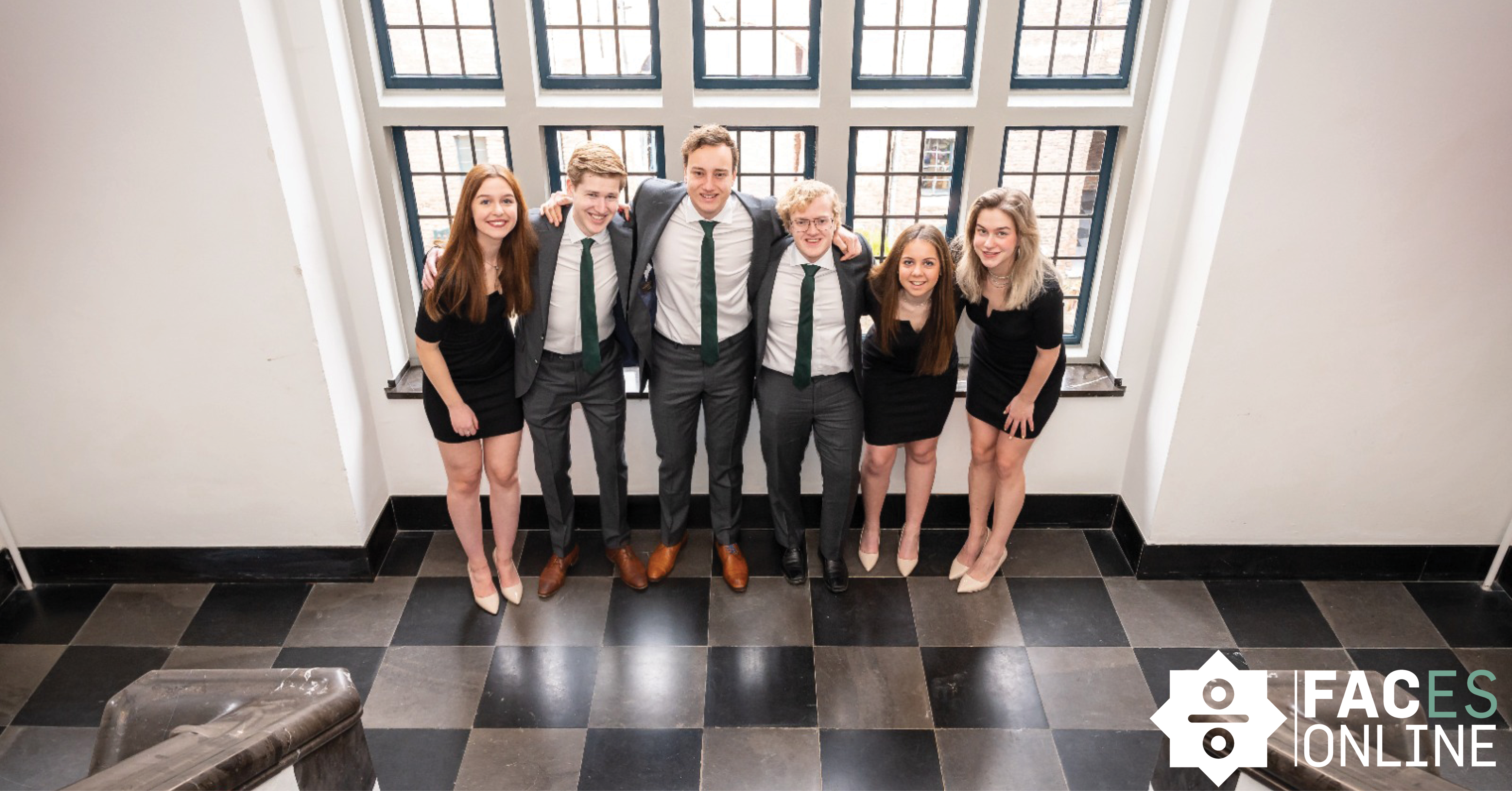
A board year as External Affairs at Asset | Accounting & Finance
For the Dutch version, click here. As External Affairs, Celine is responsible for liaising with current and prospective partners of Asset | Accounting & Finance. In addition, she coordinates the Accounting Expedition Committee and the Orientation Committee. She is also responsible for organizing the Master Experience Days Accountancy and Finance and for the FinanceDay. In this article, Celine talks about what her position entails and how she experienced a year as External Affairs of Asset | Accounting & Finance. Who am I? My name is Celine van Es and I am 23 years old. I have lived in Tilburg all my life and did my bachelor’s degree in Business Economics here at Tilburg University. In my last year of my bachelor I decided to become active at Asset | Accounting & Finance where I was an active member of the Orientation Committee for my board year. This is one of the two committees that I now also coordinate! Why did I choose to do a board year? Before I became an active member of Asset, I never had a good idea of what a board year at a student union exactly entailed and therefore had never really considered it. When I became an active member of Asset | Accounting & Finance in my final year of my bachelor I quickly got to know a lot of nice people and found out what kind of cool events we organize besides all the informal activities we do. My master’s choice was getting closer and closer and since I wasn’t sure which master’s I wanted to do, I started to consider the idea of a board year. This would be the ultimate opportunity for me to find out which master’s degree suits me, to develop myself both personally and professionally and to boost my CV. What exactly does the position of External Affairs entail? As External Affairs, you are responsible for all business contact and therefore also deal with everything that concerns the partners of Asset | Accounting & Finance. A big part of this is acquiring partners for events and exposure opportunities. When you start your board year as External Affairs, you will visit with your predecessor over the summer to visit all the partners to discuss partnership opportunities for the coming year. This is a fun way to get to know the partners you will be working with that year and to get a good idea of their expectations and goals. At the end of your board year, you and your successor visit all the partners again in the summer and you can reflect together and look back on the cooperation. Besides the company contact you are responsible for keeping the Career Platform Tilburg up to date, where partners can post a vacancy or company profile. In addition, throughout the year you are often asked for advice or help by companies, which sometimes requires some creativity but allows you to actually mean something to companies. This also gives a lot of space for your own interpretation of this function. Point of contact for companies, what else? Besides maintaining good contact with all partners, you also keep yourself busy with other tasks. As External Affairs, you also coordinate several committees and in my case they were the Accounting Expedition Committee and Orientation Committee. The Accounting Expedition Committee organizes a two-day corporate event and the Orientation Committee deals with informal activities and actions within the association. So they are two very different committees, which also makes coordinating them very fun and varied! Besides the Accounting Expedition, you also organize the FinanceDay with a fellow board member. Because you are responsible for the organization, you learn a lot in terms of planning and communication. You also learn how much it takes to organize a great event. In the end, one of the best things about my job is to be able to look back on a successful event where both companies and students were enthusiastic. During such events you also get many opportunities to network with companies and of course you often speak to your own partners. Furthermore, once a week you will also participate in the Acquisition Meeting with all other externals from Asset’s departments. Here you will discuss all external matters of Asset such as the acquisition of new partners or things about the Career Platform Tilburg. Each external also has one or more task forces within the Acquisition Meeting. Mine is General Revenues/New Business Model, where we look at all ways to make money for Asset Tilburg. Here you make sure the brochure is updated, but you also brainstorm on new events and opportunities. What are the main points of development as External Affairs? During a board year you will learn a lot on a personal as well as a professional level. You will definitely face certain challenges where you have to learn not to let stress take over in situations and to keep an overview. You will also learn what it is like to work intensively with a group of people and how important it is to communicate well with each other. We keep each other informed about what we are doing and what we are up against. This way you can keep each other on your toes and help each other out. You also learn that it is important to indicate your limits in time when it becomes too much and to dare to ask for help. As External Affairs I also had to step out of my comfort zone at times because it is a job where you often have to defend certain positions and as External Affairs you are of course in contact with everyone. If you set certain goals for yourself at the beginning of your board year, you can achieve a lot! What I would like to give my successors In the beginning a board year can be quite hectic and you will have to find your bearings. Don’t worry about this. In the
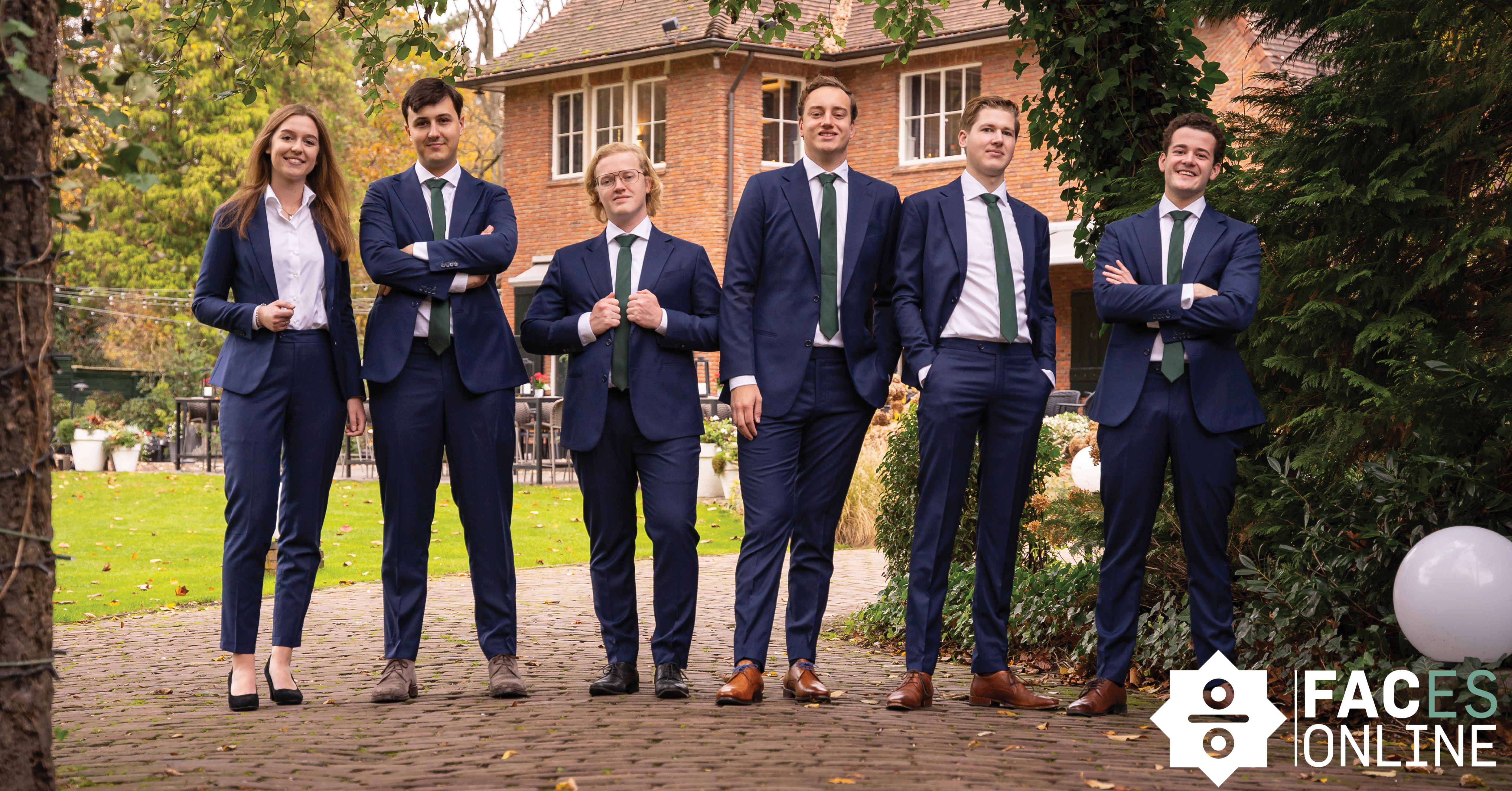
A board year as Treasurer of Asset | Accounting & Finance – Daan van den Elzen
For the Dutch version, click here. As Treasurer, you are responsible for the financial affairs of Asset | Accounting & Finance. In addition, you coordinate the Activities, Sports, Lustrum and Investment Night committees. In this article, I describe my experiences as Treasurer of Asset | Accounting & Finance and why I chose it. Why did I choose a board year at Asset | Accounting & Finance? After spending my first semester just studying, I wanted to do something in addition to my studies. In the second semester, I decided to do a committee at Asset | IB&M because I thought it would be really fun to organize something with other students and get to know a new set of people. After a year there, I went to Asset | Accounting & Finance, because I already knew I wanted to go in one of those two directions, and because I already knew a few people there. I had a great time here for a year and a half doing committees when I finished my bachelor’s degree. This seemed like the perfect opportunity to spend a full gap year doing something completely different from studying, and after Corona I did need a fun year. During this year I can also focus on what I want to do later and have the chance to get in touch with all kinds of companies. What are you actually doing all day? Treasurer is a pretty internal job, which means that most people don’t see the immediate results of what you spend all day doing. One of the main tasks is creating and keeping track of the budget. You do this right at the beginning of the year and in doing so, you set a lot for the rest of the year. This budget is constantly updated, so you know whether there is still room for a spontaneous drink or a beer bike, for example. You are also responsible for the general bookkeeping of A&F, which you keep up to date. I do this with our accounting program Twinfield. Especially at the beginning of the year I regularly had to call my predecessor to get me through the maze. But soon I had learned this. Everything costs money, so you also know a lot about what is going on within the association. Besides the financial part, you are also the coordinator of A&F’s four most fun committees: The Activities, Sports, Investment Night and Lustrum Committee. Throughout the week, you’ll be busy putting on all kinds of events with these committees. From the Meals on Wheels, to the Mario Kart Tournament, to a fat symposium. The many informal committees are also a nice contrast to the fairly formal work you do on a daily basis as Treasurer. Together, it’s a super fun combination to fill the week! It is a unique experience that you can experience in very few places. Once a quarter the cash control takes place. Then the treasurers of the last three years come together to review my accounts and give advice for the coming period. Then I can ask all the questions I have. It’s also fun to compare what everyone ran into in their year and what is still the same now or what is going differently. In addition, A&F is part of Asset Tilburg, so we work together a lot. This year I am the vice treasurer of all of Asset, which means that I am involved a lot in the financial decisions of the association. Every week we also meet with all the treasurers of the departments to discuss matters within Asset. Of course, it is also nice to catch up with the other treasurers once a week. What are the highlights so far of your board year? It’s hard to pinpoint one moment because so many different things happen in a year like this. Some of the best are the first activity with the members, which this year was the Activities Committee’s Meals on Wheels. The Department Members Meeting was also a special moment, because that’s when you reflect on the past six months and also say goodbye to the Winter Enlightenment. But even smaller moments are still fun to think back on, such as when the Investment Night Committee brought in its first speaker, and the announcement of the new Winter Board. The year is really made up of an awful lot of little moments that together make it a wonderful year! Would you recommend a board year to anyone else? Absolutely!!! It is a unique experience that you can experience in very few places. You basically run a small company with five other people while still being a student. You have a lot of responsibility, but also a lot of freedom to set up this year and organize fun events and activities. Because of the combination of the formal and informal activities, you actually never get bored. You also get to know many new people from other associations and experience many fun things. Of course, you’ll also be at plenty of get-togethers and parties to fill your evenings. All in all, it’s a fantastic experience and definitely worth doing. I’ve never doubted my choice to apply. You get the chance to meet lots of people, experience fat things and still be able to catch plenty of parties. All while still being a student. I can only recommend this year.
