

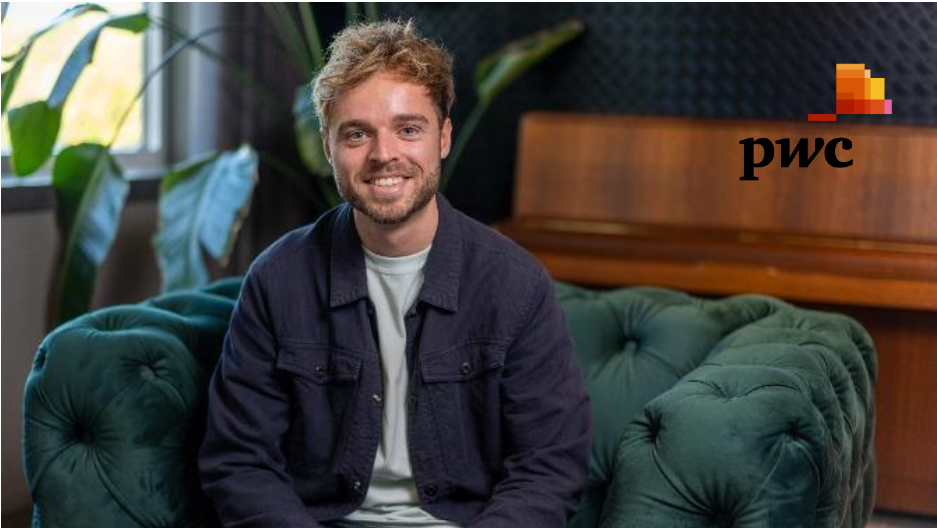
Meet Sam. A connector, accountant, innovator, DJ and solver at PwC Netherlands. Can you tell us a little about yourself? ‘I’m Sam Dijkshoorn and I’ve been working in assurance at PwC for 4 years now. Together with my colleagues, I am responsible for auditing the financial statements of various clients. I am also part of the Social Board and the recruitment team. Recently, I became a Digital Accelerator. In this role, I think about how we can use digital tools to improve the processes surrounding the audit. In my spare time, I volunteer at football club AZ and occasionally play as a DJ in clubs or at festivals. I can also often be found on the tennis court. “I like working at a young organization. Every assignment has a different team composition. In addition, there are many social activities organized.” How did you end up at PwC and what exactly do you do? “During my bachelor in Economics & Business Administration, I participated in a PwC recruitment event. Here I got to know PwC in an informal way and talked to employees. After this event, I had the opportunity to write both my undergraduate and graduate thesis at PwC. I believe this is one of the best ways to get to know the company well. Because my internship period was very positive and I immediately felt at home at PwC, I started the entry-level program at our assurance branch immediately after my internship: One Assurance Academy. “I get to deal with many different clients and topics. This allows me to grow quickly and develop in various areas.” What is your (study) background? “I completed the bachelor’s degree in Economics & Business Administration at the University of Amsterdam and also obtained my master’s degree here. What does your workday look like? ‘A typical workday at PwC doesn’t exist. Every day is different: on Monday I work from home, Tuesday and Wednesday I’m at a different location with clients, Thursday I work in the office and Friday is my part-time day. In addition, I get to change clients every few weeks, which makes the work very varied. I work in different environments, with various clients and colleagues. During my work, I conduct interviews with clients, discuss with my teams, coach colleagues and audit various items in the financial statements, among other things.’ What makes your job fun? ‘I get to deal with many different clients and topics. This allows me to grow quickly and develop in various areas. Moreover, there are numerous opportunities within PwC. People listen to what you like and where your interests are. The fact that I became a Digital Accelerator last year is another example of this. In addition, my work at PwC is very flexible, which gives me enough time to do things I like to do besides work. I like working for a young organization. Every assignment has a different team composition. In addition, many social activities are organized: such as the gala, winter sports and regular get-togethers. This allows me to get to know many different colleagues. A number of colleagues have now become good friends!’ Tell us something about the culture at PwC ‘The culture at PwC suits me very well. I feel at home when I’m in the office because the atmosphere is informal and the organization is not very hierarchical. From associate to partner: everyone is open to help you or just having a chat. In addition, there are no fixed workstations. Because of this, you sit with different colleagues every day and get to know many new people. I usually sit with my own team, but I also regularly meet up at the office with friendly colleagues. “In addition, my job at PwC is very flexible, this gives me enough time to spend on things I like to do besides work.” What else is on your bucket list? “My bucket list includes obtaining my chartered accountant (RA) degree. I have now completed the theoretical part of my training as a chartered accountant and have started the final year of my practical training. I am also very much looking forward to the Audit Course. This is an annual event where MSc Accountancy students get the chance to learn about accountancy by going on a trip together to a changing destination. This year I get to come along as an attendant. If you’re interested in accountancy at PwC, this is highly recommended. What project makes you proud? ‘In addition to my work as an accountant, I am also part of the Social Board. The Social Board organizes social activities for our accountancy colleagues to contribute to the connectedness within the department. I am proud that our team has organized many social get-togethers and a number of sporting activities over the past year. For example, we held a padel tournament.’ What do you think of the work-life balance at PwC? ‘The flexibility at PwC is great. I’m fairly free to organize my own workday, as long as it’s discussed with my teams. Sometimes I work from home, other times I work in the office or on location at the client. In the morning I regularly play tennis with my sister for an hour and then I make up the hours missed in the evening. As a result, I have a good work-life balance. Because I have a busy social, sports and musical life in addition to my work, I work 36 hours a week. This gives me the space to go to AZ on Thursday night and spend some extra time on Friday to prepare my DJ set.’ What would you like to say to your future colleagues? ‘Do you want to discover whether PwC suits you too? Write your thesis at PwC and check out our careers page for events and opportunities. Hope to see you there!
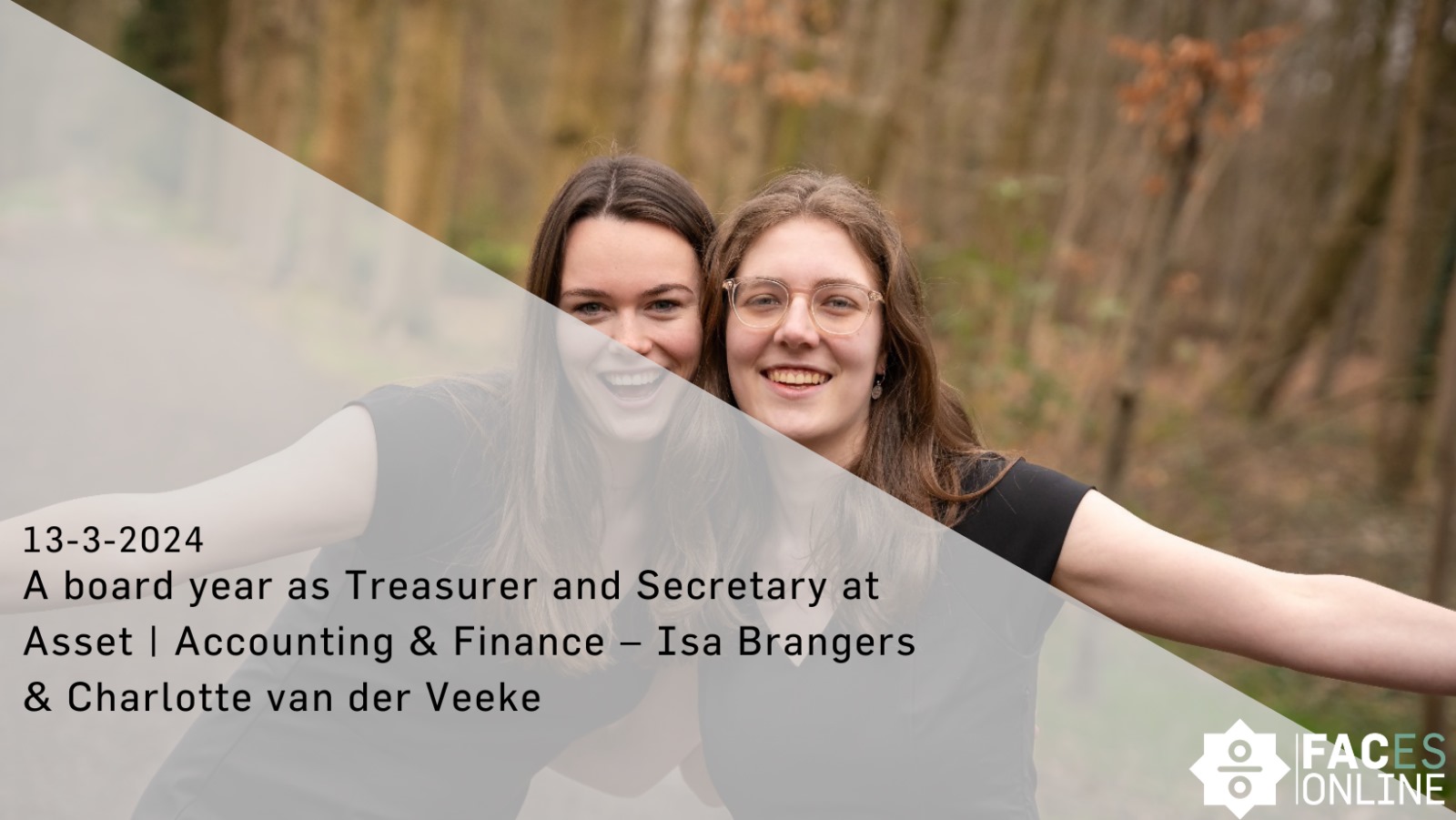
A board year as Treasurer/Secretary at Asset | Accounting & Finance
In this article, Isa Brangers and Charlotte van der Veeke share their experiences as board members of Asset | Accounting & Finance. Who are you? Isa: My name is Isa Brangers and I am 21 years old. I am originally from Nederweert-Eind, but moved to Tilburg in 2022, at the beginning of the third year of my bachelor. When I moved here I immediately became active at Asset, first in the general events committee and later also in the sports committee of Asset | Accounting & Finance. Now one and a half years later, I have finished my bachelor in Business Economics and I want to start my master accountancy after my board year. Charlotte: I am Charlotte van der Veeke and I am 19 years old. I am from Almelo, which is quite a distance from Tilburg. However, I chose to come to the beautiful Brabant and have absolutely no regrets. I am currently in the second year of my bachelor in Business Economics and joined A&F last summer. After being in the Orientation Committee for six months, I liked it so much that I decided to do a board year. Why did you choose to do a board year at Asset | Accounting & Finance? Isa: Based on the recommendation of my former roommates, I joined A&F, which immediately brought me into contact with many new, fun people. Soon my calendar filled up with all kinds of informal events. Initially, I was on the general events committee, where I still didn’t understand exactly what Asset | Accounting & Finance entailed. After six months, I decided to join the sports committee as well, which gave me a better idea of what was going on in the rooms. Initially, I was convinced that a board year wouldn’t be for me; it seemed too busy and I doubted whether I wanted this responsibility. However, I had almost completed my bachelor’s degree and the decision to choose a master’s was very close. I did have the idea that I would like to study Accountancy, but I didn’t know what this looked like in practice. After hearing countless positive stories about board years, I decided to apply anyway, hoping to meet new people, organize great events, see different companies and finally make the right choice regarding my master’s. Charlotte: I chose a board year because I want to develop myself on a personal level. I feel like I still have a lot to grow in certain areas and I didn’t manage to do this during my studies. Therefore, I think this is a good way to make my desired development possible. In addition, it is a welcome distraction from studying and I can fully dedicate myself to the association. Because I had such a good time last semester, I am looking forward to taking the association to the next level. The choice for secretary is because I am very organized which is convenient for this position. The best thing about my job is that you can ensure everything stays neat. While the rest of the board members are busy completing their tasks, you can make sure that those tasks come together properly. You take minutes during the board meeting, you take note of the new members that the Vice-Chairman brings in, you make the annual planning for the organized events of the other directors (and your own, of course) and you can pick up smaller tasks from them if they don’t have time for them. This is how, little by little, you lift the association to the next level. What does a week as Treasurer/Secretary look like? Isa: As a Treasurer, you are responsible for all the finances within Asset | Accounting and Finance. At the beginning of the year you set the budget, which you keep updating throughout the year. What I find very interesting is that almost everything costs money, so you are involved in all the decisions. Unfortunately, sometimes you are forced to be strict and reject interesting but overpriced ideas. On the other hand, of course, you can occasionally bring good news if there is room in the budget left for a spontaneous drink. I also coordinate four more committees: Activities- Sports-, Investment Night and Lustrum Committee. With these, there are weekly meetings, in which you work together towards the events. What I like about this is the variation. With the Investment Night committee, you work all year towards a big formal event, while with the activities and sports committee, you focus on small informal activities for active members. As a nice bonus, we are celebrating our anniversary this year. So I like the challenge of being responsible for this series of major events together with the committee. It is great to see that such a large group of members and former members attend our activities and that we can share this experience together. In my opinion, a board year is a unique experience where on the one hand you carry a lot of responsibility, but at the same time you have a lot of room for your own interpretation. It allows you to build a large network both formally and informally. One of the biggest advantages of a board year, in my opinion, is the alternation between formal and informal events. After a formal event, it’s always nice to have drinks with the other board members and board members. However, drinks on evenings before formal events are not so recommended, but these are part of it too! Charlotte: As secretary, I am involved in various tasks. One of these is the weekly Secretary Meeting on Wednesday afternoons, where you get together with all the secretaries of the other departments to keep all administrative matters in order. In addition, around this time of the year, we as secretaries are busy preparing the new annual schedule, which is also an important part of my duties. In doing so, you ensure that next year’s events have a set date and
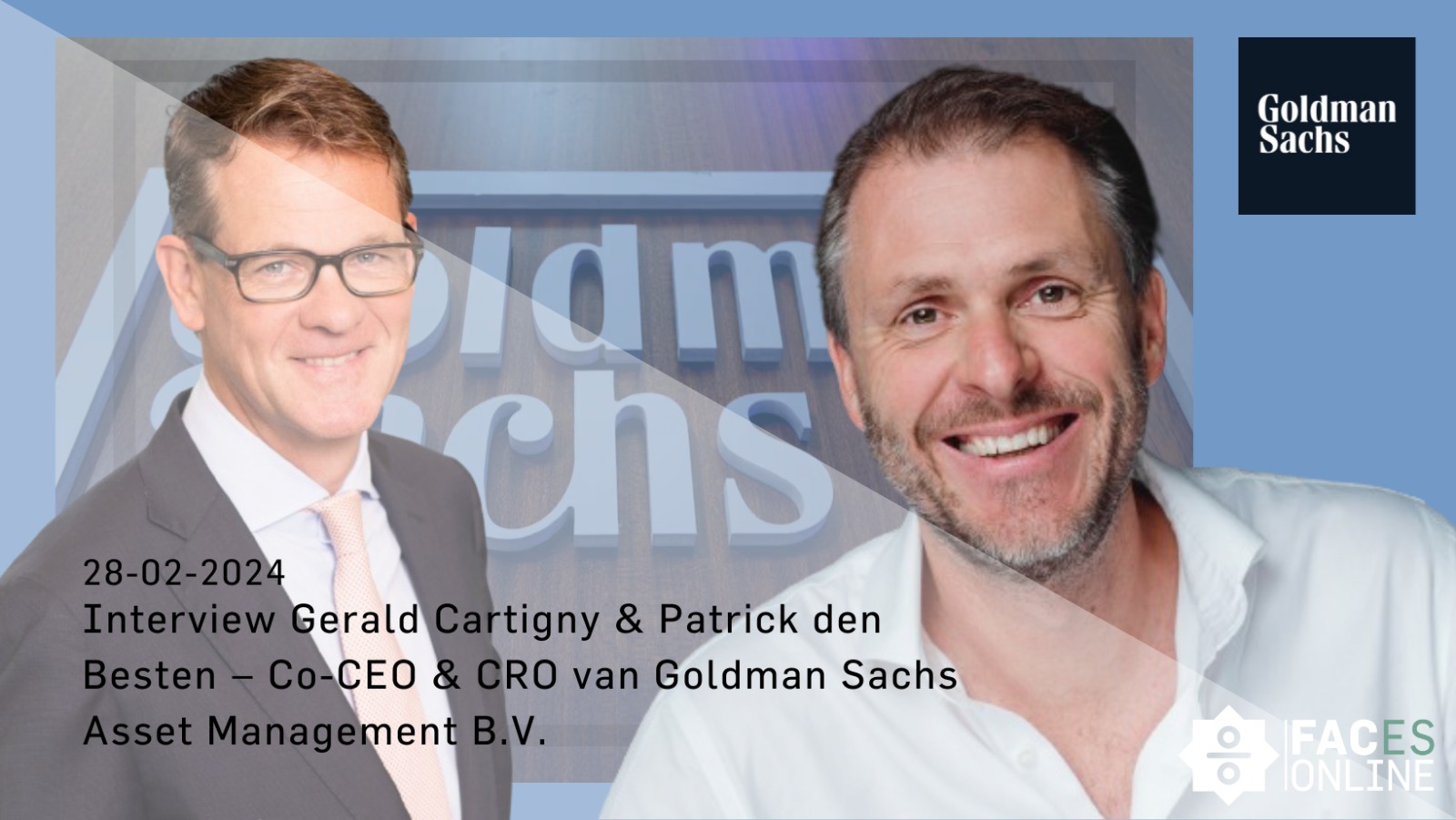
Interview with Gerald Cartigny & Patrick den Besten – Co-CEO & CRO of Goldman Sachs Asset Management B.V.
Goldman Sachs Asset Management (GSAM) B.V. is the Dutch asset management arm of Goldman Sachs. GSAM offers various investment strategies to investors, with a focus on equities, fixed income, quantitative solutions, alternative investments and multi-asset solutions. Two of our alumni were asked 10 questions in this interview. 1) How did you go through your studies and what was the transition like from being a student to your first job? Patrick den Besten: ”I started studying economics in 1992, and eventually graduated in 1997. I graduated in Money, Credit & Banking. During my studies, I worked at Staalbankiers, where I was responsible, together with their macroeconomic office, for creating a macroeconomic vision. Equities and investing have always been interesting to me. Early in my career, I transitioned smoothly from working at Staalbankiers to the Strategy/Asset Allocation team at Aegon Asset Management. At the time, this was one of the partners of the university. Just before the end of the dotcom bubble (March 2000, ed.), I moved to the Equity team at ING Investment Management. The study in Tilburg was very practical and for me, it helped to create a smooth transition to the workplace.” Gerald Cartigny: ”I started at Tilburg University in 1984, and in 1989 I graduated in business economics with a focus on corporate finance. I ended up taking five years to complete the degree, due to a board year at the sports organization Pendragon. At the time, one of my professors suggested me to do an internship; that’s how I ended up at the NMB (Nederlandse Middenstands Bank, ed.), where I researched the topic of Eurobonds. This was a new phenomenon at the time, and the NMB commissioned me to research this by surveying all the important investors in the Netherlands. This turned out to be a great advantage because when I finished at NMB, three of the parties I visited offered me a job spontaneously. By coincidence, with this internship and job offers, I ended up in the investment world. At the time, I chose Nationale Nederlanden, already a big investor during that period. I started in the department that manages the portfolio of the insurer. So, for me, it was also a very smooth transition.” 2) What are the most important lessons, skills and habits that you picked up during college that you still benefit from? Gerald Cartigny: “The board year at Pendragon was very helpful, the dynamics there ensured that you had to be able to communicate with everyone, tune in and take action. Later in my career I worked in the US for 3 years, which brought a lot of enrichment. The activities alongside my studies were important and I learned a lot because of it.” Patrick den Besten: “What I learned the most from was my internship at the Staalbankiers. There I was able to engage in discussions with the people who were in control. I was in the dealing room, which was quite small. But what I learned in theory, I tried to put into practice, which was very beneficial. Above all, engage a lot in conversation with fellow students, and be involved in different things. I got a lot of pleasure out of doing projects with other students and engaging in discussions with my professors. Try to seek other perspectives: don’t take things for granted. Engage in discussions, even during your first job. I think that’s very important to make sure you become very well-rounded, which requires you to do more than just exams and studying.” Gerald Cartigny: “One more addition, I learned the following during my board year: if you want to do something, you have to be proactive. That applies to your entire career. Nothing comes to you, there are lots of opportunities for all students, but you need engage actively. Take advantage of these opportunities and be curious; that is also something we (GSAM, ed.) look out for in the people we hire.” 3) What does the corporate culture look like within GSAM? Patrick den Besten: “For me, the following aspects are important: First of all, expertise; Don’t sit around, show initiative; And drive, we want to see energy. I think this is important within every company. But for large companies, leaders in their market segment, these are the people they need to make sure they stay the best.” Gerald Cartigny: “To illustrate: Goldman Sachs is a global company with about 45,000 employees, we hire about 3,000 graduates every year. These hires come from a selection of about a million letters we get. In those letters, almost everyone qualifies based on studies and secondary activities. However, in order to hire those 3,000 individuals, for one position we sometimes interview 15 people. We check if the candidates show that they are motivated, but also that they enjoy working with us. And that’s also what Patrick says: the “eagerness” has to be really evident because the difference on paper keeps getting smaller and smaller between students. When you are applying, you have to think about your presentation and preparation, but you also need to know what you exactly want. If you don’t know what you want, then it’s pretty hard to get concrete with a company.” 4) What does the Chief Risk Officer do on a day-to-day basis? Patrick den Besten: “As an asset manager, you manage risk for two main categories: operational and financial risks. Financial risks arise as a result of our investments in equities, derivatives and bonds in the financial markets. Thus, I work daily with the portfolio management team to evaluate the state of the portfolios. During unique events, such as geopolitical developments, we work even closer together. On the other hand, there are operational risks. We manage clients’ money, including large institutional clients and individuals who invest in funds. As a risk management team, we make sure that the funds we manage are invested according to the agreements made with the clients or as stipulated in the prospectus for a specific fund. This brings
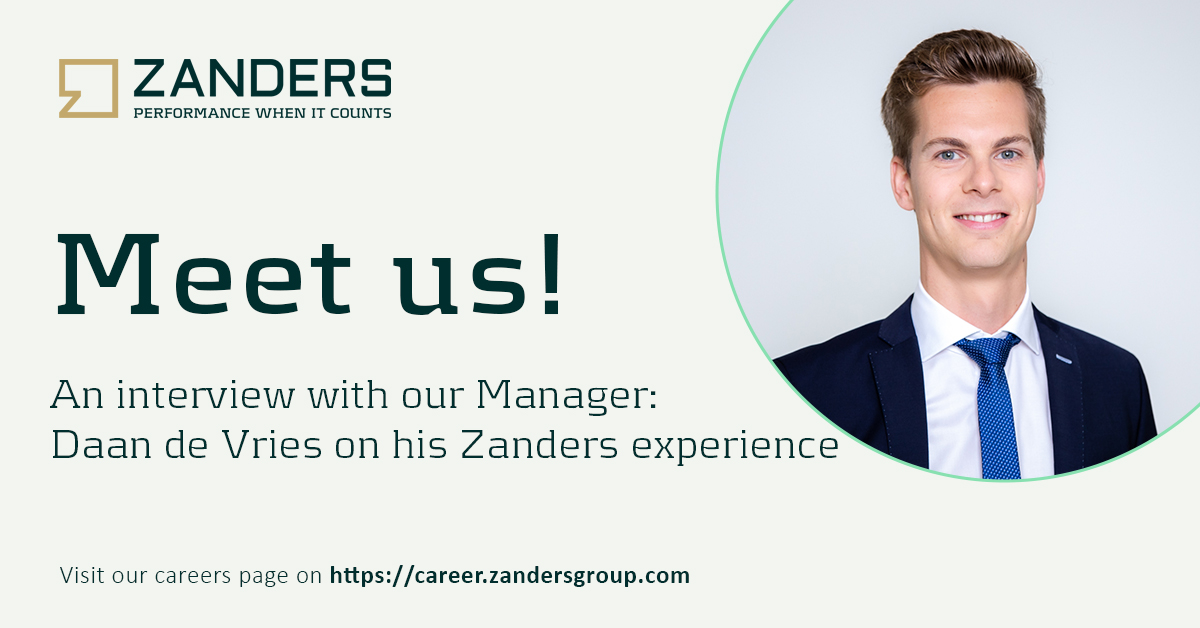
Working at Zanders – Daan
Who are you and what do you do at Zanders? My name is Daan de Vries, I am 29 years old and live in Utrecht. I did a bachelor in Business Economics and a master in Finance, both at Tilburg University. During my master, I started working as an analyst at Zanders. This went so well that I started as a consultant in December 2019. Since then, I have advanced to a role as manager within the Treasury Advisory Group department. This department advises (listed) companies worldwide in the area of treasury. What is treasury? Treasury involves managing money and controlling financial risks in a company. Treasury’s priority is to ensure that the company can meet its daily business obligations. At the same time, your role as treasurer is to help develop long-term financial strategy and policies. Why did you choose Zanders? Zanders is an internationally oriented organization that focuses on complex treasury issues. These are often issues concerning both finance and technology. Therefore you’ll need to be interested in both areas and in my case it was exactly what I was looking for after completing my studies. I wanted to get an inside look at (international) companies in different industries and that is possible in this role. Although treasury is a niche area within finance, many study aspects are reflected in my work – such as financial risk management and debt financing. Zanders also has a flat organization structure where lines of communication are short and where you get a lot of freedom to develop yourself. In your first year as a consultant you participate in the Talent Program, which consists of three training weeks that take place throughout the year. During these weeks you will receive both professional and soft skill training from experienced colleagues and external trainers. The final week is at a location outside the Netherlands with other starting consultants from different departments and offices. Finally, at Zanders there is a good work-life balance, which is very important to me. Zanders also has a young team and fun activities are organized with and by colleagues. For example, once a year the Zanders Trip is organized; we then go with the whole company for an entire weekend to a destination in Europe that is secret until the last moment. There we then have all kinds of fun activities together. What do you deal with on a daily basis? This is a question that is often asked and is obviously very important. The answer depends on the projects I work on. I usually work on two projects at the same time. For each project, we have client meetings, provide reports and conduct workshops. In addition to the projects for clients, I also work on internal projects, which helps me develop myself in other areas of work. One of my internal projects is business development, where I have contact with existing and potential clients. For example, a day while conducting a strategic consulting project looks like this: 09:00-10:00 – Meeting with the client about actions regarding the Treasury Policy to be taken up today 10:00-12:00 – Edit the Treasury Policy and actions resulting from the meeting 12:00-13:00 – Lunch with colleagues, walk around 13:00-15:00 – Preparing a Treasury Policy workshop for next week 15:00-17:00 – Business development 17:00-20:00 – Friday drinks What advice would you give students? Most important is to know what interests you. Take your time to find out which companies match that. Go to recruitment days/events, in-house days and approach companies that seem interesting to you. You can visit us for an informal talk to see if Zanders and treasury suit you. Would you like to know more about Zanders and/or my experiences? Then send me a message via LinkedIn! https://zandersgroup.com/nl/ https://career.zanders.eu/
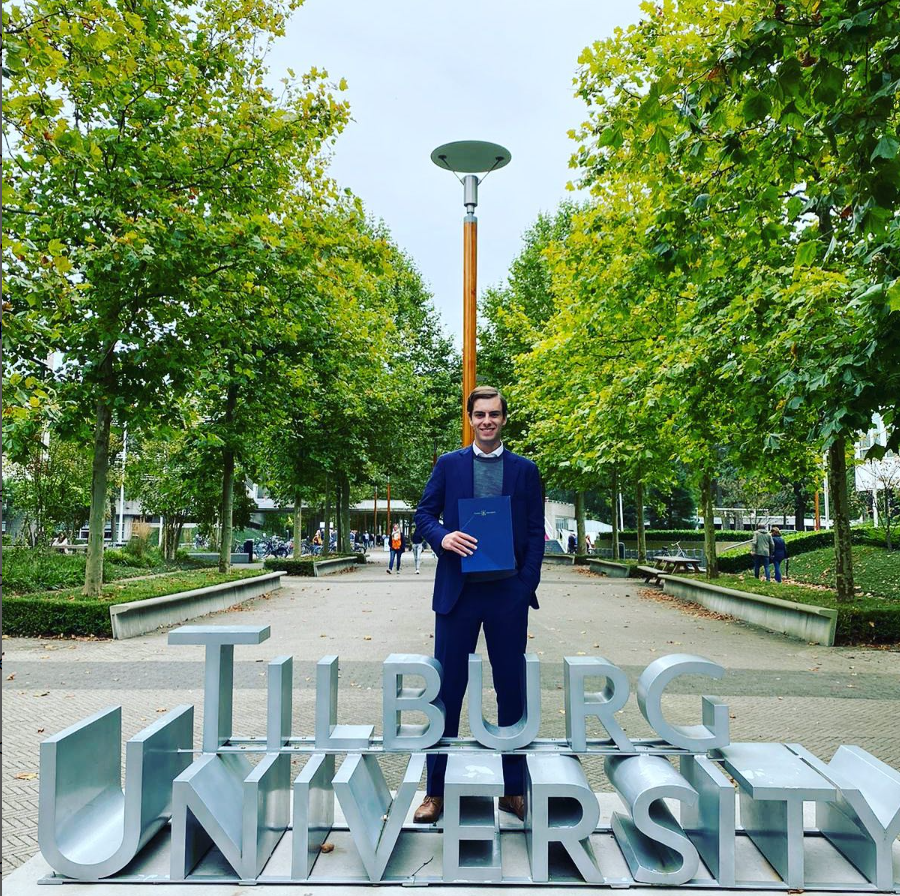
Jasper Vreman – Just Graduated
Who are you? I am Jasper Vreman, 23 years old and raised in Oud Gastel. In 2018 I started my bachelor’s degree in Business Economics in Tilburg, which I completed in 2021. Then I did both the master’s in Accountancy and Finance, also at Tilburg University. After completing both masters, I joined QVO Values, a start-up in corporate valuation, on September 1, 2023. What was graduation like? In 2021, I first started my master’s degree in Accountancy. I pretty much completed this master’s in the first year, except for one subject. In order to avoid paying a huge fee for the second master, you should not yet complete your first master. Therefore, I chose to leave one subject open. The master’s in Accountancy is special because you do not write a thesis, but an MSc File. Here, the thesis is divided into three parts, so to speak: the Business Application, the Replication Study and the Research Note. This divides the workload of one large thesis over an entire year. The Research Note is the largest “project,” and I wrote it under the supervision of KPMG in Rotterdam. I would recommend writing the Research Note with an employer to anyone to get a sense of your possible future work environment and what work is involved in the accountancy profession. All in all, I liked the setup of the MSc File, however, you now have a whole year of guilt if you prioritize social activities over an afternoon in the UB. The Finance master’s did require writing a full thesis. In January, I decided to apply for a research project within the thesis: here a group of thesis writers share the same direction, in my case inflation hedging, and that way you can help each other by sharing knowledge and tips. Also, you get a supervisor who is at home in this topic, which can help tremendously in thesis writing. With the help of my supervisor Rik Frehen, I experienced the whole thesis process as pleasant, with an 8 as the icing on the cake! What was the job search like? The serious job search started with a LinkedIn message, in which I mentioned that I had completed both masters and was looking for a job in Finance. I then sincerely received more than 100 responses from recruiters. Many messages were from secondment and interim finance firms, but of course many accounting firms sent messages as well. However, there was one message that stood out, from Henk Oosterhout. He stated that he was embarking on a new adventure: a start-up in corporate valuation. Now valuation was exactly what I was looking for: a lot of analytical thinking, but also a social touch through contact with clients. I then called Henk while I was still on vacation in South Africa. The first click was very good, and we decided to have a ‘formal’ job interview in Leiden, on the terrace. Here the initial suspicion was confirmed, and I subsequently started on September 1. What is it like working at QVO Values? Currently I have been working at QVO Values for more than four months and I am still enjoying it immensely. The great thing about a start-up is that you get to experience all aspects of the ins and outs of founding the company. For example, in the first month I got to give a valuation workshop for the tax and accounting reporting division of an AEX fund. Furthermore, giving guest lectures at the VU and RSM is of course unique. Because we would like to grow, we obviously need to hire more analysts. The nice thing about this is that Henk and I do the job interviews together. That way we can complement each other with questions for the applicant or information about QVO Values. What else do you do? Actually, apart from the start-up work, the work can be divided into three parts: modeling, deepening and appointments. Modeling very simply means developing models for valuation work. Because we are just starting out, we have to start completely from scratch. Although developing models may not sound very sexy, it does ensure that you get a better understanding of the models that you will then use in the future. In that way, I can say that I have learned an enormous amount in the past four months. Furthermore, delving deeper is mainly researching our customers and their competitors to get a better understanding of the customer, or an entire industry. Figures, of course, only tell part of the story: a low gross margin for a supermarket is not so crazy, but for a pharmaceutical company it is. Therefore, it is important to understand the company and its industry well. The last facet is agreements: the data supplied by our clients is sometimes incomplete or raises questions. To resolve the noise then, we have appointments to ask our questions. Furthermore, our results are checked by, for example, an audit firm or the tax authorities. If they then have questions, we also provide explanations in an appointment.

The story of Charlie Munger
In late November 2023, the life of iconic investor Charlie Munger sadly came to an end. Described by many as Warren Buffett’s confidant, however, he is much more than that. In this article, we look back on the successful life of this investor. Charlie Munger was born in Omaha, Nebraska, in 1924. He grew up during the Great Depression (1930s in the 20th century), which had a lasting impact on his outlook on both life and investing. In Omaha, the American also attended public school, where he soon managed to excel. He then went to the University of Michigan to study mathematics. This study he decided to interrupt to join the army during World War II. After his military service, he was admitted to Harvard Law School. During this study, he gained important knowledge, particularly in tax law, business law and contract law. Not soon after, he divorced his wife, to whom he lost all his money. Then his son died at the age of 8. Despite these setbacks, Mr Munger was determined to become successful. Soon fortune found him and he married his new wife. Because of the death of his father, he returned to Nebraska to take care for his family. Here he met his future business partner Warren Buffett. Next he moved to California to open his own law firm. He also opened his own investment firm called “Wheeler, Munger & Co” with his then business partner Jack Wheeler in 1962. From 1962 to 1975, his firm achieved an average return of 19.8%, while the Dow-Jones averaged “only” 5% per year in returns during this period. Nevertheless, the company made a loss during the oil crisis (1973), so Charlie Munger felt compelled to close the company. During this period, he also quit his law firm on the advice of Warren Buffett. Over the next few years, he began investing with, indeed, Warren Buffett before becoming vice chairman of Berkshire Hathaway in 1978. The golden duo was a reality. Investment philosophy Charlie Munger had a lot of influence on Warren Buffett’s investment strategy. For example, Warren Buffett used the so-called “cigar butt” method. This involved an investor buying an undervalued stock of a bad company. This with the idea of making a short-term profit. As a result, there came a change in Berkshire’s view regarding value investing: It stated: “Forget what you know about buying companies at nice prices, instead buy nice companies at fair prices.” Charlie Munger’s “mental models” also play an important role in his vision. He believed you needed a broad general knowledge to become successful as an investor. An investor needs knowledge in various subjects such as, indeed, law, but also in psychology, economics and mathematics. Charlie Munger was known as a man of great patience; this was reflected in his passive investment philosophy. He believed that making a profit was not a matter of buying or selling stocks, but rather patience and simply waiting. If you owned a stock long enough, its value would naturally move toward its intrinsic value. In addition, he was not an advocate of diversification. According to Munger, your returns are limited when you own many different stocks. Instead, he appointed that it is better to have a concentrated portfolio consisting of a limited number of stocks. When Charlie Munger died, he personally owned only 3 different stocks. Consequently, this mindset caused him to be selective. He believed that opportunities are always scarce and looks critically at new technologies. For example, he is absolutely not a fan of Bitcoin and even calls it the worst investment ever. This cautious view of new technologies is also a result of the fact that he thus grew up during the Great Depression. During his childhood, partly because of the Great Depression, there was a lot of poverty around him. As a result, he always remained cautious when it came to new technologies. Furthermore, Munger valued ethics within companies. Companies that do not act ethically will eventually make decisions that are bad for the company. Therefore, investors should stay away from companies that perform poorly in terms of ethics, even if they have potential financially. Charlie Munger himself was known as a reliable business partner, which no doubt was partly responsible for his successes. His view of ethics can also be seen in his philanthropic activities. For example, he donated at $300 million to make rooms more affordable for American students. Life Lessons Charlie Munger was known for his beautiful quotes and particular outlook on life. First, he emphasized the importance of lifelong learning. He mentioned that all the wise people around him read many books to keep gaining knowledge. Also, according to Munger, it is to look critically at your surroundings and surround yourself only with people who are trustworthy. Furthermore, Charlie Munger was a great advocate of personal growth, in this, he said, there was no room for self-pity, but rather discipline. Discipline, according to him, was necessary to become successful. Munger also believed that a person should be humble. Despite his status as a multibillionaire, he lived a relatively bleak existence and spent little money. This too was a result of growing up during the Great Depression. According to him, jealousy brings out the worst in man and should be avoided at all costs, for example by living frugally. All in all, we can conclude that Charlie Munger has been of great value to Berskhire Hathaway and the entire investment world. His wisdom will always be used.
