


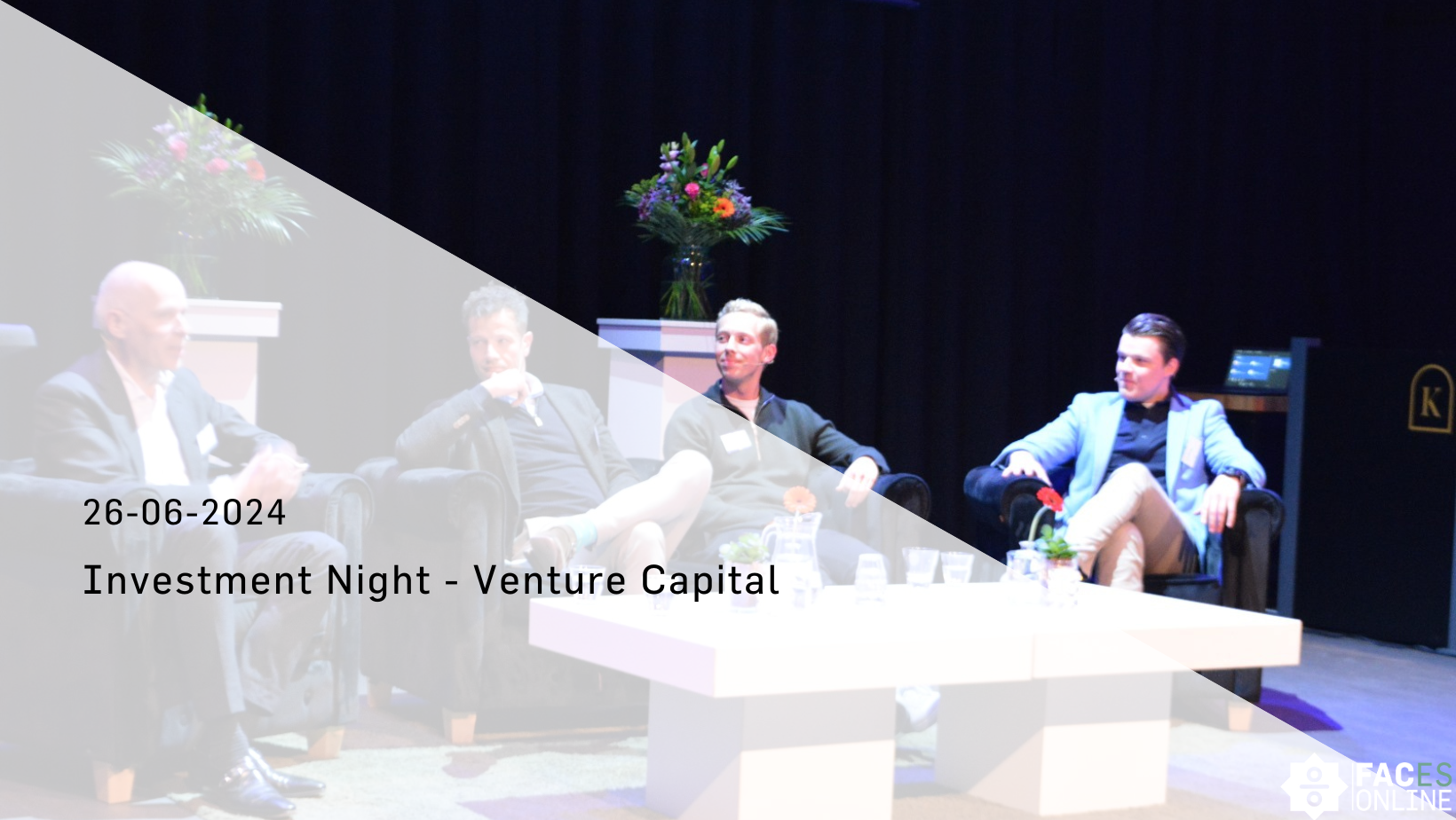
Preparation for the eleventh edition of Investment Night began in early September. When we as a committee met for the first time at the beginning of the academic year and had to look for a topic, all kinds of ideas immediately came up regarding ESG. However, we felt that there was so much talk about this topic at this time that there was a fear that this would become just another story. That’s when we started focusing more on other topics that we, as up-and-coming finance professionals, had little to no information about in our education. This actually led us directly to Venture Capital! A very dynamic world that is hardly highlighted in our education and the news institutions. Therefore, this symposium was the ideal evening to learn more about the world of Venture Capital. In short, Venture Capital is a form of financing in which investors put money into start-ups or growing companies with high growth potential. These investors, also known as venture capitalists, provide capital in exchange for a stake in the company. The goal is to help the company grow, increasing the value of the shares and eventually allowing the investors to sell their investment with a profit. Venture Capital is often used by companies within innovative sectors such as technology. However, of course, an event like this depends on its speakers. Our intention was to illuminate the world of Venture Capital from 3 sides. Of course from experts who are Venture Capitalists themselves but also from the side of a company that receives a capital injection from the Venture Capital world. Finally, we looked for an expert who stands above both parties from a larger institution or the party providing capital to the Venture Capitalist. Through our network, we quickly arrived at ECFG, a Venture Capital firm based in Eindhoven. The investment director Leo van Schijndel was eager to share his expertise and share his years of experience. ECFG is right in the middle of the brainport region which means it invests a lot in promising business-to-business sectors such as (high-tech) manufacturing, agrotech and ICT. The second Venture Capitalist was Erwin Saasen who spoke from his experience at ABN-AMRO ventures. He himself is now working for a company that has had an injection from Venture Capital so was able to give a fresh and clear view on the subject from both levels. From the perspective of a company that received an injection from Venture Capital, Qurein Biewenga came to speak about his experience at Lightyear, the solar car manufacturer. He was also able to speak from two perspectives because he went the opposite way and is now fund manager at PhotonDelta where he invests in companies engaged in innovation in the semiconductor industry. The last speaker was already a familiar one from this event: Hans Grönloh. He is a partner at KPMG and came to speak from a more controlling role. With a wealth of experience, he was able to provide more interpretation in how to look at the world of Venture Capital. The evening itself was led by our chairman Johan Doesburg, who led the evening with humor and put fire to the feet of our speakers. He ensured that the conversation never stopped and all facets were highlighted. The event began with a brief introduction of what Venture Capital actually is and how the process works from start to finish. Then the evening was shaped by various statements and questions from the audience. One of these questions was whether the people within the Venture Capital world should be seen as “sharks” or in other words as people who are only interested in money and do not care if a company really benefits from it. This was firmly denied by our experts who claimed that they always have the best interests of the companies at heart and also only invest if they actually believe in the product. This last part came back throughout the evening in the discussion and could be seen as the motto of the experts: only invest in something you believe in! As chairman, I would like to thank the mentioned experts and the day-chairman for their participation. I would also like to thank my fellow committee members Bart Schellekens, Bas Verhagen, Emanuel Willemsen, Martijn Mols, Vincent Metz, Rogier Muller and Isa Brangers for their unconditional commitment to making this great event happen.
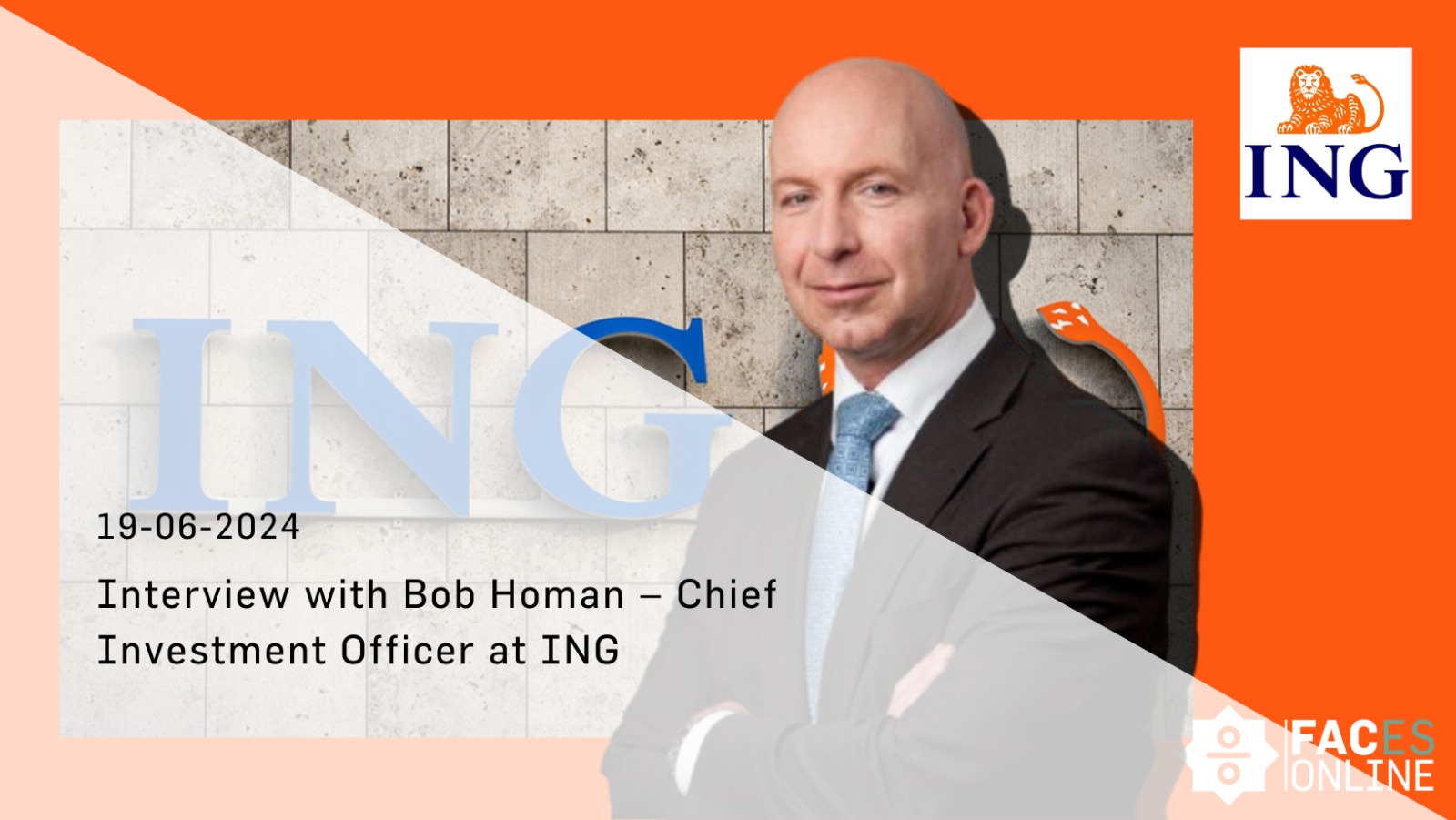
Interview Bob Homan – CIO ING
ING is a multinational banking and financial services company headquartered in Amsterdam, Netherlands. It offers a wide range of services including retail and commercial banking, asset management, and insurance. ING is known for its innovative digital banking solutions and operates in numerous countries across Europe, the Americas, and Asia. The company emphasizes sustainability and customer-centric services and holds a strong presence in the global financial sector. What did you study and why? I studied economics in Amsterdam, completing my studies in 1992. After that, I spent a year in the military, which was mandatory at the time. Then I unexpectedly ended up in the investment world. I had little interest in investing initially. The job market was quite weak after military service, but I eventually found a position at Postbank through an employment agency. At that time, investing for individuals was just becoming popular. During this period, there was the KPN share issuance; individual investors received a 2.5 gulden discount on the share compared to institutional parties, making it very popular to subscribe. From that moment on, individual investors started investing massively. I found the work and the subject matter immediately enjoyable and gradually pursued it further. I then worked for an asset manager to really learn what to focus on and subsequently spent nine years at Westland Utrecht. This was already a subsidiary of ING. The work was essentially the same as here: investing customers’ money. I was also the manager of a department; I had several commercial teams under me. Then, 16 years ago, I transitioned to ING. I ended up there thanks to the foundation of the securities custody company of Westland Utrecht. I was on that board, and there was also an ING representative. He mentioned he was looking for someone for a new department. That’s how I ended up there, and I’ve been doing that for 16 years now. The financial content combined with a bit of management is the most interesting combination to me. What does a CIO do at ING? It’s quite difficult to precisely describe what I do in a day. Generally, it looks like this: meetings, determining our investment policy, and exchanging transactions. I’m also on several committees that decide on global asset allocations (stocks vs bonds); one focuses on sectors, another on bonds. Once a month, these come together in a committee that I chair, where decisions are made. Decisions like: “We are now going to invest more in IT stocks.” So, I am very involved in the entire investment process, but also in coordination with Belgium and Luxembourg, with whom we share a department. We have a Benelux asset allocation, the same instruments (the same stocks and bonds to choose from), but we have different portfolios and different managers. I think this is very good because it creates a lot of internal competition. Secondly, it ensures that the sense of responsibility is much greater. We have now centralized ING’s investment policy into one department. Communication is very important in this regard. Every morning, we have a meeting with the department where all private bankers in the Netherlands and the Dutch-speaking part of Belgium can dial in. We discuss all economic developments (inflation figures, etc.). With the analysts, we discuss the figures of the companies in our portfolio. And we discuss whether, based on these figures, we should maintain or sell a position. How do these committees work together across these countries? We have consciously chosen to keep the committees fairly neutral in terms of countries. We have 33 people in the Netherlands, just under 20 in Belgium, and only 5 in Luxembourg. It often strikes me that the Dutch have the loudest voice. You notice that there too. The good thing about the Dutch regarding investing is that we dare to make decisions. In some other countries, people always have good ideas, but then they say, “but it can always go wrong”. Yes, it can always go wrong, but that’s part of investing. But you have to dare to make a decision and go for it. When we were merging, I said I wanted to lead it. No one from Belgium or Luxembourg objected, also because they lack that direct character. What mentality is needed to work at ING? You need assertive characters who really have an opinion on topics, but at the same time, you must be flexible as well. So, assertive but being able to conform to the group. Sometimes I also have a preference regarding approach, but if no one agrees with me, it ultimately stops there, and I won’t push it through on my own. You need to be very assertive but able to conform once a decision is made and communicate that clearly. What skills/values are important as a CIO at ING? I’ve been doing this for quite a while, and what surprises me is that there are few people trying to undermine my position. We also do succession planning here, and for my role, there is actually no one. That’s quite comfortable for me. For my role as an investor, it’s important to be insightful and being able to handle uncertainties well. Unlike other bank products like mortgages, which are fully rational and clear, as an investor, you make decisions that are completely uncertain, and so are the outcomes. Many people find that difficult; those who can handle it well often lack management skills. So, there’s little competition among investors who enjoy managing. Another important factor is strong communication skills and the ability to explain things well to those around you, whether they are customers, employees, or the media. I think those qualities are important in my role. You need assertive characters who really have an opinion on topics, but at the same time, you must be flexible as well. How do you deal with clients when stocks are falling? It depends on our view. If we were very positive and unexpectedly end up in a recession—a recession is actually the only
The Data Revolution in Venture Capital
Traditionally, venture capital has mainly been a people’s business. It’s all about knowing people. As a venture capital fund, you need to find the best founders and be able to convince them that you are the right investor for them but you also need to be able to keep your own investors happy. If you are a founder you need to reach and convince investors to invest in your startup. Moreover, many, if not all deals happen behind closed doors. As one can imagine, the venture capital industry is plagued by information asymmetry. However, the industry is now being reshaped by data. One of the biggest trends seen in the industry is the aggregation of data by database providers. Some of the biggest database providers for VC are Pitchbook and Crunchbase. In these databases, one can find anything from the contact information of startup founders to VC fund’s investment strategies and specific deals. These databases allow founders to find investors and vice versa, but also provide insight into the current dynamics of the industry. Additionally, whereas the stock exchange allows for easy price comparison of similar companies, it was nearly impossible to compare deals before the arrival of these databases. With these databases, both startup founders and VC funds are able to better gauge whether they have come to a good deal or not. While Pitchbook and Crunchbase have been around for quite some time, there are new providers popping up to give an additional edge to VC funds such as Harmonic.ai. These provide additional information by scraping the web such as increases in web traffic, growth in employees on LinkedIn, or incorporation filings. The information was always publicly available, but ease of use clearly gives VC funds the ability to reach more startups. With these databases, both startup founders and VC funds are able to better gauge whether they have come to a good deal or not. Issues within the industry However, the true potential of data within the VC industry still remains untapped. The databases provided by Pitchbook and Crunchbase only provide high-level information with a lack of detail when it comes to deal terms, fund/investment performance, or startup financials. This is of course not unexpected as there is a benefit of the information asymmetry to the VC funds, and this is not helped by the fact that the information in the databases is often self-reported. Another issue with the data is a lack of standardization in the data formats and metrics across the industry. This can be in terminology, where Cost per Acquisition can refer to the total cost incurred to acquire a new customer, but could also refer to the ad spend per click in digital marketing. Furthermore, there is no consistent usage of metrics across VC funds, with some looking at annual recurring revenue, some at monthly recurring revenue, and others that look at neither and only care about burn rate. As a result, trying to combine the data of different VC firms at a higher level of detail would lead to a lot of missing data points as well as incorrect data points. However overcoming these challenges is not going to be easy, as VC funds would have to be open about their investments and cooperate with each other. In addition, the data would need to be aggregated in a way that upholds data privacy when it comes to company-specific data, as no startup would want their private data out in public. Opportunities The biggest opportunity for data within the VC industry is the creation of predictive analytics models for early-stage startup evaluation. With these models, a better understanding would be created of the factors that drive success in startups. This could help VC funds select the best startups to invest in, and also to provide better guidance to help startups become successful. The application of these predictive models would allow for better risk mitigation in this highly risky asset class, turning VC funds into a more attractive investment opportunity. Ultimately, the integration of data-driven approaches in venture capital holds promise not only for investors but also for entrepreneurs and the broader innovation ecosystem, fostering greater opportunities for sustainable growth and value creation. Conclusion All in all, the venture capital industry is undergoing a transformation propelled by the increased availability and utilization of data. While traditional networks and relationships have long dominated the industry, the advent of databases like Pitchbook, Crunchbase, and emerging providers such as Harmonic.ai are providing access to crucial information, reshaping how deals are sourced, evaluated, and executed. However, challenges persist, from information asymmetry and lack of standardization to privacy concerns and the need for greater cooperation among VC firms. While some persist that one’s gut feeling remains unrivalled, when the venture capital community embraces data-driven approaches, it not only enhances its own efficacy but also creates a more robust startup ecosystem poised for sustainable growth and value creation in the years ahead.
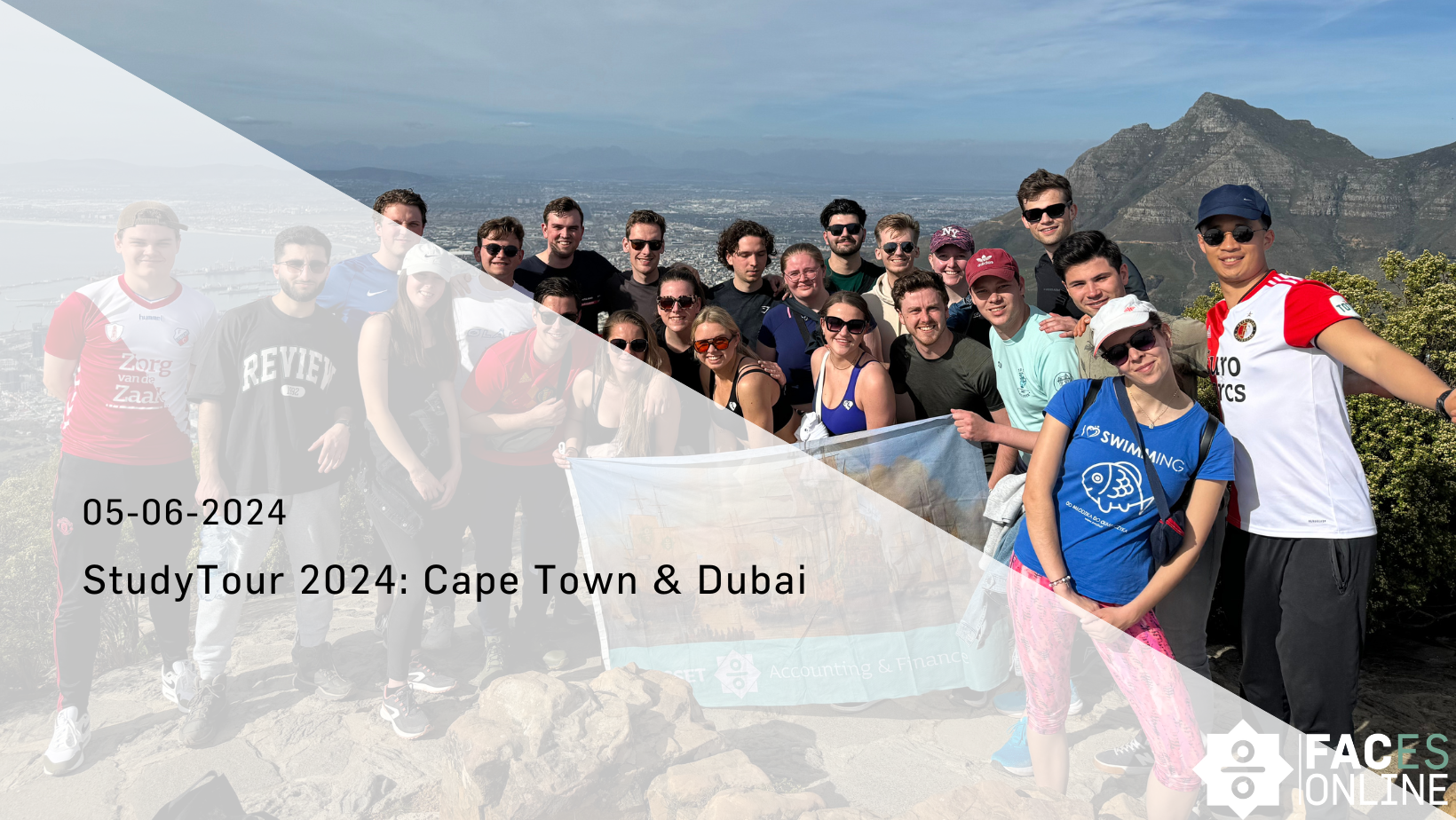
Study Tour 2024: Cape Town & Dubai
Capte Town It all started this year on Monday, April 29, we gathered at Tilburg central station, where the bus picked us up around 4 o’clock in the afternoon. With 24 people we were complete and ready to go. The bus took us to Brussels Airport where the journey could really begin. In the evening at 21:45 the plane left for Cape Town! After a long trip, with a change of plane in Dubai, we finally arrived in Cape Town. On the way to the hostel, we could already admire the city in its beautiful evening glory. Once we arrived at the hostel, we checked in and had something to eat. After that, most of us wanted to go to bed right away, as the trip was very tiring after all. Our first full day in Cape Town began in the Victoria & Alfred Waterfront district. Here we had a morning of free time to explore the area, some visited the aquarium, and others went shopping. In the afternoon we wanted to go hiking on Table Mountain, unfortunately there was a fire near the route of the hike, so we had to come up with another plan. We decided to hike up Lion’s Head. This hike was tough but once at the top we had a beautiful view! On Thursday in Cape Town, we spent our day at the University of Cape Town. We were warmly welcomed and after an opening talk, we were also given some information about what studying at University of Cape Town is like. Next, we were given a tour of the entire campus, with its many beautiful buildings and large sports fields, not to mention the beautiful views. After the tour we had a delicious lunch and went back to school. Here several more speakers came by with interesting stories. In the evening there was plenty to do in the city because it was First Thursday; so there is a party in the city every first Thursday of the month. This was a great reason for us to explore the evening life in Cape Town! Friday morning, we started our day with a tour to Robben Island. After a nice boat ride, we were given a bus tour of the island. Our guide here shared many stories with us. Once we were back on the mainland, we had something to eat and went on to the Bo-Kaap district. This neighborhood is known for its beautifully colored houses. After shooting many pictures, we went back to the hostel to freshen up. In the evening, most of the group went to eat at a typical African restaurant called “Mama Africa”. Over the weekend we went on a wine tour, this of course cannot be missed when you are in Cape Town. We also went along the Cape of Good Hope, and visited Boulders Beach where we could see penguins. Of course, the nightlife was also explored further this weekend. Unique opportunity After a great weekend, we went to KPMG Cape Town on Monday morning. Here we had a tour of the office followed by a fun, interesting presentation about the economy in South Africa, as well as “fun facts” and “snack history” of South African culture. After this instructive morning, we had some free time in the afternoon, some went up Table Mountain, one by cable car and the other on foot, unfortunately it was very cloudy when we reached the top. We ended the evening with a delicious dinner. Our Tuesday morning began quietly with some free time. We scored some souvenirs and had a nice lunch. In the afternoon we visited the consulate. Here we had an interesting afternoon where we could ask many questions. In the evening, we all had a last dinner in Cape Town at a delicious tapas restaurant. Our last morning in Cape Town began quite spectacularly for some. Part of the group went skydiving, because how often do you get this opportunity? The same morning, we also visited the Diamond Shop, where we got a tour and could ask all our questions for the research. In the afternoon it was really time to leave Cape Town and we flew to Dubai around 18:00. Dubai Thursday in the early morning we arrived in Dubai, once we arrived at the hotel it was still way too early to check in, so we all went to rest at the pool on the top floor of the hotel. Just recovering after such a restless night. From 2 p.m. we could check in, and the rest of the afternoon everyone did their own thing. In the evening, we divided into smaller groups for dinner and then went to bed in time for a good night’s sleep. Friday morning began with a trip to Mars, a hearty company in the FMCG industry. Once we arrived at Mars, we were welcomed with a delicious breakfast buffet. After this, in addition to a presentation from the company itself, we also received presentations from partners including ING and Dubai Holding. It was certainly an interesting and educational morning. In the afternoon everyone had free time again, a few went out to see some more highlights of the city, but most of the group ended up at the beach, where we were also able to admire the sunset. All in all, it was another successful day. The weekend in Dubai arrived. On Saturday we had planned a visit to the Burj Khalifa, we went all the way to the 125th floor and were able to see a beautiful view here. We also took this day to visit the Dubai Mall and all the craziness that can be experienced here, including a large aquarium. Of course, we also had a chance to admire the fountain show, which takes place right next to the Mall. After an afternoon of walking and shopping, we went back to eating scattered throughout the city. Some of us ate at restaurants around and in the
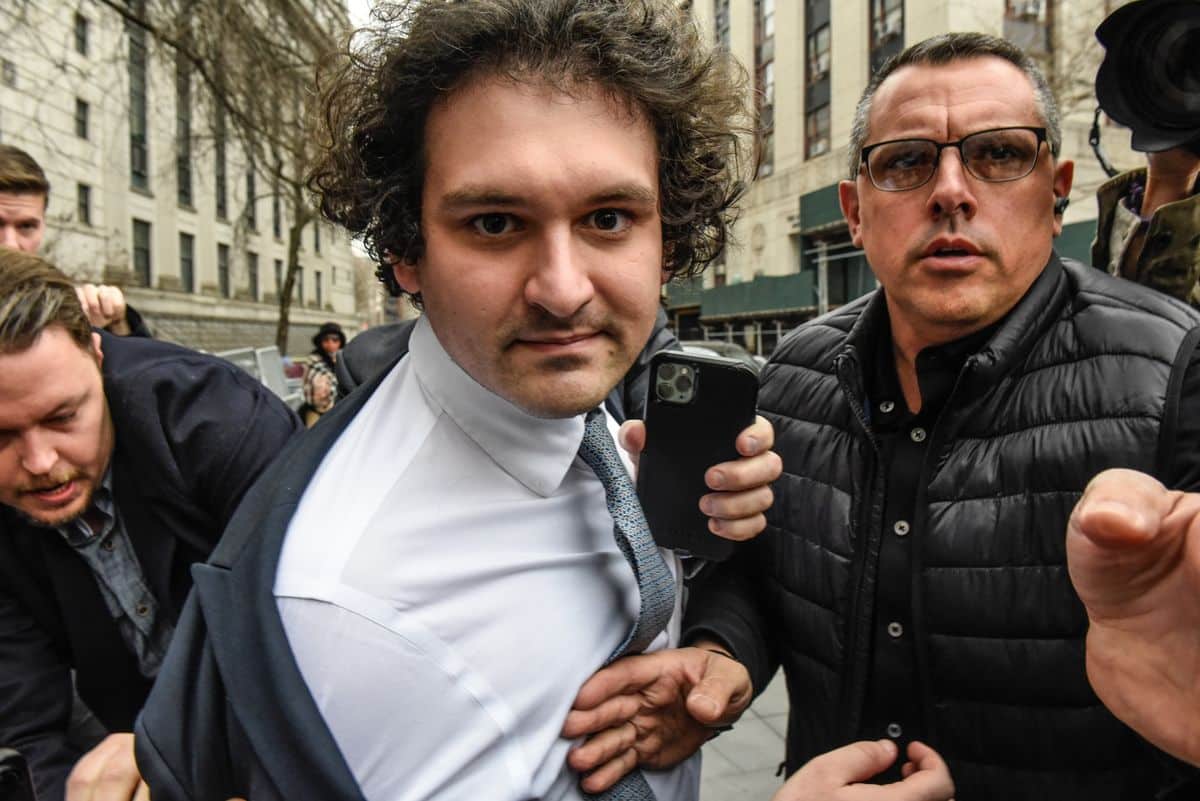
A “genius” fraud: the story of Sam Bankman-Fried
Sam Bankman-Fried’s life began promisingly. He graduated from the prestigious MIT in 2014 with a bachelor’s degree in physics to join the Center of Effective Altruism. This organization consists of the following idea: the first part of life is about making as much money as possible, and in the second is this money should be donated to good causes. Bankman-Fried promised that when he will make a lot of money, he will later donate these funds aggressively. At the Center of Effective Altruism, Bankman-Fried meets Tara Hedley, with whom he founded Alamada Research in 2017. With this hedge fund, he earns a lot of money through arbitrage in a short period with which he could eventually fund FTX. What is FTX? In 2018, the platform FTX became a reality. FTX functioned as a crypto exchange. Here it was possible to trade in the best-known cryptocurrencies (including its own token FTT), NFTs and futures. In addition, it was possible to trade with a high leverage position. The platform was already growing rapidly; for example in 2020, $385 billion in cryptocurrencies was already being traded. “Built by traders, for traders” was the motto. Thanks to its user-friendly website, many said it was the best platform to trade cryptocurrencie s. That same year, FTX acquired a majority stake in Blockfolio, an app that allows you to track the value of your crypto portfolio. It later turned out that 94 percent of this deal was paid for with FTT. Brand awareness also grew as a result of the many commercials on television and during the Super Bowl, which featured several celebrities. Bankman-Fried himself got regular publicity and was even on the front page of Forbes. This gave people more confidence in the platform. However, this trust soon came to an end. “Sam Bankman-Fried is one of the most sensational stories in the history of capitalism.” Michael Lewis The collapse While on paper Alamada Research and FTX are two different companies, in practice it turns out differently. In fact, Alamada Research’s balance sheet shows that the company owns a lot of FTT. While this is not illegal, it does show that Alamada Research relies heavily on FTX. This shows that the token is not decentralized, which is what it is supposed to be. As mentioned earlier, FTT is the token of the exchange FTX; owners of this token pay fewer transaction fees. Sam Bankman-Fried regularly signaled his confidence in FTT by often indicating via Twitter that he was buying the token at a later date. Because Alamada Research did not indicate how much FTT they had, price manipulation was possible. Sam Bankman-Fried allegedly directed Alamada to purchase large numbers of FTT when the price fell in order to prevent a further decline. The company also even used FTT as collateral when raising new loans. “I thought he was the Mark Zuckerberg of crypto, but is he now the Bernie Madoff of crypto?” Anthony Scaramucci In 2022, Alamada’s main lenders went bankrupt. To make up for this shortfall, Bankman-Fried decides to allocate customer deposits on FTX to Alamada. To make matters worse, Binance CEO Changpeng Zhao (better known as CZ) decides to liquidate all FTT on Binance. When the price of FTT falls by more than 75% in 2022, there is great cause for panic. What follows is a bank run, with customers of FTX trying to withdraw their positions from the exchange. However, these positions are not on the exchange, as it has thus used to cover deficits on Alamada. The collapse is complete on November 11th, 2022, Alamada Research and FTX are both bankrupt. A week later, Bankman-Fried indicates in an interview with CNBC that it was “not his intention to scam others” and that he would “handle some things differently now.” Sam Bankman-Fried is subsequently arrested and faces a 25-year prison sentence. In total, former FTX customers are missing more than $8.9 billion. What started as a fascinating story involving charitable donations, ends up being one of the biggest scams of all time.
From Strategy to Integration: Process, Skills and Opportunities in M&A
In the realm of investment banking, few areas offer as dynamic and impactful a career as mergers and acquisitions (M&A). In our previous article, we explored the various ‘front office’ careers available after earning a finance master’s degree, highlighting the significant role M&A plays within the investment banking sector. This article delves deeper into the intricacies of M&A, shedding light on its processes, the essential skills and backgrounds beneficial for success in this field, and the prospective exit opportunities it offers. Processes in M&A The M&A process is intricate and multifaceted, typically involving the following stages: Strategy Formulation It begins with strategic planning, where companies identify their objectives for pursuing an acquisition or merger. This stage sets the foundation for the entire process. Target Identification Companies or advisors search for and assess potential targets that align with the strategic goals set forth in the initial phase. Due Diligence A critical phase where detailed investigations are conducted to confirm and validate all material facts regarding the target company, including financial, legal, and operational aspects. Valuation and Deal Structuring This involves determining the value of the target company and structuring the deal in a way that meets both parties’ objectives, taking into consideration financial, tax, and legal implications. Negotiation Parties discuss and agree upon the terms of the transaction, aiming to reach a deal that is beneficial for both. Integration After the deal is closed, the focus shifts to integrating the acquired entity into the buyer’s operations, a complex process that can determine the long-term success of the merger or acquisition. Each stage of the M&A process attracts professionals who have the requisite skills that thrive under specific challenges. For instance, the meticulous and skeptical nature required for due diligence contrasts with the visionary and decisive traits that strategy formulation demands. Similarly, the negotiation stage benefits from resilient and persuasive individuals, while integration requires organizational savvy and empathetic professionals. A career in M&A opens doors to numerous exit opportunities, as the skills acquired are highly transferable and valued across industries. . Required Backgrounds and Skills A career in Mergers and Acquisitions (M&A) is highly dynamic and requires a broad set of skills that can be often cultivated through diverse career experiences. Some of these career experiences include: Corporate Finance Working in a corporate finance department offers insight into how businesses manage their finances and make strategic decisions. This experience is invaluable for understanding a company’s financial health and identifying potential M&A opportunities that can create value. Strategy Consulting Consultants who specialize in corporate strategy work closely with companies to identify growth opportunities and operational efficiencies. This experience allows them to assess how potential mergers or acquisitions could fit into a company’s overall strategy, making it a valuable background for M&A. Private Equity & Venture Capital Professionals in private equity or venture capital develop a keen eye for valuing companies and identifying potential investment opportunities. Their experience in assessing companies’ growth potential and strategic fit is directly applicable to M&A. In general, the M&A sector is known for its demanding yet rewarding nature. Professionals often work long hours, especially during the closing phases of a deal, which can be both exciting and exhausting. The fast-paced environment requires a high level of commitment, resilience, and the ability to thrive under pressure. Thus, having a high level of resilience and stress management is a trait that is often key for success in the M&A sector. Equivalently, commitment and a strong work ethic are non-negotiables in M&A. The long hours and fast-paced environment demand professionals who are not only passionate about their work but also dedicated to seeing projects through to completion. Moreover, the most successful M&A professionals tend to be those who can balance their technical expertise with social adeptness. The ability to analyze a company’s financial health and then persuasively articulate the value proposition of a deal requires strong abilities in number crunching and relationship building. This is especially critical during negotiations, where understanding the nuances of both the financial details and the counterparty’s motivations can lead to more favorable outcomes. The client interaction aspect of many M&A roles also highlights the importance of interpersonal skills and being able to engage effectively and empathetically. Despite the challenges and the dedication required, the intellectual stimulation, exposure to high-profile deals, and the opportunity to significantly impact corporate landscapes make M&A a highly sought-after career path. This unique combination of high stakes, intense learning opportunities, and the chance to shape industries attracts some of the most brilliant and ambitious individuals in the business world. A career in Mergers and Acquisitions (M&A) is highly dynamic and requires a broad set of skills that can be often cultivated through diverse career experiences. Exit Opportunities A career in M&A opens doors to numerous exit opportunities, as the skills acquired are highly transferable and valued across industries. This is one of the reasons why many are drawn to M&A. Gaining experience in the field makes professionals highly versatile and adaptable to various roles across the business spectrum. Some of these skills include the ability to navigate complex negotiations, understand intricate financial structures, and drive strategic decisions – all of which equip M&A professionals with a unique perspective on business operations and strategies. Corporate Strategy Transitioning into corporate strategy allows M&A professionals to apply their analytical skills and strategic foresight within a corporate setting, often in roles such as Chief Strategy Officer or strategic planning director. These positions involve identifying growth opportunities, leading market analysis efforts, and developing long-term business plans. The experience in M&A equips professionals with the ability to not only devise strategies but also to understand the practicalities of implementation and the potential impact on the company’s financial health and market position. Private Equity and Venture Capital In PE and VC, the skills acquired in M&A are directly transferable and highly valued. Professionals stepping into this domain typically engage in sourcing and executing investment opportunities, managing portfolio companies, and devising exit strategies to maximize returns. The valuation expertise, due diligence
