


For this week’s interview in Faces, we had the opportunity to speak with Indy van Heijst, a 23-year-old master’s student in Accountancy from the Netherlands. Indy is currently spending a semester abroad at Shenandoah University, a small institution located in Winchester, Virginia, just 1.5 hours from Washington, D.C. Motivated by her curiosity about American universities, Indy decided to add this semester abroad to her program through ISEP, an organization that connects students with global study opportunities. Despite some initial challenges, such as transitioning to online classes and adjusting to the campus culture, Indy is embracing the American experience and looking forward to exploring the U.S. during her stay. Read on as she shares insights into student life in America, cultural differences, and her travel plans. How does university life in the USA differ from what you experienced in the Netherlands? Perhaps due to its size, with approximately 4,000 students, Shenandoah University offers a unique academic environment characterized by small class sizes. All of my classes accommodate a maximum of 15 students, and attendance is mandatory for all lectures. Another change I have experienced is the prevalence of numerous small assignments. While at Tilburg University I typically had one final exam and one group project, at Shenandoah University I have almost weekly quizzes and assignments for each course. Additionally, as previously mentioned, I reside on campus in dormitory accommodations. One notable difference from the Netherlands is that I share a room with another person, which is an integral aspect of the American university experience. Luckily, my roommate is very nice and we have already bonded. I also have a meal plan that includes 18 meals per week, which allows me to enjoy meals in the dining hall or at three small restaurants on campus—Moe’s Southwest Grill, The Spread, and Bento Sushi—where I can order food. What has been your favorite aspect of studying in the USA so far? Especially interesting to see was the official moving-in date. As international students, we arrived on campus earlier than the majority of students due to two additional orientation days that provided information about the university, our visas, and various other topics. On the official move-in day, student-athletes assisted the incoming freshmen with their belongings, creating a welcoming environment. Additionally, the marching band and cheerleaders were present, contributing to a vibrant atmosphere with their performances. How do you find the academic workload compared to your university back home? Thus far, I find the academic difficulty to be lower compared to Tilburg University. While the overall workload may be slightly higher due to the numerous weekly assignments, the complexity of the material is noticeably less challenging. Additionally, I expect that the workload at the end of the semester will be lighter compared to what I experience at home, particularly since not all courses conclude with a final exam. What aspects of American culture have you found most surprising or interesting? Many aspects of American culture have aligned with my expectations. For example, the presence of the marching band and the prominence of athletes on campus are very much part of the experience. Additionally, most students dress quite casually. It’s common to see athletes wearing sports attire or t-shirts representing their respective sports. And don’t be surprised to see people wearing pajamas on campus. Especially in the dining hall when getting food. The most surprising thing is that there is not really a drinking culture at this university. Since the legal drinking age in the U.S. is 21, all university-sponsored activities are alcohol-free. In my opinion, as well as that of a few other European students, this made some of the orientation activities feel somewhat bland or less engaging. This is the downside of studying at a small university, because I would have loved to see and experience how that is. Moreover, there aren’t really any clubs or good bars in this town. Additionally, the town itself lacks vibrant nightlife, with very few clubs or bars available. What challenges have you faced while adapting to life in the USA? The biggest challenge I have encountered is meeting new people. So far, I have primarily connected with other international students, as they tend to be more open and approachable compared to American students. I was also somewhat unfortunate in that all of my classes were transitioned to an online format. Due to low enrollment in the face-to-face versions—typically only two or three students—professors opted to conduct the courses entirely online. This has made it more difficult to engage with others and build connections. However, this issue seems specific to MBA courses, where many students are slightly older and working full-time. For the four other exchange students taking undergraduate courses at the university, all classes are still held on campus. Fortunately, the university organizes several weekly activities, including shopping trips, hiking excursions, yoga, dance classes, and more. These events provide some opportunities to meet new people and foster connections. What skills or lessons have you learned that you didn’t expect to gain from this experience? One thing I’ve come to appreciate more is the public transportation and infrastructure in the Netherlands. In Winchester, commuting is quite challenging. It is evident that America is designed with car ownership in mind. There are few footpaths, and in some areas, they abruptly stop, making it difficult to walk to places like grocery stores or shops. For example, while there is a gas station nearby, the closest grocery store is a 20- to 25-minute walk. Additionally, most stores here are surrounded by large parking lots, which means you have to navigate through several of them when moving from shop to shop. This makes getting around without a car quite inconvenient. Luckily, since I have a meal plan, I don’t really need to buy a lot of things. Have you had any moments of homesickness? How did you cope with that? I did have a brief moment of regret after arriving. This feeling was mainly due

Choosing a Minor during the Bachelor Business Administration & IBA
For the Dutch version, click here The study Business Administration introduces you to many different facets of a business. The four pillars that the study mainly focuses on are accounting, finance, marketing, and management. However, this wide range of subjects can also result in students not seeing the wood for the trees anymore, as most of the time, not all the courses spark their interest. To prevent this, Tilburg University allows students to choose their own courses during their minor, in a direction that interests the student the most. This article explains the rationale behind students’ choices for both the Accountancy minor and the Finance minor at Tilburg University. Various options In the first semester of year 3, business economics and IBA students have various ways to fill their first term. You can go on exchange abroad to a partner university, do an internship or take a minor at Tilburg University. All these options have their own added value. In exchange, you develop certain independence and learn to cope in an unfamiliar, international environment. If you are curious about the business world and want to gain your first experience here early on, an internship may be the perfect opportunity for you. If these options do not appeal to you, there is the option of taking a minor at Tilburg University to complete several courses of your choice. For both Accountancy and Finance, the university has compiled a minor that focuses on one of these subjects. If a student is interested in more than one of these subjects, they can also choose to compose the minor themselves. Minor in Accounting The minor in accounting focuses on the “language of business”, the financial audit, and management accounting. During this minor, students take three courses: Auditing & Accounting Information Systems, Intermediate Financial Accounting, Intermediate Management Accounting. Bo Janssen chose this minor during her third year as a Business Administration student: “I always found the accounting-related courses given during the bachelor’s degree interesting and was curious whether I might want to do something with this later on.” According to Bo, the subjects that came along with this did make the field of Accountancy a bit clearer: “The minor consisted of three subjects, each covering a different topic within Accountancy. You get, just a bit more detailed than in the rest of the bachelor, a picture of what Accountancy is really about.”However, according to Bo, there were also some disadvantages about the minor: “I did find it difficult to judge from the theory of the minor alone whether I would actually like the profession of accountancy. Therefore, I think it’s good to discover what the field of Accountancy looks like in practice, to really experience where you could end up.” In addition to the three Accountancy courses, the minor does require the completion of the required 30 credits, which means choosing at least two additional courses. Bo did this with an eye to the future: “Because I was thinking of taking the master’s in Accountancy after my bachelor’s, I chose to take two deficiency courses in addition to the required minor courses. You have to pass these deficiency courses before you start the postmaster. That way I didn’t have to take them into account later in my studies.” Meanwhile, Bo has started the master Accountancy: “Now that I have started my master Accountancy, I notice that I encounter several things that I recognize from the Minor. Although you certainly don’t need the minor courses as a building block for the master, it is nice to see different concepts from the minor come back and be dealt with more extensively this time.” Minor in Finance The Finance minor dives deeper into the content of the courses Finance 1 and 2 of the IBA and Business Economics bachelor’s degree. The focus is on investments as well as valuing and assessing financial decision-making. Anne Kemps and Sjors Seinen both chose to follow this minor. Anne was mainly triggered by her interest in previous courses in the bachelor: “During the first two years, Finance interested me the most, but because the economical scope of the bachelor is very wide, I could only follow a few Finance courses. Therefore, I chose to follow courses from the minor in Finance so that I could get a better understanding of this subject, as this would enable me to decide whether I wanted to delve deeper into this field during my master’s.” The Finance minor also consists of three courses: Financial History and Intermediation, Financial Management, and Risk Management. Sjors was able to confirm his interest in Finance while following these courses: “Whereas Financial History and Intermediation was primarily focused on theory, the other two courses directed a great deal of attention to practical applications. After covering the basic concepts comprehensively during the first few weeks, I started to connect underlying principles and better understand financial markets than beforehand. As we dove deeper into the course material, I became increasingly interested: concepts such as asset-pricing models and derivatives motivated me to go beyond the teaching materials to find out more, which is something I had never done before. This spike in interest, primarily fuelled by Finance minor curriculum, led me to believe that Finance is my passion.” As for Anne, her interest in Finance was also confirmed, resulting in her choice to start the Master Finance: “In the Master Finance I now notice that the same topics are brought up again. You are not expected to know the subjects from the minor, nor are they specified as required subjects. It is therefore not necessary to take the minor if you want to start the master, but it already gives you a lot of insights into the subjects that will also be dealt with in the master.” All in all, as a business economics student in year three, you are given multiple options for the first semester. Besides broadening your horizons abroad or doing an internship at a company to gain practical experience, you

Exchange: an (un)affordable experience?
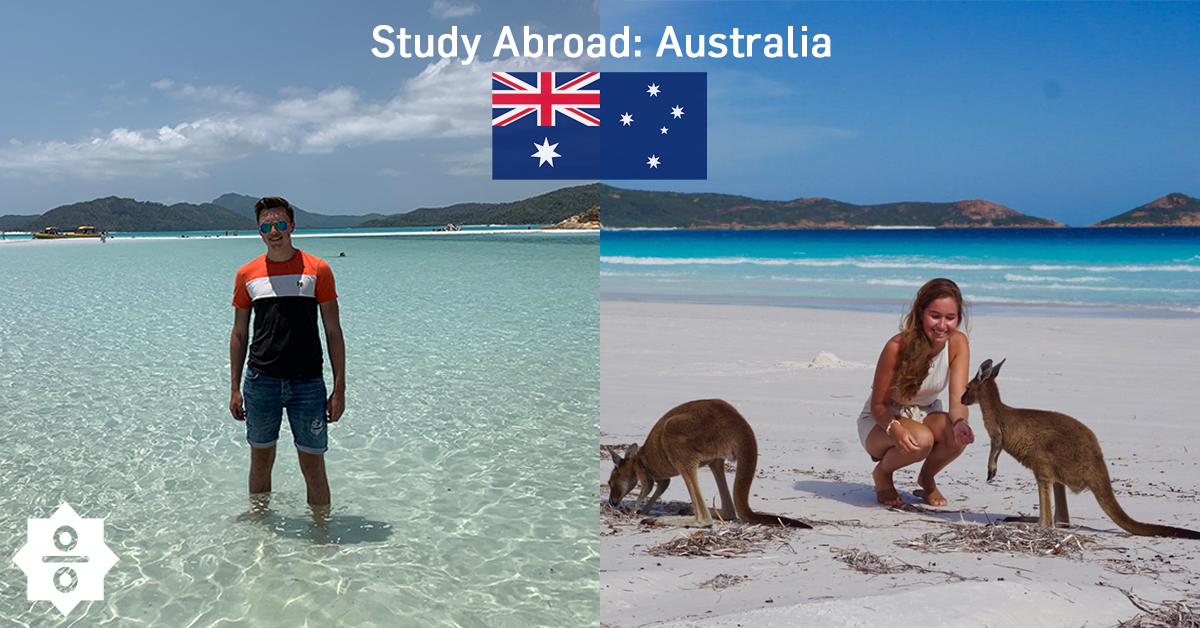
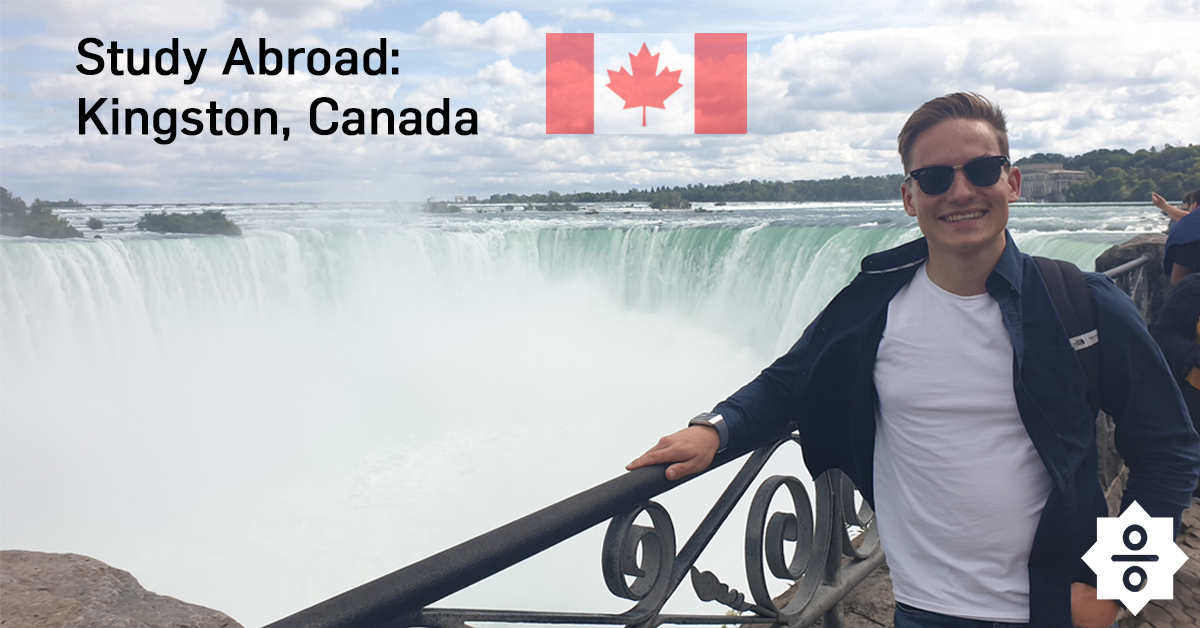
Studying for a semester in a foreign country is one of the best and most valuable experiences in a student’s life. It gives you the possibility to study at a different university, yet that is not all: getting to know people who become friends for the rest of your life, exploring a new country, and planning spontaneous trips are just a few examples of the advantages an exchange semester offers you. In addition, it allows you to further develop yourself; you become more independent and will better understand the culture and norms and values of international students. However, an exchange semester needs to be financed as well. For some students, this is the deciding factor whether they are going on an exchange or not . Therefore, this column draws attention to the financial side of an exchange period. Four students, who each studied in a different country, will share their experiences and dive deeper into exchange expenses. Jönköping, Sweden Romano Ruijtenburg Sweden, and Scandinavian countries in general, are known for being expensive. In 2017, I studied for one semester in Jönköping. A financial windfall when doing an exchange within Europe is receiving an Erasmus grant; I received 270 euros per month (5 months in total). I lived in a spacious apartment in a small flat which I shared with two other international students. Monthly rent expenses were 3300 Swedish crowns, which equals about 330 euros. In Swedish terms this is a fairly low amount, so I was lucky when it came to accommodation expenses. In Sweden, students often receive discounts on gym memberships and public transport; this cost me about 35 and 40 euros monthly, respectively. As expected, everything in Sweden is a bit more expensive compared to the Netherlands. Groceries cost me around 25% more than in Tilburg. However, especially going out is costly in Sweden; in a bar, a beer costs about 7 euros, and in clubs 10 euros. Luckily, student bars and some clubs give discounts to students, yet still going out was way more expensive than it is in Tilburg. During an exchange, chances are pretty high that you will do some trips to different cities and countries. Not surprisingly, these trips bring expenses with them. However, since student organizations often organize these trips, they are still relatively cheap. Altogether, studying in a Swedish city is more expensive than Tilburg. Nevertheless, it is a great country to spend your semester abroad, and if you handle your money and expenses smartly, the additional financial burden remains reasonable. Monterrey, Mexico Roel Elissen I left for Monterrey, Mexico, in July 2018. I studied there for one semester at Tec de Monterrey. Unfortunately, I did not receive a grant to study in Mexico. So naturally, I continued borrowing money from DUO during this period. In Monterrey, I lived in an independent studio with my own bathroom and kitchen. This furnished studio cost approximately 375 euros, which is relatively expensive for Mexican standards; however, in the Netherlands I would have paid at least 1.5 – 2 times that amount for such a studio. It would have been possible to find a room costing 250 euros, yet that would have been less luxurious than my studio. Life in Mexico is way cheaper than life in the Netherlands, such as lower grocery expenses. However, as an exchange only takes half a year, you want to make it an amazing time by travelling and going out. Obviously, this brings expenses with it; especially going out is different than here in Tilburg. In Mexico, you usually go to bigger clubs where you pay quite some money for a drink (or bottle). Altogether, I have probably spent more than I typically do in Tilburg, yet compared to other destinations, Mexico is definitely a great option if you want to go on exchange and limit your expenses. However, you have to be lucky to find a cheap flight! ”However, the experiences that you receive in return are beautiful, and therefore I do not have any regrets from my choice of going on exchange to Australia.” Sydney, Australia Wouter Janssen During my exchange I studied at Macquarie University in Sydney, Australia, from July 2017 till December 2017. I did not receive any grant for my studies in Australia, since studying in that country does not receive any financial support from Tilburg. Of course, you have fixed monthly costs, which were often higher compared to Tilburg. For my room, which had its own shower and toilet and was 16 square meters, I paid about 850 euros per month. Groceries were 200 euros, costs for a sports membership were 40 euros and public transport near 45 euros. Going out and trips cost me approximately 250 euros per month. As mentioned, costs in Sydney were higher than in Tilburg, yet if you go on exchange, you know in advance that it is going to cost more than studying in the Netherlands. However, the experiences that you receive in return are beautiful, and therefore I do not have any regrets from my choice of going on exchange to Australia. Victoria, Canada Maarten Zandvoort In 2017, I studied for 5 months (from August till December) at the University of Victoria on Vancouver Island, Canada. Unfortunately, I did not receive a grant, since there were no specific grants available for Canada. Some of my fixed expenses were the following: accommodation costs were approximately 600 euros (900 Canadian dollars). I lived in a one-person studio, and the monthly expenses included gas, water, and electricity costs. Groceries cost me about 220 Canadian dollars per month, which is roughly 150 euros. Another cost was my gym membership, which cost 30 Canadian dollars. Additional costs came from travelling (in total, I traveled five times), going out (which I did almost every weekend) and activities such as sports games. This cost me on average 1000 euros per month. Altogether, I estimate that my expenses were approximately 2000 euros per month. Hopefully, the above information provides a useful insight into the expenses that are
