


The rise of Central Bank Digital Currencies (CBDCs) raises fundamental questions about the role of commercial banks in our financial system. These digital currencies issued by central banks combine the reliability of government-backed money with the efficiency of modern payment technologies. Central banks around the world are exploring the feasibility of a CBDC, as seen in China and the European Union. This article examines what CBDCs actually are, how they can be implemented, what advantages and risks they bring and what their potential impact is on the survival and function of commercial banks. What are CBDCs Central Bank Digital Currencies are digital forms of national currency that are issued and guaranteed directly by the central bank. This makes CBDCs a secure alternative to traditional means of payment such as cash and the money held in commercial bank accounts. In the current system commercial banks manage the money of citizens and businesses, which is only indirectly linked to the central bank. With CBDCs, the risk of bankruptcy of intermediary commercial banks is removed since the central bank itself guarantees the value. Thanks to recent innovations in digital technologies such as blockchain and mobile payments it has now become technically possible to introduce national digital currencies. Direct or indirect The implementation of a CBDC can take place in two fundamentally different ways: direct or indirect. The difference lies in the level of involvement of commercial banks in their contact with the end user. In a direct model, citizens and businesses have an account or digital wallet directly with the central bank, while in an indirect model commercial banks remain the main point of contact for users. Direct In the direct model, the central bank itself becomes the financial service provider for citizens and businesses. Consumers would open a digital wallet with the central bank where they store their digital money. All transactions would then go directly through the central bank’s network without the involvement of a commercial bank. This would mean the central bank is not only responsible for issuing money but also for maintaining accounts, customer service, and transaction processing. Although this model offers maximum transparency and control for the government and could provide more stability in times of crisis, it also carries significant risks. Commercial banks would largely be sidelined, which could lead to a decline in competition, innovation, and customer-focused services. It would also mean an unprecedented expansion of the state’s role in payment systems. Indirect In the indirect model, also called the two-tier model, the existing financial ecosystem largely remains intact. The central bank creates the digital currency and guarantees its value, but distribution and customer contact are handled by commercial banks or other recognized financial institutions. Citizens would still have a wallet or digital account with their own bank, but the underlying digital euro or currency would remain a direct claim on the central bank. This model is considered more attractive by many central banks including the European Central Bank, as it provides stability while respecting the role of existing banks. It avoids a direct threat to the current banking system, encourages cooperation between the public and private sectors, and allows for a phased introduction with room for technical adjustments. The Benefits of CBDCs The Drawbacks of CBDCs Examples The Future of Commercial Banks and CBDCs Although CBDCs will play a key role in the future of the financial system, it seems unlikely that a fully direct model where central banks themselves carry out all financial services will become the standard. This is because such a model would represent a major shift from the current banking system. Commercial banks fulfill an essential role as intermediaries between the central bank and the public. Many central banks such as the European Central Bank prefer an indirect model. In this model the distribution of digital currency continues to take place via commercial banks. This offers the necessary stability and keeps competition and innovation within the private sector intact. The role of commercial banks therefore appears to be largely secure. They can continue to focus on their traditional tasks such as providing loans, offering customer service and developing financial products. At the same time commercial banks can improve their services by collaborating with the new digital infrastructures made possible by CBDCs. However, the future of commercial banks depends on their ability to adapt to digitalization and take advantage of the benefits that CBDCs bring. The coming years will reveal how the financial ecosystem continues to evolve. It seems likely that commercial banks will continue to play an important role, albeit in an increasingly digital and technologically advanced landscape. Conclusion CBDCs represent an important development in the financial system. They offer benefits such as more efficient payments, broader access to financial services and greater control for central banks. At the same time, they bring risks in the areas of privacy, cybersecurity, and the role of commercial banks. The success of CBDCs depends on careful implementation and the maintenance of public trust.
The Rise and Fall of AI Wrappers
In a matter of weeks, artificial intelligence took over the world in a way unseen before. With the launch of ChatGPT by OpenAI in November 2022, everyone suddenly had the capability to utilise the power of AI in their work, but also in their personal life. Be it answering a simple question or providing comprehensive insight into programming, there is an AI application that can help you. Due to the open nature of OpenAI, a new business model was enabled called AI wrappers. AI wrappers, which are also referred to as API wrappers or libraries, essentially build on top of pre-existing AI tools like ChatGPT to provide their service to their client. Because a lot of the heavy lifting is already being done by the engineers of these pre-existing AI tools, it has become incredibly easy to set up a business that leverages the capabilities of AI. As one can expect, it did not take long for these businesses to start popping up. While talking about AI, it’s important to note that AI is a very broad term. When a company uses the term AI, it’s just as vague as someone saying “Oh yeah, I invest.”. When talking about the current hype behind AI, it’s mainly about generative AI which uses large language models, of which ChatGPT is the best example. So what do these AI wrappers actually do? AI wrappers build a user interface for consumers and businesses around the generative AI technology provided by e.g. OpenAI, that is more user-friendly and tailored to specific use cases than ChatGPT itself. Therefore, the business of an AI wrapper is built around the tech provided by another company, hence the name wrapper. An example of an AI wrapper could be a tool that can give you advice on a legal document. Here, the AI wrapper could make it easier to provide the AI with the text of the legal document, but the actual advice would be provided by ChatGPT. With the newfound hype behind the technology of AI, it did not take long for investors to follow the hype with their money. Microsoft was well ahead with their initial investment into OpenAI of $1 Billion in 2019, which they have increased to $13 Billion in total as of writing. With the success of OpenAI, many investors have been looking to invest into AI themselves. While many startups have been grappling with the difficulties of securing funding in the current global economic climate, it seems that investors have been burning holes in their pockets to invest into AI startups. Despite the 48% decline in venture capital investment to $173.9 billion in the first half of 2023, over $40 billion was invested into AI startups. However, the cracks are starting to show. Due to the ease of create an AI wrapper, especially those that only provide little added value, the market has become highly saturated. It has become increasingly more difficult for AI wrappers to generate revenue and cover their expenses. This is mainly caused by the lack of almost any barrier to entry, so much so that many AI wrappers have to deal with free and open-source alternatives. One especially big example of this is the newly unveiled feature of ChatGPT in which anyone is able to create custom versions of ChatGPT tailored to their own specific needs- called GPTs. It becomes immediately clear that these custom versions of ChatGPT are essentially AI wrappers, however, anyone will be able to make them as no coding will be required to make them, and they can even be sold to everyone on the GPT store. While this feature is not live yet, one can already see what impact this will have on AI wrappers. Once customs versions of ChatGPT become available, it will be the final nail in the coffin for many AI wrapper businesses as the last sliver of a barrier to entry has evaporated. While the AI industry as a whole will continue to flourish as the technology continues to develop, it will only be a matter of time until AI wrapper businesses will start to crumble one after the other. With that, the investments in these AI wrappers will turn out to be worthless. That is not to say that there won’t be any successful businesses that can be seen as an AI wrapper, but they will be few and far between. As a result, many investors will have fallen victim to their fear of missing out when the hype around AI started building.

Working at Rembrandt | Mergers & Acquisitions
For the Dutch version, click here. Who are you? My name is Tim Foesenek. I grew up in Rijsbergen and have lived in Tilburg since the beginning of my student days, where I have continued to live ever since. After completing the masters in Finance and Supply Chain Management, I started working at Rembrandt M&A (after traveling for a month). How did you come into contact with M&A? Initially, I had never looked into M&A specifically. Towards the end of my studies it started to become somewhat clear which aspects I found interesting. Figures is an important one of these, but in doing so I wanted to be in contact with the business world. After many introductory meetings with different types of companies (including corporates, the big 4 and smaller business service providers), it turned out that M&A suited my preferences very well , because of the dynamic work and the combination of business and personal aspects. I started to look into this further and it turned out that M&A in the midmarket appealed to me the most, as it involves a lot of contact with clients. Rembrandt is a big player in this market. With 45 employees it is a small company, but within this specialized market you are one of the largest with such a group. The culture, working methods and training appealed to me the most. To what extent are the aspects of your studies reflected in your work? Although it is often said that you only really start learning in practice, I still use a lot of knowledge I gained during my Master’s in Finance. General knowledge about balance sheets, results and cash flow comes back daily. Subjects like Corporate Governance & Restructuring and Corporate Valuation even show directly what some of our work involves. The more quantitative subjects come back less, but have shown me how the market views risk thinking. That helps when there is a financial buyer candidate, for example. In addition, it is also common to work with negotiated options, so knowledge about these types of aspects comes in handy. The M&A profession Rembrandt’s role can best be summarized as process support for mergers and acquisitions. In the majority of our assignments we are on the sales side, where we can guide and advise our clients from preparation to closing. The preparation phase consists of valuing the company. This helps us get a good feel for the business and also gives the sellers an indication of the value. Based on this, if the client decides to pursue the process, we prepare an information memorandum and start identifying potential candidates. Once we start approaching candidates, the sales phase has begun. In it, we maintain contact with candidates, coordinate contracts and often conduct negotiations. This phase is very challenging both in terms of content and planning. What is your role in the process? As a consultant, I work with a manager and possibly a second consultant on a potential transaction. In the preparation phase, I take on most of the work and often spar with the manager about my progress and questions I have. In the sales phase, we work more closely together. In this, my role varies per project, but I am involved in every phase and also get a lot of space to make an active contribution. Typically, I have about 5 active projects as well as several projects that are in the preparation phase or temporarily paused. What is the most challenging part of your work at Rembrandt? The most positive thing is the variety and dynamics my job brings me every week. I talk to a lot of people and almost every project has one or (many) more surprising twists and turns. Very challenging, but this makes me go home feeling fulfilled. Besides the content, there is also a lot of challenge on a personal level. I communicate with many different people with diverse backgrounds. And although we often share positive news, of course it sometimes happens that the client had different expectations. It can be tough to deal with this, but these are the moments when I develop myself and learn a lot. What parts of your work are different from what you expected beforehand? The steps of the process largely match my initial assessment. During my first year, I found out a few things that are a little different in practice. For example, the negotiations are often less hands-off than I thought and are usually based on good substantiation. This makes it interesting, because in that case I can have a big impact with my preparations. By the way, this does not exclude the occasional heated negotiations. Working in the office is also much more fun than I had envisioned. We are all in an open space, so you get a good sense of what everyone is doing. We make a lot of phone calls, so you often hear challenging conversations from colleagues, which I learn a lot from. In addition, it is very nice to be able to ask a quick question and it is fun to help others. What do you like about Rembrandt? Rembrandt has both the advantages of a large and a small company. With 45 colleagues there is an incredible amount of knowledge and experience in house and you get to know many interesting people internally. In addition, we are part of Rabobank and have the advantages of a large, professional organization. At the same time, Rembrandt is small enough for you to know everyone and be able to keep up with what is happening within the organization. The culture is accordingly. Everyone is very ambitious and professional and this goes very well together with fun, interest and humor. We do fun activities together, but it is also paramount at Rembrandt that everyone has enough time for their own friends, hobbies and interests.
Working at Bol Advisors
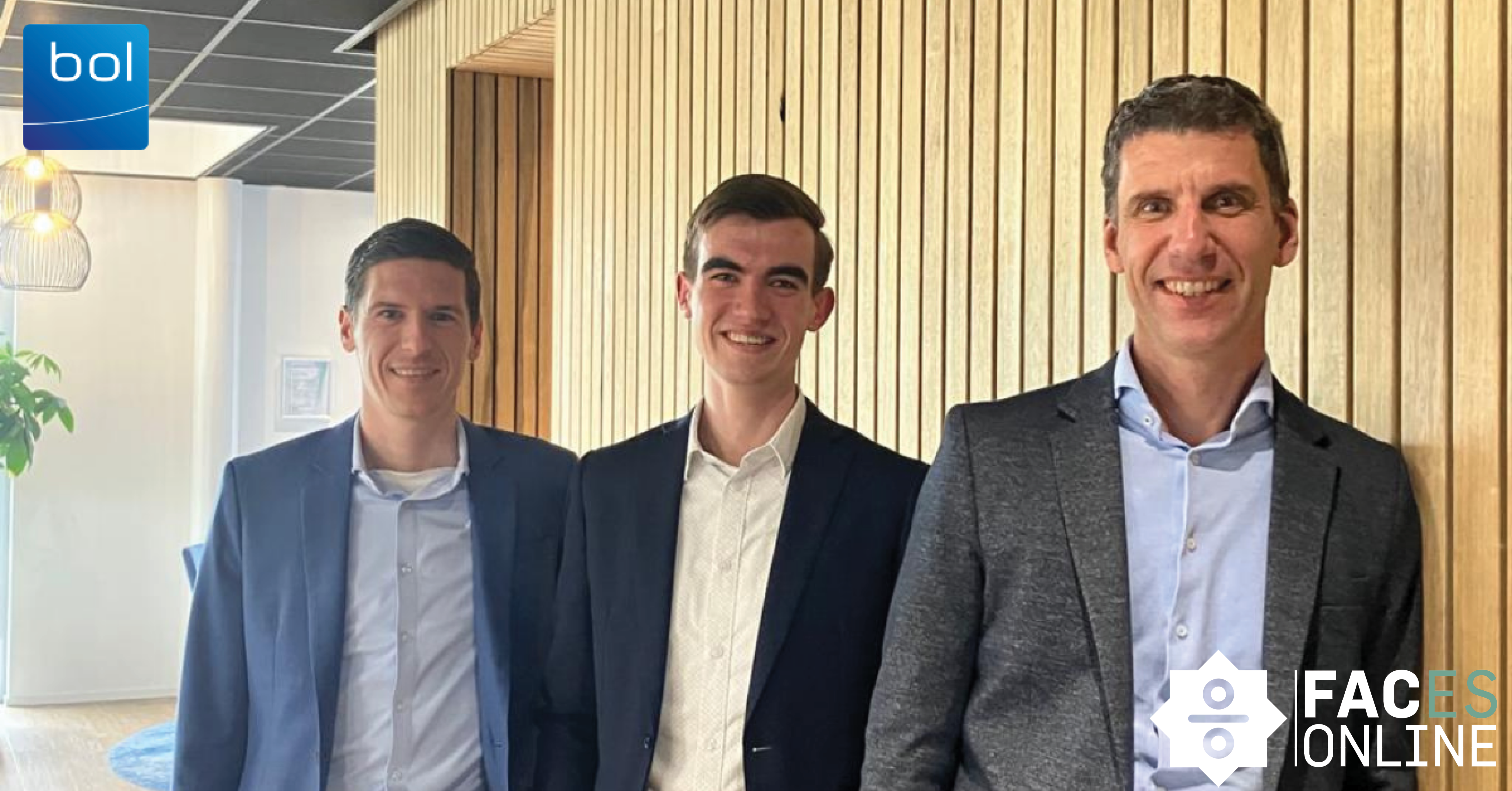
For the Dutch version, click here. At Bol the fraud risk sensors are always on Imagine: one of your customers has a branch outside Europe. An audit reveals that the accounts do not comply with local laws and regulations. External suppliers have made a mess of their accounts. This could mean hefty fines for your audit client, amounting to hundreds of thousands of euros. Now what? Exciting? Not for Harm Thielen anymore. As control manager of Bol Adviseurs, he always has his fraud risk feelers on. Which is just as well, as in the case we described in the introduction: “When we discovered that our customer’s suppliers did not have their administrative affairs in order, we immediately went to investigate. What exactly is going on? How serious is the fraud threat? Was our client aware? If not, should he have been? And, perhaps most importantly: how do we ensure that he still meets his legal obligations?” Relieved In this particular case, Harm and his colleagues connected with a local tax advisor. He confirmed our suspicions: this was fraud. Ignorant admittedly (because the Dutch party was not aware), but the risk of sky-high fines was high. “It would involve tons,” Harm explains. “As an entrepreneur, you’re obviously not waiting for that. We reported our findings to the tax authorities and still paid the amount due. And the customer? He was initially surprised, but also relieved and happy. He experienced the incident as a confrontational revelation.” Audit approach to fraud risks Accounting firms have been required to report on fraud in the audit reports for statutory audits since 2022. In the report, the auditor explains the fraud risks he has identified that could potentially lead to “a material misstatement. He also provides an explanation of the audit procedures and observations made. Mandatory topics are revenue recognition and management override (this occurs, for example, when management breaks its own rules). Transparency “Situations where fraud is suspected are now being ‘disclosed’ through the audit report,” says compliance officer Harold Bruins. “They prove that the fraud risk paragraph in audit reports can be particularly useful. In addition, fraud interviews with clients provide valuable insights. You get a better understanding of the company and you get to know the executives better. The latter, the contact with the client, I find a valuable aspect of our profession. Files are important, but serving clients together with a team of colleagues is what you do it for.” “Files are important, but serving clients is what you do it for.” – Compliance officer Harold Bruins Dynamics of the profession Harm agrees, as does assistant accountant Robin Vreeswijk: “Of course, we often sit behind our laptops, recording our findings in files. But that’s not all. Interacting with colleagues, getting to know clients, investigating cases – that, to me, is the dynamic of the profession.” Harm adds: “Every colleague has a different background and expertise, but we also have a lot in common. We all like to figure things out. It doesn’t matter how complex the financial puzzle is; we keep going until we figure everything out. Getting to a great result together with the client is never boring.” “No matter how complex the financial puzzle is; we keep going until we have figured everything out.” – Controller Harm Thielen About Bol Advisors Bol Adviseurs is an entrepreneurial consulting firm that assists and advises companies on sound business management. The company’s control branch is mainly active in medium and large enterprises (with annual sales up to approximately 750 million euros). Bol Adviseurs has five offices: in Wijchen, Veghel, Venray, Boxmeer and Venlo. Bol Adviseurs employs about 220 employees. Development opportunities Robin joined Bol Adviseurs several years ago. In a short time he climbed from junior assistant accountant to the position of assistant accountant. “A logical route,” he explains. “If you want to grow, there are plenty of opportunities here. Of course, you have to be proactive. If you do and share your dot on the horizon, Bol Advisors will help you shape a development plan. My own dot on the horizon? To become an audit manager, to eventually advance to accountant.” “If you share your dot on the horizon, Bol Adviseurs will help you shape a development plan.” – Assistant accountant Robin Vreeswijk Table Football Incidentally, hard work and relaxing go hand-in-hand at Bol Advisors. Robin: “It is very pleasant here, no matter which office you work in. We enjoy working, but there is also time for relaxation. For example, during the break the soccer table is a favorite.” Bol Advisors also organizes regular activities and outings, such as the summer BBQ, a Christmas dinner and Friday afternoon drinks. “Bol existed in 2022, 70 years. To celebrate this anniversary, we took all 220 colleagues on a weekend to make Rotterdam unsafe,” Harold laughs. “No kidding: the atmosphere at Bol is businesslike, but informal. We work hard, but we do it together, with each other.” Harm sums it up nicely: “If you like dynamics, this is the place to be. We are a professional, but cozy company that is in full swing and where you can’t really avoid the challenge and development opportunities. That makes me feel perfectly at home here for the time being.”
Accounting Expedition 2023: Looking back
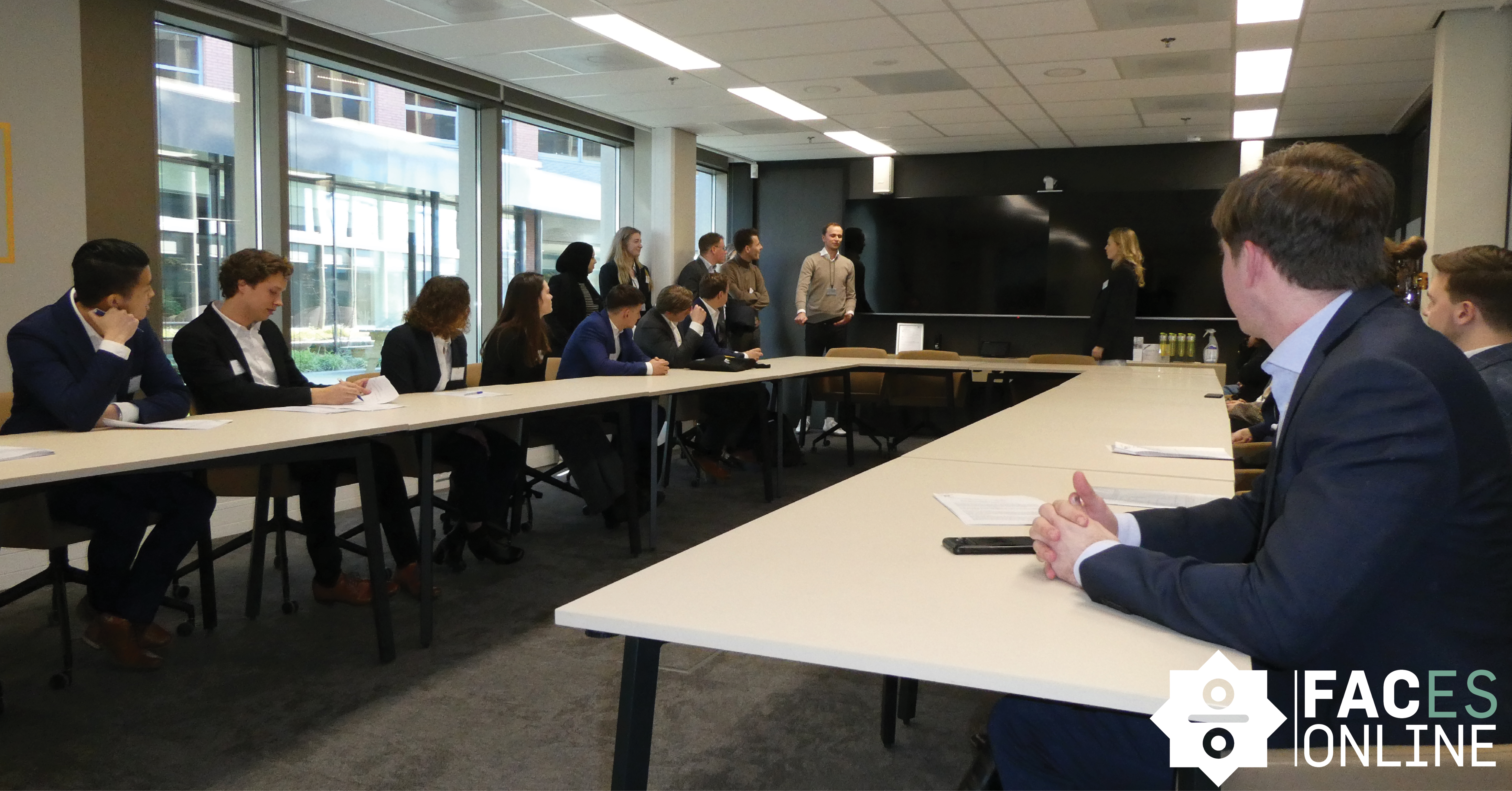
For the Dutch version, click here. On March 1 and 2, 2023, the Accounting Expedition took place. This event allowed a large group of motivated students to visit the Big Four in Accountancy. This way they could discover if a future as an accountant was for them and if so, which firm of the Big Four appealed to them the most. EY On Wednesday morning Ernst & Young, better known as EY, was allowed to kick off the Accounting Expedition. We received a warm welcome at their office, a ten-minute walk from Eindhoven station. There we were welcomed by campus recruiter Lisanne and her colleagues. During the opening, the question “What is your favorite series/movie?” quickly caught our attention. As it turned out, this partner had pretty much played Netflix and thus knew a lot of series. So besides hard work there is definitely time left to relax by watching a good series, was the conclusion. Then we moved on to an audit case. A case that consisted of detecting fraud. We were allowed to request documents and invoices from four different employees of ‘Wokking Good’ in order to discover who had committed the fraud. An even more important question was ‘how was this fraud actually committed?’ In the end, it turned out that the administrative assistant had transferred amounts to her own account. We concluded with a delicious lunch where we had the opportunity to talk to employees for the last time about auditing at EY. KPMG The second office on the first day was scheduled to be KPMG, less than a five-minute walk from EY. There we were warmly welcomed by campus recruiter Thijn and his colleagues and given a presentation about KPMG. There we learned what the opportunities are and what KPMG is all about. A partner also joined us who told a very interesting story about his career in America. When we were saturated with theoretical information about KPMG, we could get started with the case. In this we were allowed to analyze several transactions from an Excel database. From this database we then had to derive transactions that were fraudulent. Here we learned that there were all kinds of metrics and theories that could classify transactions as fraud. We ended the evening in the center of Eindhoven with a well catered dinner. Here we had the opportunity to speak with KPMG employees in a relaxed manner for the last time. Thus, after dinner the first day came to a formal end after which we, together with the participants, concluded the day at the hotel with a small drink. PwC After breakfast at the hotel we were ready for departure. This time PwC was on the program where we could almost roll from the hotel. It was very easy to reach because of its location near Eindhoven train station. In the morning we were welcomed by the campus recruiter Carmen and her colleagues on the top floor of the office. Here we first got a presentation about PwC and what the possibilities are within PwC. We also started with a tour of the office, which was certainly not disappointing. After we had finished the introduction round and the presentation, we could get to work on the case. The case we had to sink our teeth into was about a festival organization. The organization had several problems that needed to be dealt with and it was up to us to solve this as well as possible. For example, one of the questions was “how do you value tickets that each board member gets to give away to family?” or “how do you deal with criticism from local residents and what financial impact does this have on the organization of the festival? After we completed the case, it was time for lunch in town. Here we were just barely buried under the delicious food. All in all, a very successful case and lunch! Deloitte As the last office, Deloitte got to conclude the Accounting Expedition. When we left PwC, cab vans were soon ready to take us to Deloitte as it was unfortunately not within walking distance and public transport was on strike that day. We were well received by the campus recruiter Emily and her colleagues after which we could start with the presentation about Deloitte. Here we learned what is possible at Deloitte and what kind of employees work at this firm. Fortunately, there was no heavy audit case on the program here, but a Business Chemistry test. This reminded us of the DISC test: a personality test based on four colors. Red stands for direct and decisive (“Dominance”). Yellow stands for interactive and inspiring (‘Influence’). Green stands for stable and social (‘Steady’). And finally, blue stands for conforming and correct (‘Conscientiousness’). In this way we found out, through various tests, which personalities we had and in what way you can best cooperate with other personalities. Teamwork makes the dream work’ is an appropriate saying. In this way it also became clear that neurodiversity is highly valued at Deloitte. We ended the day with a well-cared-for dinner at eating café Spijker! So with this last dinner at Stratumseind, the Accounting Expedition 2023 came to an end! The train to Tilburg left late in the evening, after which we were back in what could be called the most beautiful city in the country. We would like to thank all participants, recruiters, employees and the organization for a wonderful edition of the Accounting Expedition. We therefore hope that this event provided new valuable insights to the participants and they are a step further in their career choice!
A board year as External Affairs at Asset | Accounting & Finance
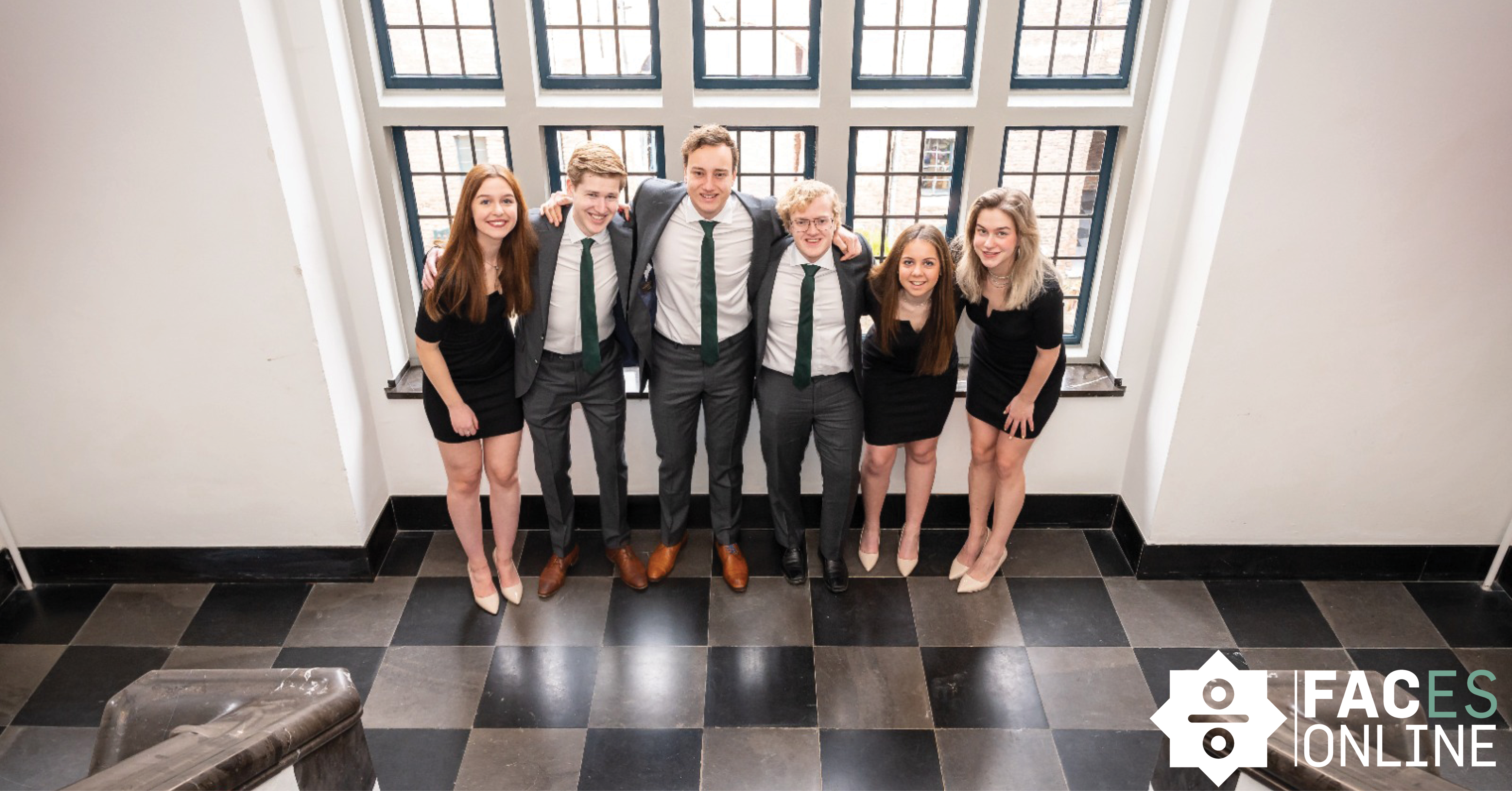
For the Dutch version, click here. As External Affairs, Celine is responsible for liaising with current and prospective partners of Asset | Accounting & Finance. In addition, she coordinates the Accounting Expedition Committee and the Orientation Committee. She is also responsible for organizing the Master Experience Days Accountancy and Finance and for the FinanceDay. In this article, Celine talks about what her position entails and how she experienced a year as External Affairs of Asset | Accounting & Finance. Who am I? My name is Celine van Es and I am 23 years old. I have lived in Tilburg all my life and did my bachelor’s degree in Business Economics here at Tilburg University. In my last year of my bachelor I decided to become active at Asset | Accounting & Finance where I was an active member of the Orientation Committee for my board year. This is one of the two committees that I now also coordinate! Why did I choose to do a board year? Before I became an active member of Asset, I never had a good idea of what a board year at a student union exactly entailed and therefore had never really considered it. When I became an active member of Asset | Accounting & Finance in my final year of my bachelor I quickly got to know a lot of nice people and found out what kind of cool events we organize besides all the informal activities we do. My master’s choice was getting closer and closer and since I wasn’t sure which master’s I wanted to do, I started to consider the idea of a board year. This would be the ultimate opportunity for me to find out which master’s degree suits me, to develop myself both personally and professionally and to boost my CV. What exactly does the position of External Affairs entail? As External Affairs, you are responsible for all business contact and therefore also deal with everything that concerns the partners of Asset | Accounting & Finance. A big part of this is acquiring partners for events and exposure opportunities. When you start your board year as External Affairs, you will visit with your predecessor over the summer to visit all the partners to discuss partnership opportunities for the coming year. This is a fun way to get to know the partners you will be working with that year and to get a good idea of their expectations and goals. At the end of your board year, you and your successor visit all the partners again in the summer and you can reflect together and look back on the cooperation. Besides the company contact you are responsible for keeping the Career Platform Tilburg up to date, where partners can post a vacancy or company profile. In addition, throughout the year you are often asked for advice or help by companies, which sometimes requires some creativity but allows you to actually mean something to companies. This also gives a lot of space for your own interpretation of this function. Point of contact for companies, what else? Besides maintaining good contact with all partners, you also keep yourself busy with other tasks. As External Affairs, you also coordinate several committees and in my case they were the Accounting Expedition Committee and Orientation Committee. The Accounting Expedition Committee organizes a two-day corporate event and the Orientation Committee deals with informal activities and actions within the association. So they are two very different committees, which also makes coordinating them very fun and varied! Besides the Accounting Expedition, you also organize the FinanceDay with a fellow board member. Because you are responsible for the organization, you learn a lot in terms of planning and communication. You also learn how much it takes to organize a great event. In the end, one of the best things about my job is to be able to look back on a successful event where both companies and students were enthusiastic. During such events you also get many opportunities to network with companies and of course you often speak to your own partners. Furthermore, once a week you will also participate in the Acquisition Meeting with all other externals from Asset’s departments. Here you will discuss all external matters of Asset such as the acquisition of new partners or things about the Career Platform Tilburg. Each external also has one or more task forces within the Acquisition Meeting. Mine is General Revenues/New Business Model, where we look at all ways to make money for Asset Tilburg. Here you make sure the brochure is updated, but you also brainstorm on new events and opportunities. What are the main points of development as External Affairs? During a board year you will learn a lot on a personal as well as a professional level. You will definitely face certain challenges where you have to learn not to let stress take over in situations and to keep an overview. You will also learn what it is like to work intensively with a group of people and how important it is to communicate well with each other. We keep each other informed about what we are doing and what we are up against. This way you can keep each other on your toes and help each other out. You also learn that it is important to indicate your limits in time when it becomes too much and to dare to ask for help. As External Affairs I also had to step out of my comfort zone at times because it is a job where you often have to defend certain positions and as External Affairs you are of course in contact with everyone. If you set certain goals for yourself at the beginning of your board year, you can achieve a lot! What I would like to give my successors In the beginning a board year can be quite hectic and you will have to find your bearings. Don’t worry about this. In the
