


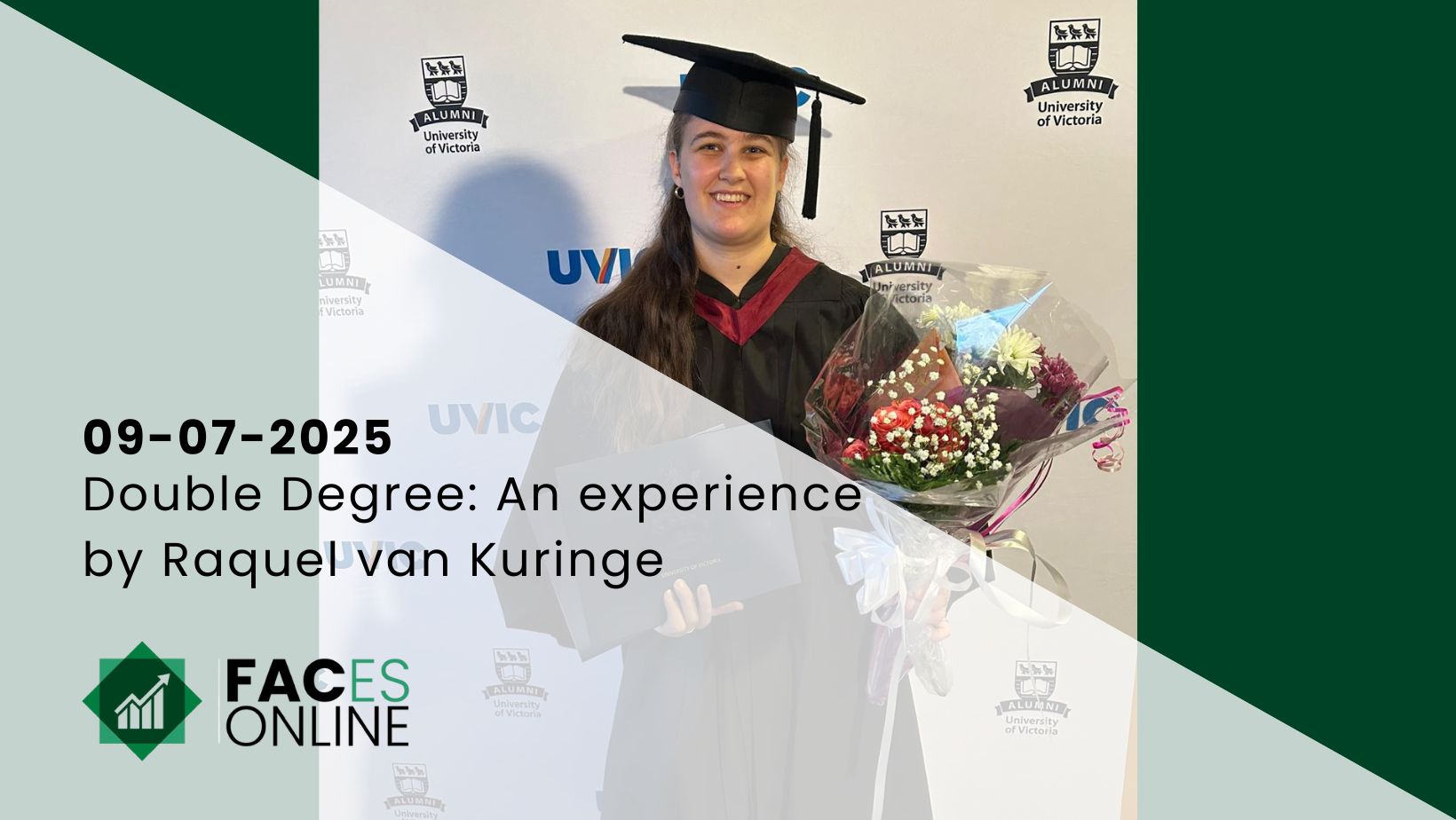
Studying abroad is something many students dream about, but turning that dream into reality can be challenging. There are countless programs, requirements, and decisions to make, which can feel overwhelming at first. Still, for those who take the leap, it can lead to unforgettable experiences, valuable lessons, and lifelong friendships. In my case, I found a unique opportunity through a double degree program that allowed me to study in both the Netherlands and Canada. What followed was a journey filled with personal growth, cultural discoveries, and academic challenges that shaped who I am today. While I was finishing off my last years at high school, the idea of studying abroad started playing around in my head. However, I didn’t know where to start as you cannot easily orientate yourself with the different programs all these universities have to offer. Therefore, I decided to not pursue this at the time and just started looking at Dutch universities. Then I came across a wonderful opportunity in Nijmegen, as they offered a dual degree option. This program would consist of studying two years in the Netherlands and after that two years in Victoria, Canada if I met the requirements. During my time in Nijmegen I had to study quite hard as I had to achieve a 7.0 average score over the two years and complete all the courses. This meant that I was not your typical student, as I did not go out much in the evenings and mainly focused on studying. All my hard work paid off and I was able to go to Canada. Even before I knew I was able to go I had to start a lot of processes already such as applying for my visa. Due to the nature of the study program in Canada I had to apply for both a study visa as well as a work visa. This way I would be able to complete the two internships that the University of Victoria integrated into their program. Once I arrived in Canada, there were quite a few things that I needed to figure out on my own. One of the things that I had to do was set up my own bank account, which was quite an experience as back home my parents had set this all up for me. However, it was in a sense a fun experience as well as it is part of learning new skills and adapting. The same thing applied for my phone plan and grocery stores. As it was a new country for me, I was unfamiliar with all the different brands/companies and their reputations. This makes selecting the right choice somewhat a gamble. On a personal level it was also a challenge to adapt and make friends. In my program I sort of joined halfway through. Most students knew each other already from the first two years and thus had established friend groups. Most people were very welcoming, but it was sometimes hard to really be part of one of these groups. Luckly, I had four other girls that were in the same boat as I was. There were two students from Taiwan and two from China, all from different universities, that started the same dual degree program. They also didn’t know each other yet, which made our first meeting a great moment to bond. I am currently still in contact with them so that is really nice. During the first year I was there our program was divided into five different groups. With the group that you were placed in you had all your lectures with. This made it so that you really got to know all your classmates in this group, but also that you saw the other students less than you might have hoped. This small scale type lectures were also a great way to have a lot of interaction with your professors. They also encouraged this during the lectures by asking lots of questions to different people in the lecture hall. On another note, I did feel like the level of education was sometimes lower than I was used to in the Netherlands. This doesn’t necessarily mean that I think that it was bad, it just felt different compared to what I was used to. During my first full summer in Victoria, it was time for my first internship. As I did not have much work experience at that point it was a bit harder for me to land a position. In the end I ended up working in a gift shop on all different fronts, as a kind of all-round employee. It might not have been the internship that I initially had in mind, but it did teach me a lot about how people in Canada behave. You might not think so because they are both well developed western countries, but social cues do vary a lot. In the Netherlands we are a lot more direct in the sense that we cut to the chase and don’t want chit chat if it is not necessary. An example I have from this is during my lectures. If in the Netherlands, I had a question for my professors I would walk up to them and just immediately ask the question once it was my turn. In Canada, however we would first talk about how the lecture was and how I was doing before I could actually ask my question. It is these small differences that do show that we need to adapt to the country and culture that we live in. In the spring of my second year, I had the opportunity to do another internship in Montreal. This was a great opportunity for me to experience the French part of Canada, as the country of course also has this cultural divide. This was quite hard to adjust to as everything, and I mean everything, was in French. I luckily had a basic understanding of French, as most French Canadians did not really speak

A boardyear as External Affairs Officer at Asset | Financials
Who am I? I am Raquel van Kuringe, 23 years old. I come from a small village next to Tilburg, namely Berkel-Enschot. In 2019, I started my Bachelor’s in Economics and Business Economics at Radboud University in Nijmegen. Through this program, I also lived in Canada for two years, where I completed a Bachelor of Commerce. After all these travels, I felt it was time to return to a familiar environment. In 2023, I started my Master’s in Economics at Tilburg University. That same year, I became active in Asset | Economics and joined the acquisition committee. Why did I choose to do a board year? To be honest, it had never really crossed my mind to do a board year until I started talking to some former board members. They thought I would be a good fit and encouraged me to seriously consider it. The more I thought about it, the more convinced I became that it was indeed the right step for me. I only had one course left to complete, which I could finish alongside my board year. Additionally, I saw it as a great way to develop myself professionally without the pressure of already working for a company. It also gave me the opportunity to explore potential employers. On top of that, friends of mine who had done a board year shared very positive experiences. They told me that they had formed a lifelong friend group because of the intense collaboration, which naturally strengthens the bond between members. What does the role of External Affairs Officer entail? The main responsibility of the External Affairs Officers is keeping the contact with partners. This is an essential task as it involves maintaining and strengthening the relationship between the association and the partners – without who the association could not operate. We always make sure to be reachable and ready to assist when needed. Throughout the board year, Externals get in contact with a lot of professionals with different backgrounds, providing valuable insights into the professional opportunities for students. This close contact opens a lot of opportunities as it develops a wide professional and social network where you get the chance to view different companies and industries from the inside. For many, this has the advantage of making it easier to choose a job in the future as you easily see what fits your personality and not. Before each upcoming academic year, the Externals are busy with the so called ‘summer conversations’, where we visit all partners at their offices to evaluate the current cooperation, as well as discuss the cooperation opportunities for next year. In the time building up to this, the Externals prepare for cold acquisition as well, which involves reaching out to new companies for potential partnerships. During these meetings, we present the services and events we offer, trying to provide a clear picture of the benefits of a partnership. For both types of acquisition meetings, it’s essential that the Externals listen closely to what the companies ask in order to best serve their needs and find the most appropriate solutions. Given the diversity in culture and needs between the companies, no meeting is ever the same and you will learn to adapt to the situation of every party, leading to a unique development in soft skills that undoubtedly enhances your personal development. This is something that may seem intimidating in the beginning but which you’ll learn to appreciate and love when getting to know the partners industries better. In addition to this, Externals also run acquisition on behalf of Asset General, for which we sit in weekly meetings with the rest of the Externals of Asset. In these meetings, the Externals are the representatives of Asset | Financials and make decisions on behalf of the rest of the board. We also discuss other relevant topics concerning acquisition and partnerships. Because of the close contact the Externals have with the partners, we are also responsible for most of the formal aspects of the association. This includes both organizing events and coordinating committees. This is to make sure the communication is as efficient as possible, avoiding the involvement of a intermediary. Externals organize the events in close collaboration with the participating partners to make sure all expectations are made and that they are kept updated about the progress of the events, or any difficulties, should they occur. These are large projects that provide great experience in planning, management, and cooperation. At times it seems challenging, but we have found it to be exciting and something to be proud of. Standing present at such an event, seeing everything you’ve worked towards unfold, is an indescribable feeling one can only experience. The events organized by the Externals include, among others, the Accounting Expedition, Finance Expedition, M&A Day, and the Economics Dinner. Last words A board year has many ups and occasionally some downs, but in the end, it is absolutely worth it. You get to know yourself and the people around you very well. It’s filled with incredible experiences that I will look back on for a long time. As an External Affairs Officer, this year offers the opportunity to develop your soft skills and expand your professional network. It comes with significant responsibilities, providing valuable experience that is highly appreciated by professionals. Beyond the professional growth, it also brings personal benefits, lasting memories, and strong relationships.

A Boardyear at Asset | Financials: Chairman & Treasurer
Maaike van der Hulst As chairwoman, I am responsible for policy, communication with the university, and other parties such as financial study associations. That may sound boring, but it’s actually incredibly fun. I represent the association to these parties, which allows me to accomplish a lot. After all, we work closely with the university to promote our events. In addition to these tasks, I coordinate the two most exciting committees within our association: the alumni committee and Asset Financials Investments. With the alumni committee, we organize three great events per year for our former members so they can stay in touch. The schedule includes two annual dinners for a group of more than 50 alumni and a networking boat event. Furthermore, Asset Financials Investments holds weekly meetings to improve its portfolio, where I participate as a coordinator. In this article, I will elaborate on my responsibilities as chairwoman of Asset | Financials. Who am I? I am Maaike van der Hulst, 23 years old. I was born and raised in Zoetermeer, a beautiful city in the Randstad. In September 2020, I started my bachelor’s degree in Business Administration at the Vrije Universiteit in Amsterdam, where I had a great time. However, due to COVID-19, I never lived in student housing there. That’s why, at the end of my studies, I decided to look for a university where I could pursue a master’s in Finance and also experience student housing. After starting my studies, my housemates took me to the Asset Kick-off party. In January, I joined a committee at Asset | Accounting & Finance: the Financial Business Dinner, the largest event we organize, together with three other committee members. Why did I choose a board year? Before I became an active member of Asset A&F halfway through the first year of my master’s, I never had a clear idea of what a board year at a study association entailed. Because of this, I had never seriously considered it. However, when I got involved with Asset | Accounting & Finance during my master’s, I quickly discovered how social it was and how many people you get to meet. Shortly after joining, I went to the lustrum event, where I initially knew no one but quickly made friends. It was a great way to take a break from studying, as the Master’s in Finance is quite challenging. Moreover, during formal events with companies, you get the opportunity to explore the job market. After attending the lustrum event and nearing the end of my master’s thesis, I felt like I had missed out on fun activities during my bachelor’s. I had only experienced half a year of it, and I wanted more. I also felt that I could develop myself further before entering the job market by interacting with various stakeholders such as companies, the university, and the management team. Finally, companies find it highly valuable to see a board year on your CV because of the responsibility you carry for an entire year. What does the role of Chairwoman entail? As chairwoman, I am responsible for overall policy. This means I review our event schedule with the university during monthly meetings. I also keep them updated on how events are progressing, and we assist each other where needed. Additionally, I communicate every two months with financial associations across the Netherlands during our FAN meeting, where we share tips and coordinate policies with partners. I also coordinate two committees: the alumni committee and Asset Financials Investments. The alumni committee organizes elegant dinners and a fun activity each year for graduates. I also have weekly meetings with our investment club, Asset Financials Investments—a group of 45 enthusiastic students who manage their own portfolio and attend guest lectures from companies. Together, they maintain a stock portfolio and regularly pitch new stocks during meetings. Additionally, they participate in case competitions and workshops. On behalf of our association, I arrange these guest lectures and maintain corporate contacts. These are two very different committees, which makes coordinating them both exciting and diverse! Besides my roles within my own board, I also hold a position on the general board of Asset, known as Asset General. Here, I serve as treasurer, managing all the financial transactions within Asset. And let me tell you—that’s a lot! Asset General itself organizes a few events each year, such as the Asset Kick-off, Asset Pre-Carnival, Big Informal, and the Champions League. I handle the bookkeeping and payments, ensuring that we can afford certain expenses—like extra beer during Pre-Carnival! This role takes about one to two days per week because I attend the General Board meetings every Tuesday. In these meetings, we discuss topics such as event organization, budgeting, and Asset’s overall promotion. What have I truly learned this year? Many people ask me why I chose to do a board year after graduating. One reason, as I mentioned earlier, is for the great parties and unforgettable memories—but of course, it’s also about personal development. You don’t learn everything in lecture halls, even after completing a master’s degree. Being responsible for an event, communicating information effectively, and speaking in front of large groups—including companies—are all valuable skills. A board year teaches you a great deal on both a personal and professional level. You also face challenges that require you to manage stress effectively and maintain oversight. Additionally, you learn how to work intensively with a team and how crucial good communication is. We constantly keep each other informed about what we are working on and any challenges we face. This helps us stay sharp and support one another. You also realize the importance of setting boundaries when things become overwhelming and learning to ask for help when needed. Advice for my successors. At first, a board year can feel hectic, and it may take some time to find your rhythm. But don’t stress about it too much. You always have your fellow board members to support you, and it’s completely normal to have a learning curve at the beginning. Everyone
Behind the Finance expedition 2024
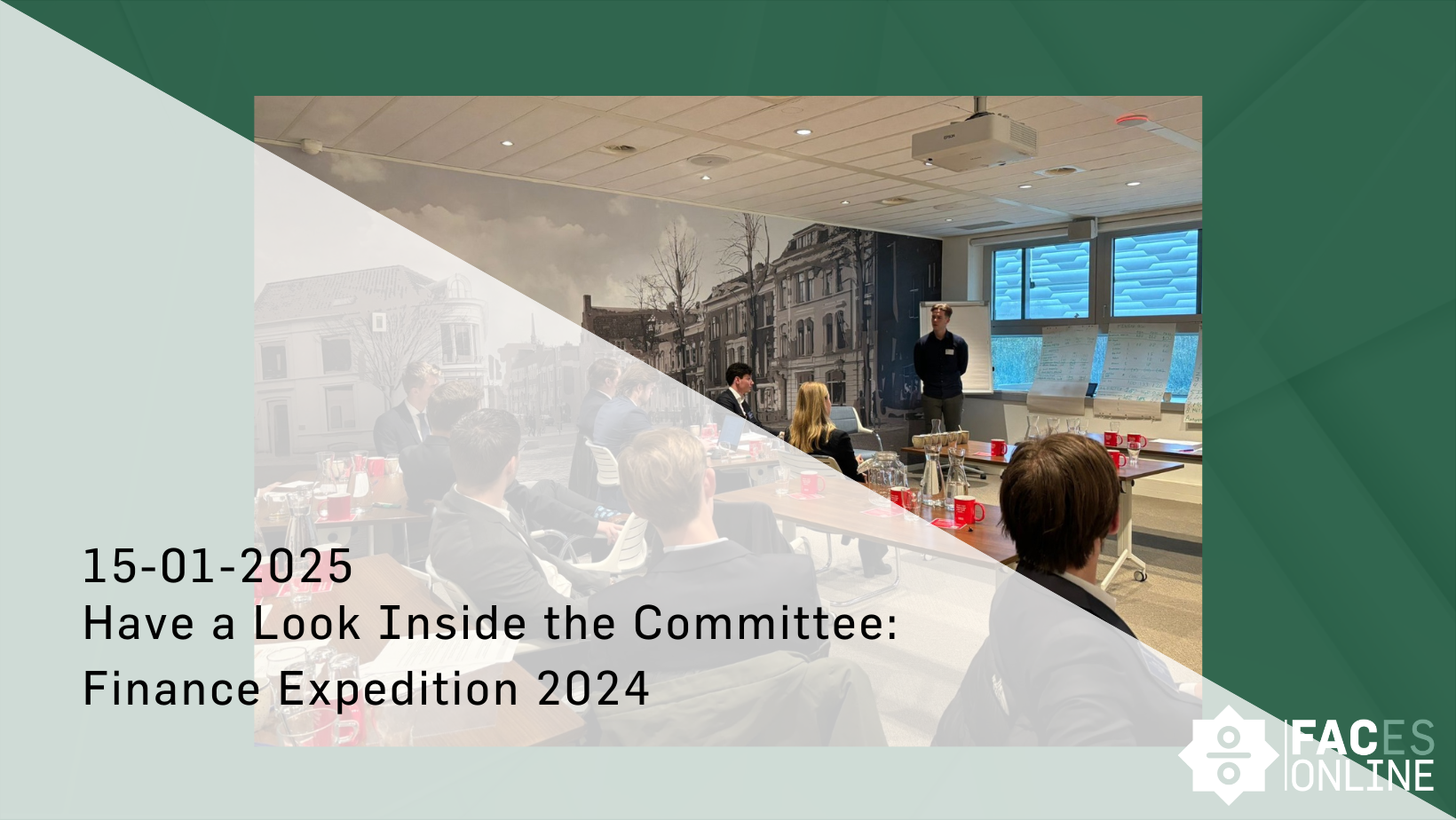
In this week’s article, Yunjie Chen shares her experiences as a committee member of the Finance Expedition 2024 and what this expedition is all about. The idea behind this expedition is to introduce students to the world of finance in a unique and interactive way, while also providing companies with a platform to discover young talent. Finance Expedition in Brief The Finance Expedition is organized by Asset Financials and Asset Econometrics and is specifically designed for students interested in Corporate Finance, Asset Management, and Risk Management. This three-day expedition, including overnight stays, offers challenging business cases, personal stories from professionals, and valuable networking opportunities that can open new doors. Program Development In February 2024, we began preparations for the 2024 edition as a committee. After hours of brainstorming sessions, weekly meetings, and a team-building activity, we finalized the program. Everyone within the committee had their own tasks and carried them out diligently. After the summer, everything accelerated, and registrations started pouring in. Internally, we were busy processing both administrative and promotional tasks. We held college talks, promoted the event online, and personally approached students with details about the expedition. Besides promotion, we also had to arrange transportation and accommodations. Logistically, we chose the Van der Valk Hotel in Breukelen for overnight stays. The Big Days: Success and Satisfaction Day 1: Rotterdam – Nerisa On the first day, we left Tilburg early and headed to Rotterdam, where we were warmly welcomed by investment company Nerisa. We received an extensive presentation about the company and its focus areas. Following that, the students worked on a challenging equity research case, which they later presented to Nerisa professionals. The day ended with a lunch where students could ask questions and network. Day 2: Utrecht – BDO The second day featured an in-house day at BDO in Utrecht. In addition to audit services, BDO has an M&A department, which was the focus of the day. Upon arrival, we were greeted warmly and started the day with a presentation about the Corporate Finance and Transaction Services departments. After the presentation, we worked on a financial due diligence case, with the results being discussed in detail. The day concluded with a group lunch, where students once again had the opportunity to ask questions. Day 3: Amsterdam and Utrecht – Deloitte & Zanders The third and final day focused on Risk Management. In the morning, we traveled to Amsterdam’s Zuidas district to visit Deloitte. We received an extensive presentation, followed by a challenging case on The Ocean Cleanup. Each group presented their findings at the end. After a group lunch and a tour of the departments, we headed to Utrecht for an in-house day at Zanders. Zanders, a consultancy specializing in treasury and risk management, welcomed us with an introductory presentation. The group was then split into two: one group worked on a case, while the other participated in a Zanders escape room. After the swap, the day ended with a group dinner, where students had the opportunity to engage in in-depth conversations with Zanders professionals. This marked the end of the Finance Expedition 2024. Challenges Along the Way During the organization of the Finance Expedition 2024, planning proved to be a significant challenge. Scheduling meetings with seven committee members is not easy, as everyone has a busy agenda. One tip that helped me was to schedule the next meeting at the end of each session using a tool like When2meet or LettuceMeet. This saves a lot of communication afterward. Additionally, flexibility is crucial: physical meetings are important for comprehensive agenda points, but shorter meetings are often more efficient online. What I Learned Organizing the Finance Expedition taught me valuable skills, such as planning, teamwork, networking, and communication. Additionally, it gave me more insight into my own ambitions within the finance world. It was very fulfilling to organize an event that helps others advance in their careers. I look back on this experience with pride and am confident that the Finance Expedition 2024 left a lasting impression – both on the students and the participating companies. Why Joining a Committee Is Worth It If you get the chance to join a committee, seize it with both hands. It’s an experience that will help you grow both personally and professionally. Organizing this event gave me insights not only into the financial world but also into my own skills and ambitions. My Experience with Asset Financials I have been a member of Asset Financials since February 2023. In addition to organizing the finance expedition, I have also been part of the financial business dinner 2023 committee which was a valuable experience as well. I appreciate how Asset Financials bridges the gap between students and companies and fully commits to this goal. The study association offers both formal and informal activities where you get the chance to meet new people! I highly recommend getting to know the association by signing up for a few events. It’s a valuable experience you don’t want to miss!
Going on Exchange: Indy van Heijst
For this week’s interview in Faces, we had the opportunity to speak with Indy van Heijst, a 23-year-old master’s student in Accountancy from the Netherlands. Indy is currently spending a semester abroad at Shenandoah University, a small institution located in Winchester, Virginia, just 1.5 hours from Washington, D.C. Motivated by her curiosity about American universities, Indy decided to add this semester abroad to her program through ISEP, an organization that connects students with global study opportunities. Despite some initial challenges, such as transitioning to online classes and adjusting to the campus culture, Indy is embracing the American experience and looking forward to exploring the U.S. during her stay. Read on as she shares insights into student life in America, cultural differences, and her travel plans. How does university life in the USA differ from what you experienced in the Netherlands? Perhaps due to its size, with approximately 4,000 students, Shenandoah University offers a unique academic environment characterized by small class sizes. All of my classes accommodate a maximum of 15 students, and attendance is mandatory for all lectures. Another change I have experienced is the prevalence of numerous small assignments. While at Tilburg University I typically had one final exam and one group project, at Shenandoah University I have almost weekly quizzes and assignments for each course. Additionally, as previously mentioned, I reside on campus in dormitory accommodations. One notable difference from the Netherlands is that I share a room with another person, which is an integral aspect of the American university experience. Luckily, my roommate is very nice and we have already bonded. I also have a meal plan that includes 18 meals per week, which allows me to enjoy meals in the dining hall or at three small restaurants on campus—Moe’s Southwest Grill, The Spread, and Bento Sushi—where I can order food. What has been your favorite aspect of studying in the USA so far? Especially interesting to see was the official moving-in date. As international students, we arrived on campus earlier than the majority of students due to two additional orientation days that provided information about the university, our visas, and various other topics. On the official move-in day, student-athletes assisted the incoming freshmen with their belongings, creating a welcoming environment. Additionally, the marching band and cheerleaders were present, contributing to a vibrant atmosphere with their performances. How do you find the academic workload compared to your university back home? Thus far, I find the academic difficulty to be lower compared to Tilburg University. While the overall workload may be slightly higher due to the numerous weekly assignments, the complexity of the material is noticeably less challenging. Additionally, I expect that the workload at the end of the semester will be lighter compared to what I experience at home, particularly since not all courses conclude with a final exam. What aspects of American culture have you found most surprising or interesting? Many aspects of American culture have aligned with my expectations. For example, the presence of the marching band and the prominence of athletes on campus are very much part of the experience. Additionally, most students dress quite casually. It’s common to see athletes wearing sports attire or t-shirts representing their respective sports. And don’t be surprised to see people wearing pajamas on campus. Especially in the dining hall when getting food. The most surprising thing is that there is not really a drinking culture at this university. Since the legal drinking age in the U.S. is 21, all university-sponsored activities are alcohol-free. In my opinion, as well as that of a few other European students, this made some of the orientation activities feel somewhat bland or less engaging. This is the downside of studying at a small university, because I would have loved to see and experience how that is. Moreover, there aren’t really any clubs or good bars in this town. Additionally, the town itself lacks vibrant nightlife, with very few clubs or bars available. What challenges have you faced while adapting to life in the USA? The biggest challenge I have encountered is meeting new people. So far, I have primarily connected with other international students, as they tend to be more open and approachable compared to American students. I was also somewhat unfortunate in that all of my classes were transitioned to an online format. Due to low enrollment in the face-to-face versions—typically only two or three students—professors opted to conduct the courses entirely online. This has made it more difficult to engage with others and build connections. However, this issue seems specific to MBA courses, where many students are slightly older and working full-time. For the four other exchange students taking undergraduate courses at the university, all classes are still held on campus. Fortunately, the university organizes several weekly activities, including shopping trips, hiking excursions, yoga, dance classes, and more. These events provide some opportunities to meet new people and foster connections. What skills or lessons have you learned that you didn’t expect to gain from this experience? One thing I’ve come to appreciate more is the public transportation and infrastructure in the Netherlands. In Winchester, commuting is quite challenging. It is evident that America is designed with car ownership in mind. There are few footpaths, and in some areas, they abruptly stop, making it difficult to walk to places like grocery stores or shops. For example, while there is a gas station nearby, the closest grocery store is a 20- to 25-minute walk. Additionally, most stores here are surrounded by large parking lots, which means you have to navigate through several of them when moving from shop to shop. This makes getting around without a car quite inconvenient. Luckily, since I have a meal plan, I don’t really need to buy a lot of things. Have you had any moments of homesickness? How did you cope with that? I did have a brief moment of regret after arriving. This feeling was mainly due

A board year as Chairman of Asset | Accounting & Finance – Lotte de Jager
In this article I would like to share with you how I experienced last year as Chairman of Asset | Accounting & Finance. If you’re curious what I do on a day or what I really remembered from my year on the board, read the article below! My choice for a year at Asset | Accounting & Finance Even though I already know a little bit about Asset, I joined the Accounting Insight Committee in April 2021. At the time, I still had the idea that I wanted to become an accountant, but above all it seemed very cool to be able to organise a symposium and meet new people. It was the time of heavy corona measures, where we even had to deal with a curfew during the active members’ weekend. Many activities were online, but to my surprise I quickly got to know many people within the association. I noticed that everyone had a very open attitude and that the atmosphere was often friendly, whether online or in small groups at someone’s home. I really enjoyed this period, and because of this good atmosphere, I got the idea to apply for a place on the board. Moreover, I saw it as the ideal opportunity to gain some experience that I would not get anywhere else. I can assure you that I succeeded! An average day as a Chairman As a chairman, you do a lot of different things, and I think my predecessors can attest to that. However, there are a number of fixed tasks that return every week. Every Monday morning I lead the board meeting, where we reflect on everything that is going on that week. I am also responsible for leading and preparing the meetings with the Advisory Board, the General Members’ Meetings and maintaining contact with the university. In addition to these responsibilities, I also have a position on Asset’s general board. Here I am treasurer, which makes me responsible for all financial matters within the association. I lead the meeting of all treasurers every week and help them with certain issues. As general manager, I not only have the role of treasurer, I also represent Asset | Accounting & Finance within the weekly general managerial meeting. “What I like about this role is that you can often take on projects to innovate or improve something that will benefit your successors.” Apart from the meetings and tasks that are on the agenda every week, I am always busy with other things. I have become much better at time management, which is a nice bonus. To give you an example of what I’m doing at the moment: these weeks I’m working on an Alumni Event in cooperation with the university, where I approach our alumni to come and talk about their careers and how they ended up there. I’m also working on the acquisition of Banking Days, and I’m having discussions with the Department of Finance about our study support and how we can better integrate that with each other. What I like about this role is that you can often take on projects to innovate or improve something that will benefit your successors. For example, I have taken steps towards the further professionalization of all legal affairs within Asset, for which we have set up a task force. Together with this task force, we are learning more about contract law, we are looking at certain rules of the tax authorities and we want to take this a step further. I also have a lot of contact with the university, mainly with the Academic Directors of the Accountancy and Finance Masters. Together with them, I often organise smaller events and information sessions. If you maintain good relations, you not only build up your own network, you also receive a lot of information and you can often switch with them if you have a new idea or run into problems. I get a lot of satisfaction from this contact because you can really help each other, and you see a lot of what a study association can mean to students. Highlights of last year Last year had a number of clear highlights. The two General Assembly Meetings really stand out. I think it’s a great moment to reflect on the past six months and to look ahead at what great events are planned. You have to be able to justify yourself and be well prepared (and of course be able to answer a lot of questions), but it gives you a lot of satisfaction. You officially say goodbye to the old board, but it is also a festive evening where you hammer in the new board and from there on it really starts. What I personally found to be a very special period was the summer, because the corona measures were gradually relaxed then. At the end of the academic year we had many lunches and drinks, where you can see all the A&F members together again. To end the summer in a fun way, we attended the announcements and constitution drinks of all the other boards. Here we quickly got to know the people with whom we would be working in the rooms every day. By loosening the restrictions, we could also physically organise formal events again, some after only two years. I was really looking forward to meeting all those companies physically and seeing all those students together. What I learned in my year on the board I think I can list hundreds of things I learned during my year on the board, but what stands out for me is what you learn about other people. As chairman you really notice the dynamics within your board and it is up to you to make sure everyone has a good time. A good atmosphere in the rooms is very nice, because you get a lot of energy and motivation from each other. As chairman you also have to take the responsibility to monitor discussions
