



For the Dutch version, click here. Disclaimer: This article does not contain investment advice and only aims to inform and entertain. This article discusses the very first economic bubble. For this we go back to the golden age (17th century). Originally, tulips did not originate from Holland at all, as many believe. They came to the Netherlands through the trade that the Netherlands conducted with Asia. Because of this, tulips were also seen as luxury goods. During this period, the Netherlands was very prosperous, thanks to this international trade, and interest in flowers increased tremendously. During the golden age, status was very important; to increase it, people bought expensive items, including tulips. The Library of Economics and Liberty wrote the following about this: “It was deemed a proof of bad taste in any man of fortune to be without a collection of [tulips].” Partly because of this, the demand, and eventually the price, only continued to rise. Because demand was so high, starting in 1636 it was possible to trade in tulips through the Amsterdam Stock Exchange. In 1637, the tulip price reached its peak; one tulip bulb had the same value as a canal house in Amsterdam. It was also possible to trade in options tulips. Disadvantages of tulips First of all, tulips are particularly fragile and must be grown carefully. Because there was a lot of money to be made in the tulip trade, many growers arose. These growers learned sophisticated techniques to promote the cultivation of tulips. There was even a technique discovered to make a tulip have different colors. These were rarer and therefore worth more money. In addition, tulips did not contain an intrinsic value, which shares do. The intrinsic value of a stock can be calculated by reducing the company’s total assets by its total liabilities and then dividing this by the number of shares outstanding. This can be used to calculate whether a stock is overvalued or undervalued. This method is used by many experts, including Warren Buffett. “What goes up must come down.” Eventually, the tulip bubble burst at the end of 1637. People began trading in tulips using leverage; this involves investors borrowing money to realize returns. These investors often had other debts that they hoped to pay off by making possible high returns on the tulips. When investors were forced to sell tulips to pay other debts, the market began to collapse. So as investors borrowed money to speculate in tulips, this happened very quickly and eventually the bubble burst. What seemed like an easy way to get rich ended in failure for many. Relevance to the present Although the tulip bubble burst almost 400 years ago, the event is still very relevant today. For example, Bitcoin today is regularly compared to this tulip mania. The price of the cryptocurrency is volatile and, like tulips, indeed lacks intrinsic value. In both 2017 and 2021, the value of the cryptocurrency rose unprecedentedly hard only to fall again at least as hard. There are a number of similarities between tulips and Bitcoin. According to Pichet, E (2017) and Taskinsoy, J (2019), both tulips and Bitcoin were only used to speculate. Individuals purchased tulips for the sole purpose of selling it for a higher amount without making rational considerations, the same was true for Bitcoin. Still, there are some differences. First, Bitcoin is scarce, which cannot be said about tulips, which can be grown at any time. In addition, the cryptocurrency is based on the Blockchain. Conclusion The likelihood of a similar bubble occurring in the future will always remain significantly high. People will continue to strive for high status and therefore are looking for a quick way to make money. Thanks to the advent of the Internet, bubbles form a lot faster and as long as people continue to act irrationally, bubbles will continue to form. There are some wise lessons investors can take away from this bubble: Always remain rational. As discussed, financial bubbles occur because people make irrational decisions and, as a result, begin to speculate in investments that they themselves do not understand. As a result, individuals can react emotionally to price changes and subsequently lose a lot of money. Be less concerned with status and don’t compare yourself to others. Instead, it is better to focus on your own (financial) situation. If an investment seems too good to be true, it probably is. Don’t just borrow money to invest. This makes an investment unnecessarily risky and can have negative consequences as the tulip bubble shows. Sources Hayes, A (2022), Tulipmania: About the Dutch Tulip Bulb Market Bubble. Retrieved from https://www.investopedia.com/terms/d/dutch_tulip_bulb_market_bubble.asp Is geschiedenis (nd), De tulpengekte tijdens de gouden eeuw. Retrieved from https://isgeschiedenis.nl/nieuws/de-tulpengekte-tijdens-de-gouden-eeuw Pichet, E (2017), The Conversation, Bitcoin: speculative bubble or future value?, Retrieved from https://www.researchgate.net/publication/324660599_Bitcoin_Speculative_Bubble_or_Future_Value Taskinsoy, J (2019), Bitcoin: The Longest Running Mania – Tulips of the 21st Century, Retrieved from https://www.researchgate.net/publication/338009334_Bitcoin_The_Longest_Running_Mania_-Tulips_of_the_21st_Century

From Startup to IPO: How financing influences the journey to public listing
For the Dutch version, click here. When looking at companies traded on the exchange, you often find a long history of how they grew to their current size. Long-standing companies such as … that originate from the early 1900s usually took a long time, gradually growing and taking over competitors until they became the market leader. Nowadays, with recent IPOs such as … we see that these companies have a different story; getting VC funding to grow exponentially until IPO. Take the FAANG companies for example, each of them used VC funding to get where they are now. In this article, we will explore how companies start out small but use venture capital to become market leaders. Many of the companies that we look up to today started out small. You probably are familiar with how Apple and Microsoft started out of a garage, or how Zuckerberg created the first version of Facebook in his dorm room. When companies are in this stage, they are often bootstrapping, i.e. solely financing their company with the revenue that they generate. Growing a company like this can be a long and difficult process, but in the end, the company will be fully owned by you and your co-founders. While bootstrapping is the way to go for some, sometimes this is not possible as you may need more capital to start than you have or if you want to grow your company quickly. If this is the case, taking on external capital is the only option. Within the VC industry, the first moment a company takes on external funding is referred to as the pre-seed round. In the pre-seed round, there are many options available, but the first funding often comes from individuals close to the founders; family, friends and fools. These people will loan money to the founders so that they can make their start, but other than that they don’t provide much else to the company. The same goes for starting grants provided by the government or university. The founders can also look for sources of external funding that will add more than just money; guidance and expertise. Business angels can be useful for starting companies if the business angel is already experienced in the industry or has a good understanding of how to build a company, but can be risky as they operate alone. Other options are incubators and accelerators. These are businesses that are specifically created to grow the companies that they finance and often have in-house services that the companies that they finance can freely use such as office space, lawyers, or accountants. With the initial financing that they received in the pre-seed round, the founders of the company are able to commit to their company and take their first steps. However, this is also the moment when starting companies enter “the valley of death”. This is the phase the company has found their initial proof concept, has a prototype, and maybe even its first cashflows, but remains unprofitable. If nothing changes, the capital will dry up and the company will have to stop operations. This leaves the founders with two options, try to become profitable before capital runs out, or go down the venture capital route. Once a company takes on venture capital, the strategy of the company will likely change drastically. With just the founders or with an early investor on board, time and growth may not be a priority until the company becomes profitable. When a venture capital fund invests, the company is expected to grow as much as possible and as quickly as possible using the newly acquired capital. Venture Capital funds have a limited lifetime in which they have to return their fund to their investors. Because of this, venture capital funds are always trying to realize an exit from their investment before the end of their fund’s lifetime. An exit for a venture capital fund can be made in multiple ways; an acquisition, a MBO, another fund buying their share, or via an IPO, the most lucrative option. So when a venture capital fund invests in a company, the founders are expected to work towards one of these exits as quickly as possible. Much can be said about taking the venture capital option, but if you can take the pressure, much can be gained. The venture capital journey is often described as being on a rollercoaster, with all the ups and downs along the way. Until an exit is reached, it has a cyclical nature to it. While growing your company and trying to reach profitability, you need to make sure that there is enough money in the bank to stay afloat. This is done through fundraising, where the first venture capital investment you raised is called the seed round, and each consecutive round is called series A, series B, series C, etc. The process of fundraising stays quite similar throughout these rounds, starting with pitching your company to various VC funds, settling on deal terms with an interested fund, surviving due diligence, until closing the deal and getting the money in the bank. On the other hand, a lot changes during these investment rounds. The company gains market traction, creates more professional processes, and hires more employees, with each new financing round fueling the fire. This all happens in order to grow the company so that an exit can be realised. The description of venture capital funding above may paint VC funds as just investors seeking to maximise their own gains. However, because of incentive alignment, VC funds will do whatever they can to make the companies that they invest in successful. The people behind VC funds are professionals when it comes to growing companies. Each shortcoming of their portfolio companies will be pointed out and resolved. They will use their network to open up new opportunities, help find new financing, and of course, help realise an exit. When you take on VC funding, you will both win quicker and fail
Investing in art, is it worth the effort?
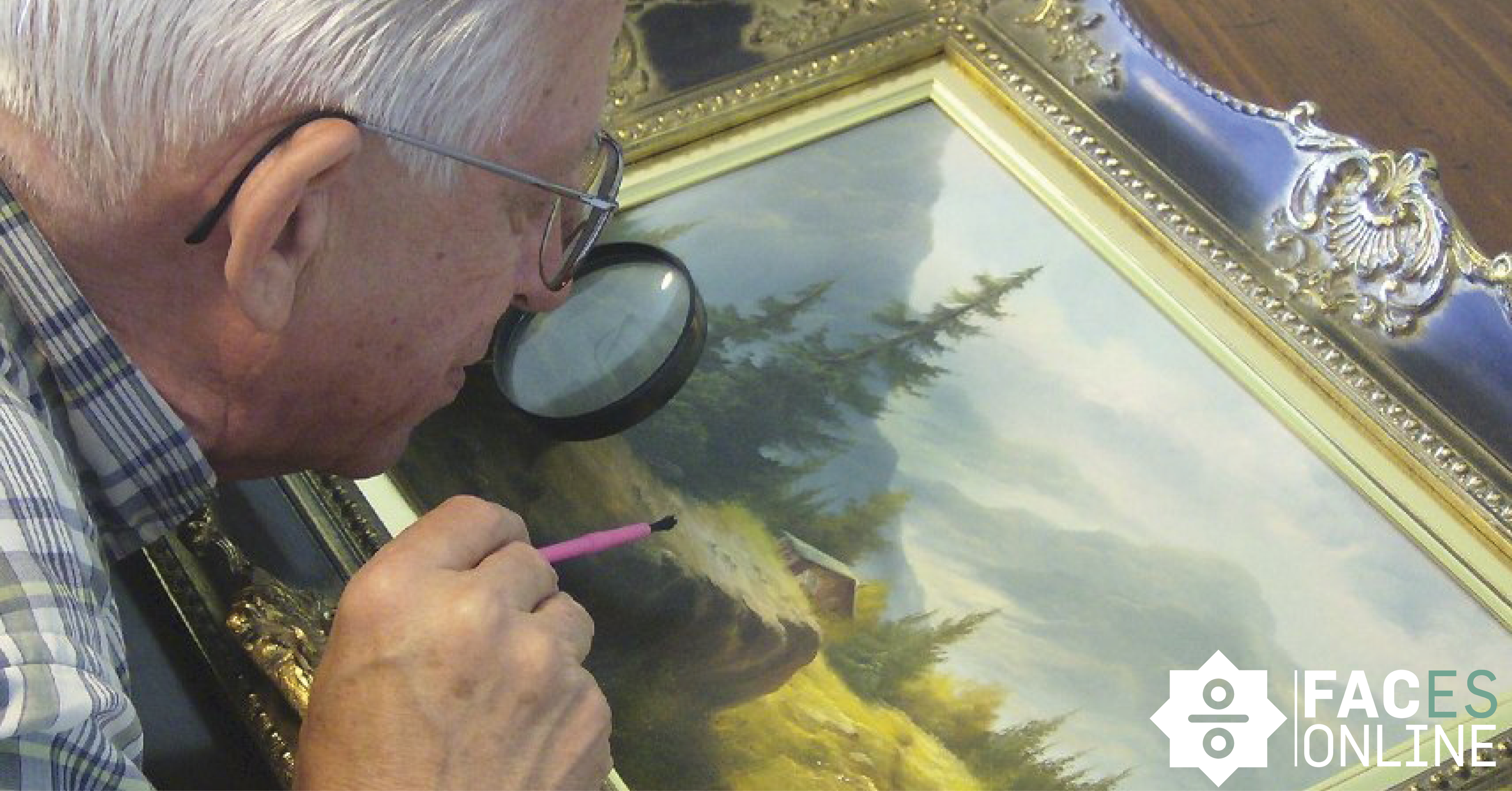
For the Dutch version, click here. Is art even a considerable asset class? In 2020, the total value of global art auctions reached $50 billion, with the auction sector contributing 42% ($21 billion) and the remaining 58% ($29 billion) handled by dealers and galleries. Notably, digital sales accounted for approximately $12.5 billion, representing around one-fourth of the total art auction value. So, the art market is not small but, is it a worthwhile asset class to consider investing in? This article provides basic information about the art market in order to try to answer this question. Why Invest in Art? How to calculate the returns of Artworks? The art market is an illiquid market, this refers to a market where there is a limited number of buyers and sellers, making it difficult to buy or sell assets without significantly impacting their prices. That is why art performance is typically measured using two methods: the repeat sales method (RSM) and the hedonic regression method (HRM). The RSM tracks the prices of artworks that have been sold multiple times, allowing for the calculation of price appreciation over time. The HRM, on the other hand, analyses the characteristics of artworks and their corresponding prices to estimate the value of specific attributes. Diversification and Portfolio Enhancement The Sharpe ratio measures the risk-adjusted return of an investment (subtracting a risk-free rate like US Treasury bills) divided by the standard deviation of the return, which represents the volatility of the portfolio’s value over time. A higher Sharpe ratio indicates a better risk-adjusted return, while a lower ratio suggests a worse performance. A ratio above 1 is generally considered good, but it should be compared to similar investments for a meaningful assessment. When evaluating the investment performance of art in comparison to other asset classes such as gold, equities, and bonds using the Sharpe ratio (return/risk), it is evident that paintings have lower Sharpe ratios than gold, equities, and bonds. However, they outperform commodities and real estate in terms of risk-adjusted returns. Therefore, including investments in paintings can be considered beneficial for constructing an optimal investment portfolio. Including art in a diversified portfolio can be advantageous due to the negative correlation between art returns and those of equities and bonds. This negative correlation implies that art prices tend to move in the opposite direction to the prices of equities and bonds, providing a potential hedge against market volatility. A suggested allocation for an optimal risk-adjusted portfolio consists of 50% Dow Jones corporate bonds, 25% S&P500 stocks, 15% gold, and 10% art. This allocation aims to balance risk and maximize potential returns by diversifying across different asset classes. Potential for Capital Appreciation According to the findings presented in ‘The Price of Art and the Art of Pricing,’ paintings and drawings have demonstrated an annual real return of 2.5% after adjusting for inflation. When transaction costs are excluded, the nominal return reaches 6.25%. Notably, higher returns are observed at the upper end of the price distribution (more expensive paintings tend to generate higher returns). Key Drivers and Risks of Art Investment Drivers of Artwork Returns Influence of colour The paper “Colors, Emotions, and the Auction Value of Paintings” (EER, 2022) conducted experiments using both field and auction data to investigate the impact of colours on the prices of paintings. The study analysed 12,906 art pieces sold between 1994 and 2017, focusing on 5,482 non-figurative abstract paintings by 66 artists to minimize contamination effects. The research found that a one standard deviation increases in the percentage of blue and red hues corresponded to premiums of 10.6% and 4.20%, respectively, in auction prices. Laboratory experiments with student participants from China, the Netherlands, and the United States confirmed that blue and red colours elicited higher bids and stronger intentions to purchase, with blue paintings commanding 18.6% premium and red paintings generating a 17.3% premium. Pleasure was found to be the dominant emotional response, increasing both bid amounts and purchase intentions across all three cultural contexts. Overall, the study concluded that colour attributes significantly influence the price of paintings, primarily through their ability to evoke specific emotions, and this effect is consistent across different cultures. Gender Female artists tend to sell their artwork at a discount compared to male artists, and this can be attributed to pricing bias rooted in gender culture. Analysing a dataset of 1.9 million auction transactions across 49 countries, the study finds that paintings by female artists sell at an unconditional discount of 42.1%. The gender discount is influenced by country-level gender inequality, indicating that more gender-equal cultures tend to exhibit less of a discount. Even when controlling for artist fixed effects, such as the UN gender inequality index and labour participation rate, the gender discount remains significant. The study also includes two experiments to further explore the issue. In the first experiment, participants were asked to guess the gender of the artist by looking at paintings, but the results showed that guessing correctly was no better than random chance. The second experiment focused on the effect of perceived gender on participants’ appreciation of artwork. The findings suggest that participants who more closely resemble typical art auction participants may value art by women 6% less. These analyses and experiments shed light on the gendered pricing disparities in the art market. Death of a master When a master artist dies, it has a positive impact on prices, returns, and turnover in the art market. The death of an artist represents a negative shock to their future production, resulting in a permanent decrease in their artistic output. Similar to the findings of Hong et al. (2006), where an increase in float reduces turnover and price, the premature death of an artist leads to an increase in both price and turnover. The death effect is more pronounced when the artist passes away at a young age (below age 65) and has achieved significant fame during their lifetime. The analysis, however, faces a challenge in that it lacks a counterfactual comparison

Investing in classic cars
For the English version, click here. Disclaimer: This article does not contain investment advice and only aims to entertain and inform. In a previous article several alternative investment options were named, in a short series these will be further elaborated with first: Investing in classic cars. Value Many people think it is just excessive, spending a capital on a car. Especially since cars decline in value between 10 and 20 percent per year on average. Yet not every car is a bad investment, as there are plenty of cars that increase in value. For example, we go back to Italy in 1977. A proud owner of the 1962 Ferrari 250 GTO was told by his wife that the car was making too much noise and was forced to sell it, the market value was around $71,000. Meanwhile, the same car is being auctioned for $50,000,000. Another example is the 1955 Mercedes-Benz 300 SLR Uhlenhaut Coupe, which was auctioned last year for $149,000,000 (Harshvardhan, A, 2023). Furthermore, Jay Leno purchased a McLaren F1 over 20 years ago for $800,000. The value of this car, which is still in his possession, is currently estimated at $20,000,000. The best-known example of cars increasing in value are classic cars. Although experts still debate this, a car is called classic when it is at least 20 years old and of historical importance. These can still be divided into vintage and antique cars. Vintage refers to cars made between 1919 and 1930. Antique cars were made just before 1919, during the so-called “Brass era,” which refers to the large amount of metal used to make these cars. To give just one example, vintage cars have increased 185% over the past decade ( Piovaccari, G & Za, V, 2023). In addition, according to the British company Vanarama, classic cars have increased in value by 97% over the past 10 years. This is a substantial increase, especially when compared to gold (45%), art (49%) and real estate in Britain (50%). This large difference between the increase in value of classic cars and other investments shows that this type of investment should be taken seriously. Auctions The most common way to purchase a classic car is through an auction. In the Netherlands, auctions regularly take place where the owner parks his classic car. Visitors can make a bid and the highest bid gets the car. Furthermore, there is often an appraiser present, this is someone specialized in the valuation of classic cars. Nowadays there are also online auctions. A well-known example is carandclassic.com. Here there are numerous cars for sale that can be bid on, including cars that cost “only” a few thousand euros. The main difference between online and physical auctions is that physical auctions take place more quickly, so that it is usually known within an hour who has bid the most. Online auctions can take as long as weeks. In addition, it is possible to see the condition of the car during a physical auction, this is not possible in an online auction. However, documents describing the car’s condition are displayed. Still, at first it seems difficult to determine the market price of a car. Fortunately, Hagerty, an insurer in classic cars, has the solution for this. The firm keeps track of the value of classic cars in an easy-to-read guide. Each model is given a figure based on its condition. Nevertheless, there is a lot of uncertainty involved in buying a classic car. Although Hagerty’s gives a good indication, there is no guarantee that the guide is completely accurate. In addition, unlike stocks or bonds, a car is physical. Therefore, a garage, for example, must be considered, which entails additional costs, and insurance for classic cars is quite expensive. In addition, this makes the investment a lot less liquid, since it remains to be seen how quickly a buyer can be found. Also, a relatively large capital is needed to profit from possible price increases. However, there is now the possibility of investing in classic cars without physically buying them. There are several funds where investors can invest in classic cars. One example is Azimut, however, investors must put in a minimum of $140,000. Investing in classic cars is an interesting option, in fact, look at the potential past returns. Nevertheless, this type of investment involves above-average risk. Material damage and limited liquidity are some examples. Therefore, it is wise to consider investing in classic cars only as a hobby and not as a means to get rich. While there are certainly examples of situations where serious money has been made from this type of investment, the chances are slim and uncertain that the same will be successful for you. However, the advent of online auctions does make it easier for individuals with relatively little liquid assets to purchase classic cars.

Explore the lucrative world of sports betting: Why it’s more than just a gamble
For the Dutch version, click here. In this article, Dhiraj talks more about the world of sports betting and the opportunities/risks in this industry. Disclaimer: This article does not contain investment advice and is intended to entertain and inform only. What is sports betting and why is it popular? Betting on sports games, also known as sports betting, is becoming increasingly popular among young people between the ages of 18 and 23. Most bets are placed on football matches because many young people play this sport themselves. Betting on specific results can increase involvement in watching matches and also offers the opportunity to earn money. However, it is important to emphasize that the industry also has a downside. In recent years, several scandals have come to light involving rich gamblers bribing players to get the desired result for their bets. Even in our own city of Tilburg, a match-fixing scandal was discovered in 2009 at Willem II, where several players were involved in match fixing. Current situation in the Netherlands On April 1, 2021, the Dutch gambling market was opened with the Remote Gaming Act (Koa), which regulates online gambling activities. Domestic and foreign gambling operators could from then on apply for a license to offer online sports betting to Dutch players. The new law requires player identification and player protection with information on responsible gambling. After the opening of the market, a fuss arose over the use of well-known (former) football players such as Wesley Sneijder and Andy van der Meijde in advertisements. Research showed that the use of these well-known football players made it difficult for young players to assess the risks of gambling. The use of well-known people in gambling advertisements has therefore been banned since July 2022, and from 2025 sponsorship of football teams by gambling companies will also be prohibited. Professional athletes are also showing interest in gambling on sports matches. Former ADO player Tom Beugelsdijk was suspended for betting on matches in his own league. The English striker Ivan Toney of Brentford FC violated as many as 232 English gambling rules, resulting in an 8-month suspension. Investing in sports betting Sports betting offers several investment opportunities. With the growing popularity of gambling on sports games, it can be interesting to buy shares in companies active in sports betting, such as gambling companies and platforms for online betting. There are also specific exchange-traded funds (ETFs) that focus on the sports betting industry, such as the RoundHill Sports Betting ETF. This fund contains shares of various companies in the sports betting industry to ensure diversified risk. The increasing availability of data and the application of artificial intelligence (AI) are also making it easier to profit from the sports betting industry. AI can be used to develop sophisticated prediction models that take into account various variables, such as historical performance of teams/players, injury data and playing styles. These models can help predict the outcome of sports games more accurately than traditional methods. In addition, AI can be used to analyze and compare the odds of different bookmakers, allowing investors to detect odds that do not match the true probability of an outcome. This offers valuable betting opportunities. Risks The biggest risk of betting on sports games is losing your investment. Unpredictable results and surprising victories by underdogs make predicting sports results uncertain. There is no guarantee of success, so you may lose your bet. Irresponsible gambling can lead to financial problems if you lose more money than you can afford. Moreover, sports betting can be addictive, especially for people prone to gambling addiction. The constant desire to bet and the thrill of winning or losing can lead to problematic gambling behavior. This has serious negative consequences for finances, relationships, work and well-being. The Dutch government has taken several measures to protect young adults in particular from excessive gambling, such as mandating limits and banning bonuses and promotions for players under the age of 24. Success Stories There are some success stories of investors in the sports betting industry, but it is important to note that they are the exception and most investors do not make a profit by gambling on sports games. Still, it is interesting to take a look at one of the successful investors in this risky industry. A well-known example is Matthew Benham, a British businessman who owns two football clubs (Britain’s Brentford FC and Denmark’s FC Midtjylland). Benham founded Smartodds, a company that uses advanced statistics and algorithms to predict sports matches. He is estimated to have made millions from sports betting, and Smartodds has become a leading sports analytics company. Benham has applied his data-driven approach to sports betting to both of his football clubs. He has invested in sophisticated scouting methods to identify promising players who fit the club’s style of play. This strategy has helped Brentford FC be remarkably successful in English football. Under Benham, Brentford FC promoted to the English Championship and eventually reached the Premier League. Last season, Brentford even finished 9th in the Premier League and missed out on European football by just 2 points. Future of sports betting The future of sports betting is promising, with numerous developments and opportunities for investors. Many countries are currently revising their laws regarding sports betting, opening up new markets and allowing investors to participate in a growing and legal industry. This creates opportunities for the creation of new gambling companies and provides room for technological innovations. Regulation also strengthens the reliability of companies, allowing investors to make better decisions. In addition, technological developments may play a crucial role in the future of sports betting. Improvements in mobile technology, data analytics, artificial intelligence and virtual reality will enhance the betting experience and provide new opportunities for both operators and investors. Think real-time live betting, personalized recommendations based on user data and innovative ways to follow and bet on sporting events. As a result of these developments and prospects, the future of sports betting looks set to usher in an

Working at KPMG
For the Dutch version, click here. Who are you and what do you do at KPMG? My name is Thomas de Wit and I have been with KPMG for 2.5 years now. I am 25 years old and live in Oisterwijk. After my studies I started at KPMG as a trainee in audit where I am now a senior and participate in the Digital Auditor Track, where we are trained to innovate and automate the audit more. Besides work, I enjoy playing tennis, running, mountain biking and meeting up with friends for drinks or dinner together. What do you keep yourself busy with on a daily basis? We always start our day with a daily. Here we discuss with each other how we feel, what we achieved the day before and what we want to do today. This way your team always knows what you are doing, if you need help and how you are doing. Furthermore, the daily schedule is very varied and I don’t really have a ‘standard day’. My daily activities can include meetings with the client to discuss and understand certain documentation, meetings with colleagues to discuss and explain certain procedures, or independently performing the recording of your work for the file. How did you come into contact with KPMG and what is the reason you chose KPMG? During an event from the Economic Business Weeks, together with recruiters and employees from different Big-4 firms, I went golfing in Tilburg followed by a barbecue. At the time I signed up for this event, I didn’t really know at all what I wanted to do for a Master’s or what I wanted to do afterwards. Numbers was always something I liked, so accountancy or finance would be a logical next step. Once at the event I got talking to several people, including the recruiter and two trainees from KPMG. I remember this last conversation best because I had the best click with these people. They invited me to join them for one day. I would then get a laptop and go to the client with a team to get a taste of what a day as an employee at KPMG would be like. No sooner said than done, so two weeks later I was allowed to join them. This worked out really well and I was then invited for a walk-in internship where I had a little longer to find out if working at KPMG would be for me. After I did this, I knew for sure that I wanted to continue in accountancy and I went on to do the Master Accountancy in Tilburg. At the end of this Master I returned to KPMG for a thesis internship after which I started working as a trainee. Like many of us, the feeling at KPMG was very good and I felt seen and heard here, so I knew that KPMG would be a good employer for me. What makes working at KPMG fun for you? A few aspects of working at KPMG stand out for me. First of all, the colleagues. The fact that you work with young people who are in the same stage of life as yourself gives a very nice dynamic to the work. Outside of work there is also plenty to do together with your colleagues where you can think of get-togethers, summer barbecues, the annual ski trip, playing indoor soccer in the KPMG team, running and participating in various running competitions. Secondly, I think serving many different clients where you have a lot of client contact and also physically go to the client is a very cool aspect. Personally, my clients include a small municipal institution, a large energy company, a sensor developer and a vacation rental company. This diversity ensures that my work weeks do not always look the same where you also always take into account different risks. Finally, I really like the fact that you develop strongly. In a very short time, you grow enormously in your knowledge and responsibilities, both professionally and personally. For me, these elements make working at KPMG fun and challenging. What would you like to give students? Especially go to recruitment events, companies, and try to speak to people from as many offices as possible. The work we do is pretty much the same everywhere since we all have to comply with the same regulations. Therefore, getting a taste of the atmosphere at the offices and seeing if you click with people is the most important thing. As you can read, I have done this myself and it has ensured that I am in a good position. Take your time for this. If you want to know more about my experiences at KPMG, you can always send me a message on LinkedIn! If you have any other questions about the (internship) opportunities at KPMG, please contact our recruiter Ariane Kuijt via LinkedIn, email (kuijt.ariane@kpmg.nl) or phone (+31204239495).
