

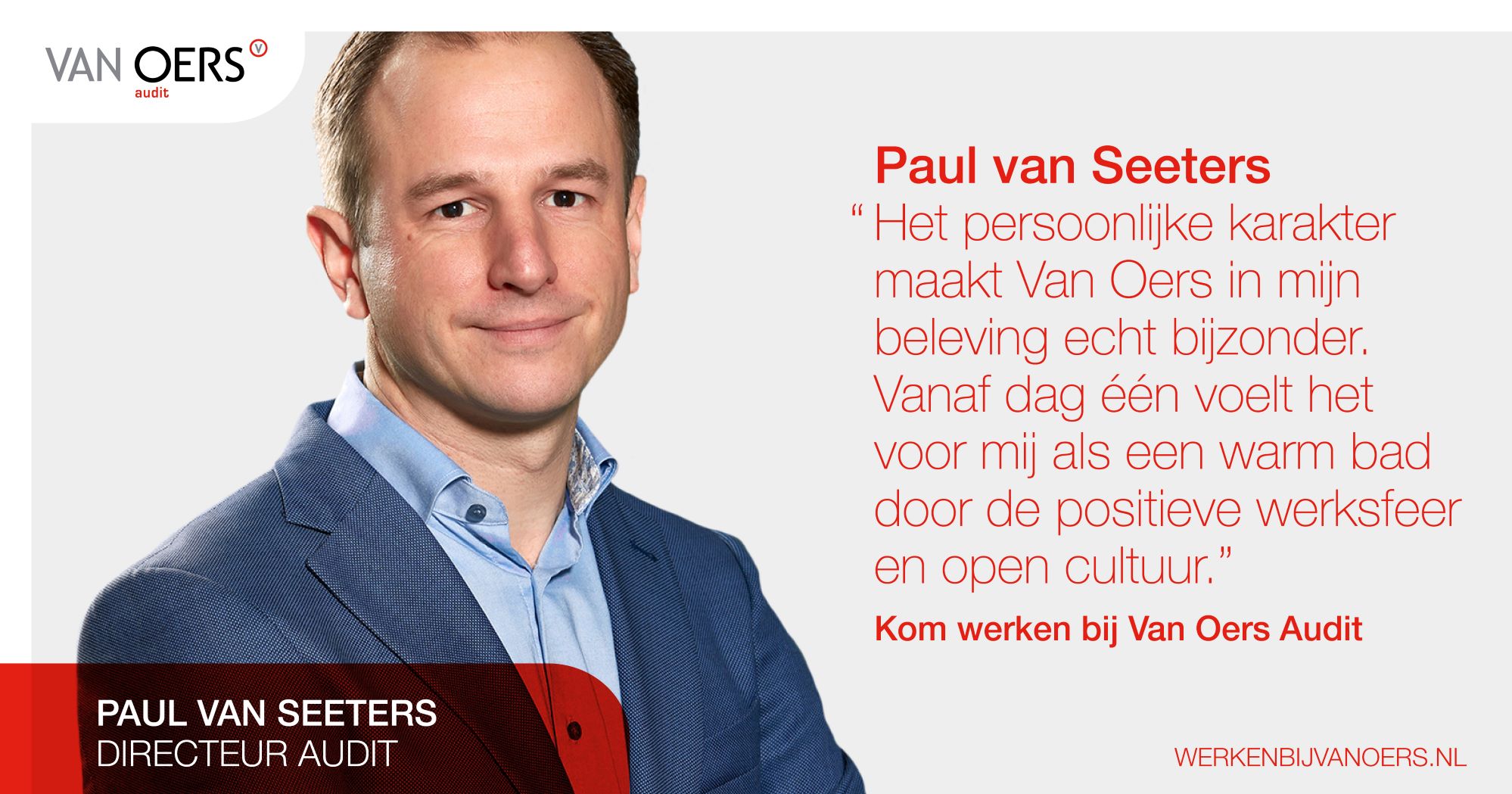
Paul van Seeters has worked at Van Oers as Audit Director since May 2021. From day one, Van Oers feels like a warm bath to him. An interview about working at Van Oers, but first more about the link with Tilburg University and with Asset. Did you study at Tilburg University yourself? I did not spend my student years there, but I did follow the post-master’s course ‘Business succession for family businesses’. Before that, I studied at the Erasmus School of Accounting & Assurance (practical training as a Chartered Accountant) and at Nyenrode University (master’s plus post-master’s in Accountancy). I also laid my foundation for Accountancy at Avans University of Applied Sciences. Van Oers is investing heavily in its relationship with Tilburg University. How does Van Oers invest in the relationship with Tilburg University and Asset? You can meet us at Asset’s career events. We have also been participating for some time in Asset’s section, Faces Online. And in our audit team – currently about 80 people – there are several working students from Tilburg University. In combination with their studies, they work at least two days a week with us in the audit team. The nice thing is that this way they can get a taste of what it is like to work for Van Oers and the pleasant atmosphere at Audit. This summer, several work students are also in the project team for the NOW grants. We are going to do all the checks on the NOW subsidies in one go. In this way, we are ahead of the deadline later in the year. Moreover, this year we have associated ourselves with the Tilburg University Challenge. We will be present at the speed dates and provide an in-house day, but what we will mainly be doing is supporting students with their innovative case. That fits well with the innovative character of Van Oers. Would you like to tell us more about Van Oers and its innovative character? First something about Van Oers in general, because Van Oers might not be the first office that comes to mind as a university student. After all, we are not one of the Big Four firms. Incidentally, I myself worked for many years – with great pleasure – at one of the Big Four, at PwC. It was not until 2021 that I made the switch to Van Oers. Van Oers is one of the larger regional accountancy and tax consultancy firms in the Netherlands. We have about 400 employees. We are big enough to take on challenging issues but with personal attention for clients and employees. The personal character makes Van Oers truly special in my experience. From day one, the positive work atmosphere and open culture have made it feel like a warm bath for me. Our Audit team works entirely from Breda, but we also have branches in Oosterhout, Roosendaal, Etten-Leur and Zundert. Within Audit, I am the innovation driver, think of the use of data analysis and dashboards. If you look at the way in which Van Oers has embraced the New World of Work, then that is also innovative. What does the New way of working look like at Van Oers? In consultation with their team, all employees can opt for their own mix of working from home, working in the office and working at customers. Everything is well organised in terms of system and employment conditions. Every employee gets a nice budget at Coolblue for setting up his own home office. Where you see that many other larger offices are still struggling with the design of the new way of working, it has already been arranged at Van Oers. That has to do with the agility of our organisation. Of course, the new way of working requires good team arrangements. What helps here is that every employee already has an (internal) coach. Co-ordination and coaching are part of the culture. In addition, within Audit we work with a coach per assignment. Giving and receiving feedback is organised via a feedback tool. That is a perfect tool for self-development. The Van Oers University also contributes to this. “Don’t wait and see, but get to work!” When you start in the audit team, where do you start? You start in a staff position and are part of an audit team. That means that you go directly to customers. These are family businesses and private equity firms that are subject to audit. That is, by the way, the great thing about working for Audit. You get the chance to look behind the scenes of so many different companies. Nothing is more fun than getting a tour of the company at the start of an assignment for a new client. I still like that very much. Then the figures really come to life. Anyone starting in the audit team follows the theoretical post-master’s course on Fridays to become an RA. What is a hot topic in Audit? Within audit, we are increasingly confronted with the theme of sustainability and report on what companies do in that area. This requires different competences of accountants. Our clients are the first to be confronted with stricter regulations in this area. Sustainability is also an important theme at Van Oers. We are working on making our premises more energy efficient, thinking about how to deal with mobility and are actively involved in the welfare and vitality of our employees. This also includes attention to our social involvement. For us, just like for other companies, this is a search. That is why it was extra nice to organise a knowledge session on this subject recently with one of our clients – construction and developer Maas-Jacobs. Typical Van Oers: don’t wait but take action! Is that what you want to teach students? What I mainly want to pass on is: follow your instincts. At the moment, young talent is in demand. So choose an organisation where you feel comfortable. Do you find warm personal contact
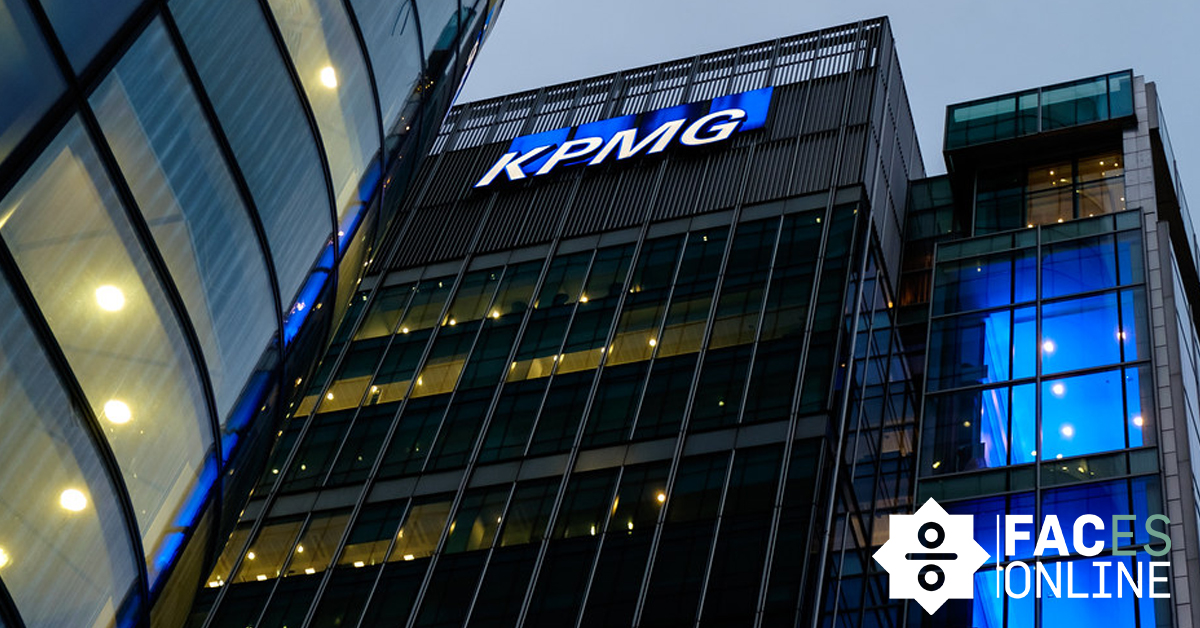
Interview with Jordi Kerckhaert and Wout van Kessel – IT consultant and partner of KPMG
Last month we had a conversation with Jordi Kerckhaert, former president of Asset-SBIT and now two years working at KPMG as an IT consultant, and Wout van Kessel, 14 years working at KPMG and now partner and also involved in the IT audit course at TIAS and Post-Master Accountancy at Tilburg University. In this interview, Jordi and Wout briefly talk about the work of an IT auditor, how IT auditing has developed over the years and how new innovations can bring about changes within the profession. What does an average working week generally look like? Jordi: That is a difficult question to answer. The advantage and the fun of working at KPMG is that you have several clients. To describe a working week is difficult to answer, because it depends very much on which different clients you are working with. We have a relatively busy period from September to about February. If I look at myself, I have done about two to three major clients, which means more than 250 to 300 hours of work. I also have a number of smaller clients. So it depends very much on which clients you work with. With larger clients, you work in a number of waves, in which you have a piece of preparation such as planning and determining the scope. We often schedule a number of interviews with the customer and ask for proof in advance, which we then go through with the customer during the interviews. Depending on the outcome, some additional interviews may be scheduled. Throughout the process, you also ensure that your project management remains in order and that communication remains good. During an IT audit, it is also important to communicate well with our audit colleagues. During that process, you also ensure that everything is properly documented. When I have an interview week, I spend a lot of time with the same client, at an intensive level with a lot of interaction, but you don’t have that every week. If I rewind for a moment, I worked at home for a client on Monday, for example. On Tuesday, I went to Rotterdam for a whole day to a client where I was doing a consultancy job. On a day like that, I have a lot of meetings with various stakeholders and work on a few things in between. On Wednesday, I was back at the office in Eindhoven where I had planned a focus block for myself for a smaller assignment. I also planned a feedback meeting with a colleague, where you give each other feedback on how we have performed in the past year, and whether there are any tips and tops. On Thursday, we had another kick-off for a new client in the morning, and on Friday I’m still at TIAS where I’m following the post-master IT auditing Can you explain what IT auditing in general entails? Jordi: ‘Traditional’ accountants audit the annual accounts. In the past, the audits were based on paper and archive folders. Over the years, these audits have increasingly involved various applications and systems that have an impact on the financial statements. This is what eventually led to our profession. In a way, we have to ensure that our auditor colleagues can rely on the systems from which they get the financial data for their audits. Wout: So we provide assurance about the effective and reliable functioning of IT systems and processes. In addition, we can also offer clients advice on IT systems and everything around them. “The hard IT payment system is not much different, only the shell around it has changed substantially”. How does an audit in the present differ most from an audit 10 years ago? Wout: There is a small comment to be made here, because the answer differs per segment. If you look at the financial sector, for example, the hard IT payment system has not changed substantially; it still runs on mainframes or older IT environments. However, the shell around it has changed substantially; for example, if you look at larger organisations such as multinationals, you will see that they have centralized their IT infrastructure. As an auditor, you can follow such a development of an organisation. This means that you cannot perform a centralized audit when a client is only organised at a local level. However, this development has transformed the audits. Due to centralization and availability of IT resources, we have started to audit much more digitally. 10 years ago, which may have been slightly distorted, because in Eindhoven were already very advanced in data analysis at the time, for example we were able to centrally audit the processes at Philips and DSM,. This gave us insight into the global procurement process; the order was digital, the goods receipt was digital, and so were the invoices. This allowed us to test the entire process integrally. This means that by means of data analysis, you can provide a reasonable degree of certainty about the process, but we can also check the entire process. So, for example, we can inform a component auditor in the Philippines that 300 invoices were not processed in accordance with the standard process. So with the advent of data analysis, process mining, and actually new audit techniques, you can give a much higher measure of certainty on large populations. 100% will never work, no accountant would dare to sign off on that. However, this will bring you very close to that point. Do you expect that this development and transformation of the profession will only accelerate if we take into account new innovations such as Artificial Intelligence and Deep Learning? Wout: That could certainly play a role, although I have to say that many customers are not concerned with this in their financial administration. If you see how RPA is used, it is often in relation to purchase invoices. In fact, that entails an application control on an automated event. You then check the robot and everything around it,

A Board Year as External Affairs of Asset | Accounting & Finance – Nina Smolders
As External Affairs, Nina is responsible for keeping in touch with the current and future partners of Asset | Accounting & Finance. In addition, she coordinates the Accounting Expedition and Orientation committee. She is also responsible for the organization of the Master Experience Days and for the FinanceDay. In this article Nina explains what her position entails and how she experiences a year as External Affairs of Asset | Accounting & Finance. A board year, how did my choice come about? In the summer of 2019, I moved from beautiful Maastricht to Tilburg to start my BSc Business Economics . Soon we all had to deal with the consequences of the corona pandemic, so almost all study activities took place online. In January 2021, I became active in Asset | Accounting & Finance by joining the Sports Committee. I then immediately joined many activities which allowed me to get to know many and the association. Slowly, I felt an increasing need to spend a year doing something other than “just studying” and so I began to explore my options. During a board yera you learn a lot and it also gives a boost to your CV and that is why I decided to do it. Function as External Affairs As External Affairs, you are the person who is concerned about the contact with Asset’s partners. This is done via email, phone or of course a physical appointment. In the summer all partner meetings are planned, which you do together with your predecessor or successor. Here, we reflect on the past year and look at what companies are looking for in order to make the best fit in terms of package or event . This way, you can really think along with companies so they can achieve their goals, this may include creating brand awareness, promoting career opportunities or to engage directly with students. Throughout the year, there are often other things that companies ask you to think about in order to achieve the optimal result. For example, I will soon be having a lunch meeting with a company along with a fellow board member to spar about what students need from an employer and what they value highly. In addition, you look at every event to see which companies are the best match, taking into account the interests of students and companies and other factors that play a role. In the run-up to the event, you are often the contact person for questions and unexpected problems, making sure that everything will run smoothly. Point of contact for businesses, what else? Besides maintaining contact with companies, you have other tasks to perform. In fact, as a board member, you always have committees to coordinate. In my case, those are the Accounting Expedition Committee and the Orientation Committee, the latter I did for six months. As a coordinator, you get a bit of leadership and it’s really fun to organize events together in this way. For the Accounting Expedition I was in close contact with the chairman of the committee to make sure all deadlines were met. During the event itself I was mainly in contact with the companies and other parties, such as the hotel. Afterwards you can look back on successful events with a satisfied feeling. “By being responsible for these events you get a good idea of what is involved and you will certainly pay extra attention to the small details.” Apart from the events you organize with committees, you also have your own events. These are the FinanceDay and the Master Experience Day of the MSc Finance and MSc Accountancy. By being responsible for these events you get a good idea of what is involved and you will certainly pay extra attention to the small details. For the Master Experience Days, you will have a lot of contact with externals from other departments, especially during the weekly Acquisition Meeting. In this meeting we discuss everything that is going on within Asset Tilburg, for example things about Career Platform Tilburg. Each external also has one or more task forces within this meeting. Mine is General Revenues/ New Business Model, with this taskforce we look at all the ways to make money for Asset Tilburg. Here you make sure the brochure is updated, but you also brainstorm about new events and opportunities. Learning Points as External Affairs When you enter a board year, you naturally want to learn things. I had thought a lot about this beforehand. I did this by looking at what I had to offer as a board member and in what area I could improve. By nature I am quite a stresser, and there will certainly be busy periods in your year as a board member where the stress can rise a bit. My goal was to be able to indicate this to my fellow board members and, where necessary, delegate small tasks. This took some getting used to, but in the end it worked best and I allowed myself more rest. As External Affairs you are of course in contact with everyone a lot. I never really considered myself an outgoing person, so this position was perfect to push my boundaries in this area. If you set certain goals for yourself at the beginning of your administrative year, you can achieve a lot! Tips for my successor A board year can sometimes be hectic. Above all, do not forget to enjoy all the nice things you will experience. Every so often, look back on the time that has passed and be proud of what you have achieved. Make sure that you often do something to relax. For me, sports and walks in the woods were ideal for this. Try to find your own rhythm and then you should be fine! Does this appeal to you and do you want to know more about my experience? Or do you have any other practical questions about a year on the board? Feel free to contact me or drop by room E1.07!

Share Buybacks in 2021
For the Dutch version, click here Share repurchases were on the back burner at the beginning of the Corona crisis, but now that the economy is picking up and time is moving forward, it seems that the big boys are picking up where they left off: buying back their own shares in large numbers. For example, data from the S&P500 index shows that in the second quarter of 2021, 200 Billion USD worth of shares were repurchased. According to the latest figures, we are heading for a record level of buybacks at the end of 2021. [1] Why do companies buy back shares? A publicly traded company buying back its own shares is one of the ways it can share profits with its shareholders. Normally, this is done through dividends, but these days a different route is often chosen. First, of course, a company will use the profits it makes to invest so that even higher profits can be made in the future. It can also choose to strengthen its own balance sheet. In some cases, however, profits are made so high that there are no other justifiable investment opportunities, so the balance would end up in the bank. With today’s interest rates, this of course only entails costs. In these cases the choice is made to share the profits with the shareholders. This can be done by paying dividends, or by buying back shares. From the shareholders’ perspective, there are two main reasons for preferring repurchase over dividend. One of these reasons is the fact that shareholders value a stable dividend in the future. They prefer a predictable stream of dividends to a one-time increase followed by a lower dividend a year later. The second reason concerns taxes: dividends are subject to tax in the Netherlands, but gains from share repurchases are not. “It may be clear that companies both in the Netherlands and abroad are actively engaged in distributing their profits to shareholders.” A consequence of share repurchases that is beneficial to both the repurchaser and the shareholders is the fact that the earnings per share increase in the following period. Because there are fewer shares in circulation after the repurchase, future profits are spread over fewer shares, which increases earnings per share. This is an important performance indicator for both investors and managers of companies. Shell On December 2, 2021, Shell started to buy back shares worth 1.33 billion Euros. This is the first part of the profits that Shell wants to share with its shareholders after the sale of one of its business units in the United States. In total, more than 6 billion euros worth of shares will be repurchased. The remaining plans will be announced during 2022. [2] ASML It is no secret that the chip giant from Veldhoven has been doing well for several years. As such, they started programs to buy back their own shares back in 2006. One of the most recent buyback programs consists of a plan to buy back 9 Billion Euros of shares between 2021 and 2023. So far, over 4 Billion Euros have been “returned” to ASML’s shareholders. One of the reasons why ASML is buying back shares is because it wants to use them for the compensation plans for its employees. For example, ASML states that 450,000 shares will be used in employee share packages. According to the current price, this amounts to almost 300 Million Euro. [3] Microsoft The US Tech giant has been buying back its own shares for quite some time. For example, the number of shares in circulation has already dropped by 33% since the dotcom bubble two decades ago. Since the appointment of Microsoft’s new CEO in 2014, the amount of money involved in buying back shares each year has quadrupled. [4] ING Our own ING has also begun actively buying back its own shares. For example, in October 2021 ING started a buy-back program, in which the intention is to buy back a total of 1.7 Billion Euros in shares. In the week of December 13 to 17, for example, more than 210 Million Euro worth of shares were bought back. [5] It may be clear that companies both in the Netherlands and abroad are actively engaged in distributing their profits to shareholders. Buying back shares seems an ideal way to reward the shareholders for their loyalty, and to give the company’s performance indicators a little boost. In particular, earnings per share are positively affected by these buyback programs. Another side effect is that buying back shares sends an important signal to the outside world that the company in question has a positive view of the market, and clearly shows that it considers its own shares to be a very wise investment.
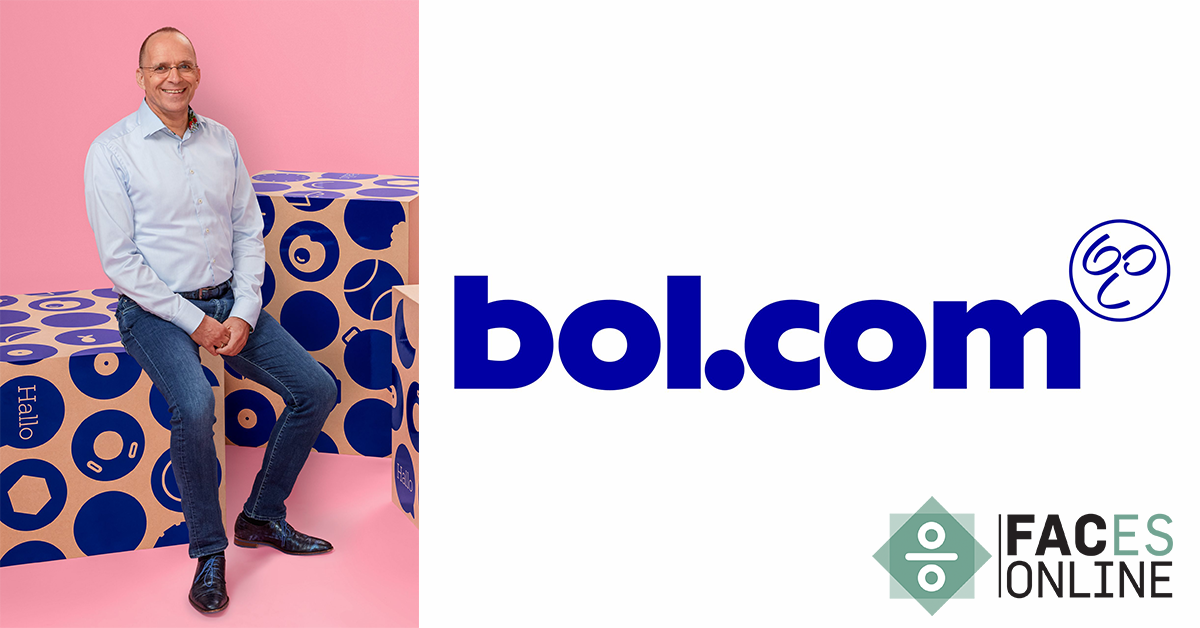
Interview with Huub Vermeulen – former CEO of bol.com
For the Dutch version, click here With over twenty years of experience within the company, Huub Vermeulen stepped down as CEO of bol.com last November. In this article you can read more about Huub, his career, milestones and transfer. Can you tell us about your study background and career? As a young man I always had an affinity with technology. That’s how I started studying electrical engineering. I soon found out that the programming part in particular suited me. You have to imagine that in this era the personal computer did not yet exist. In short, a nice challenge to work with computers. Because of my affinity with programming, I eventually started working at Philips. After a few years I switched from the large company Philips to a small company in Boxtel, where I sold complex technical projects to large companies. I liked this switch; a small company where people felt an affinity with the purpose of the company and where you can make your own contribution to its development. From here I started looking for a management-related position. I continued to grow at a secondment company for software employees and after some time I held the position of commercial director. In this position I have had both successes and setbacks. However, setbacks are inevitable and it makes you stronger both personally and professionally. My next step was a position as operational director at a CD factory in Tilburg. As a company, we had discovered a new customer group within CD production and logistics, including bol.com. We saw a collaboration with bol.com as a great opportunity for growth, so we started a project for the logistics of bol.com in a garage. It soon turned into a large and successful project. At one point I became CEO of Docdata e-commerce fulfillment, now called Ingram Micro, after which I made the switch to bol.com itself after a year or two. It is great to see that the handful of Docdata employees has now grown into a large company with logistics activities throughout Europe. Also a fun fact about bol.com: twenty years ago about 20 people worked here, 3 of whom were logistics employees. The logistics department has now grown to more than 200 people and the total number of employees to approximately 2500 to 3000. During my career I actually started working for smaller and smaller companies, and what did I notice? The smaller the company, the more fun I liked it. With small companies you are much closer to the soul of the company, which makes the connection with the business operations much stronger. My goal has always been to maintain the connection with the purpose of the company, despite the growth of bol.com. As an employee you have to feel that what you do matters and contributes to the purpose of the company. In November you will stop as CEO at bol.com. What is your reason for resigning? A few years ago I already said to those around me that after twenty years of employment it would be time to stop. This term has now expired, so I guess I have to surrender to it. I have to say that the CEO position of a growing company like bol.com is a very nice, but also a very intensive job. Therefore, I am now also ready to take a job in a somewhat freer role, in which I can expand my world further. I especially hope to take up a role in which my affinity with entrepreneurship can be expressed. What role this will be exactly, I’m not sure yet. For example, I think it would be cool to sit down with entrepreneurs, for example young innovative start-ups, and help them in the development of their company. You have been working at bol.com for more than 20 years. How do you view the growth and development bol.com has gone through? In her younger years bol.com started out as a physical bookseller. The sales range expanded to CDs, video tapes, etc., so that bol.com grew into the largest media store in the Netherlands in 2007. We are no longer purely a media store; but an online platform that sells pretty much anything. Bol.com has therefore made a gigantic transformation, in the field of assortment, from physical to online platform, and from retail to retail tech. Within this continuous growth, it is a challenge to maintain the culture and working method of bol.com. For example, we used to have a daily lunch where all 20 employees sat at the table together. After the lunch break everyone was up to speed on all developments. We now have more than 2500 employees, so it is a challenge to keep all employees connected to the company and to get them on board with the vision. A culture in which employees feel connected to each other and the business model is essential for a successful company. This growth also requires bol.com to continuously reinvent itself. This actually makes us as a company some kind of business experiment. You have to continuously adapt to the size you have and to the type of company you are. Daily business operations therefore require continuous creativity and thinking. This makes working for bol.com very fun and challenging. What have been personal milestones for you in your career at bol.com? Growing from a start-up with 20 employees to a large developed retail tech company with a large group of motivated employees, I have been able to experience many milestones together with my colleagues. For example, I still remember the first 100 million euros in turnover, because we had officially passed the start-up phase. The acquisition of Ahold was also one to remember, as it coincided perfectly with our growth plan to expand our range to all product categories. However, I don’t see my role in this as unique because we all did it together. Of course I had my own goals when I held the position of CEO. For example, when

Why Starbucks also acts as a bank
For the Dutch version, click here Starbucks What began in 1971 as a small coffee shop in Seattle, has grown into a global phenomenon nowadays: Starbucks. With 30,000 outlets around the world, it is impossible to imagine the world without it. In 2020, the company was ranked 37th in Forbes’ list of “most valuable brands”, valued at 18 billion dollars. Starbucks owes a large part of their success to a loyal customer base. To reward these customers, Starbucks has been using loyalty cards for years. For every nine drinks you order, you get the tenth from Starbucks. In a number of countries, this punch card has been digitised into an app. Besides making sure customers don’t lose their cards, this also ensures that Starbucks manages almost 1.6 billion dollars from customers, for which it doesn’t have to do anything in return. Starbucks vs. PayPal Customers can put money on a digital (or physical) card. They can then use the money on the card to pay at Starbucks. So the app works like a bank account: Starbucks can invest the money between the period when customers deposit the money and withdraw it (When they are buying coffee). Therefore, Starbucks can thus make a profit with the money within this period. The most recent annual report shows that customers have deposited a total of 1.59 billion dollars in these Starbucks accounts. Because customers receive no interest, they provide the company with free money.Actually, this is not unusual. The interest rate on a Dutch bank account has been 0% for some time now. The difference is in the reserves that banks have to keep and Starbucks does not. Financial institutions are subject to strict regulation and must adhere to rules when investing customer money. A good comparison is PayPal, which also manages money from customers until they decide to use this money in online transactions. They are obliged to keep a large part of this money in cash or to invest it in safe government bonds. This is only logical, because PayPal has to keep enough on hand for when customers withdraw their money. This is not relevant for Starbucks, as they do not pay out their customers in cash, but in coffee. This allows Starbucks to invest customer money in high return projects or use it to expand the business. The Starbucks account is an attractive way to raise capital, as Starbucks normally pays between 0.46% and 4.5% on their own bonds. “This is irrelevant to Starbucks as they do not pay out their customers in cash, but in coffee” There is also the concept of “breakage”. These are amounts that customers have in their Starbucks accounts but have forgotten about and Starbucks estimates that they will not use. This amount is added to profits. In 2021, this amounted to $164.5 million, about 10% of the total amount deposited by customers at Starbucks. The Future Currently, you can use the card in the United States and Canada, just two of the countries in which Starbucks operates. In the US, the app accounts for 40% of sales and in 2019 Starbucks has indicated that it wants to make the digital savings card more attractive. Understandable, because the growth potential is enormous. By expanding the savings programme to multiple countries and making it even more attractive for customers to put money on the card, the profit from breakage can become much greater. Good news for Starbucks, but also for the regular visitor. The free drinks, cakes or merchandise that customers receive after a number of transactions are a kind of interest on their credit. Compared to the interest on savings at a regular bank, that’s not crazy at all. Literature: https://medium.com/e-cell-vit/how-starbucks-is-also-a-bank-80e8b65cf1d4 https://jpkoning.blogspot.com/2019/08/starbucks-monetary-superpower.html https://www.forbes.com/sites/niallmccarthy/2016/08/01/starbucks-holds-more-cash-than-many-banks-infographic/?sh=1662fce9231a https://investor.starbucks.com/press-releases/financial-releases/press-release-details/2021/Starbucks-Reports-Record-Q4-and-Full-Year-Fiscal-2021-Results/default.aspx https://www.emerce.nl/cases/starbucks-versterkt-focus-loyaltyprogramma
