



At ASSET Financials, we highly value transparency, accountability, and continuous improvement. Our Advisory Board and Audit Committee play a crucial role in this. In this article, we answer frequently asked questions about their tasks and responsibilities. The Advisory Board How often are evaluations or reviews conducted by the Advisory Board? The Advisory Board meets three times a year. This happens in the summer and winter, prior to the General Assembly (GA), to obtain approval for event-related plans. A mid-semester evaluation also takes place. Additionally, board members can submit questions at any time when advice is needed. What are the main tasks of the Advisory Board and the Audit Committee? The Advisory Board provides input on event organization and offers support where needed. The Audit Committee reviews the bookkeeping quarterly to ensure that the treasurer follows accounting regulations correctly. How do the advisory bodies provide feedback to the board? Feedback is given during meetings, which take place twice a year at a restaurant over a three-course dinner. During the summer, when many members are on vacation, feedback is often provided online. What authority does the Advisory Board have to intervene if the board is not functioning properly? The Advisory Board serves solely in an advisory capacity and has no formal authority to intervene. Nevertheless, their advice is often followed, as it benefits the association. Are there fixed criteria by which the board is evaluated? Event outcomes are assessed, and updates are written to provide a complete picture of the association. Additionally, various topics are discussed during the meetings. Who are the members of the Advisory Board, and how are they selected? The Advisory Board consists of three types of members: How is the collaboration between the board and the Advisory Board experienced? The collaboration is considered very positive. The Advisory Board provides the board with valuable insights and key points in a constructive manner, always with the goal of improving the association. Are there examples where the Advisory Board played a key role? After the COVID-19 pandemic, membership declined, impacting committees and events. During a brainstorming session, strategies were discussed to attract more students, such as inviting high-profile speakers or organizing more engaging informal activities. Financial Control (Audit Committee) How often does the Audit Committee review financial records? The Audit Committee conducts a review four times a year. Which financial documents and reports are reviewed? The Audit Committee reviews the balance sheet, profit and loss statement, and general ledger accounts. Additionally, they verify that VAT is recorded correctly via the quarterly VAT return submitted to the tax authorities. What happens if financial irregularities are discovered? Any irregularities are documented and corrected as soon as possible. This is a normal part of the auditing process. How independent is the Audit Committee from the board? The Audit Committee consists of former treasurers. They are no longer part of the board and base their assessments on legally established accounting rules. Are external accountants or experts consulted for financial control? No, this is not necessary. The Audit Committee possesses sufficient internal expertise. Transparency and Accountability How are ASSET Financials members informed about the findings of the Advisory Board and Audit Committee? Findings are incorporated into policies and official documents, which members can review in the lead-up to the GA. How is the balance between independent oversight and board autonomy maintained? The Audit Committee ensures that financial management is responsible, while the board has the freedom to allocate the budget for events. Are improvements from reviews incorporated into board policies? Yes, for example, in time management. Lessons learned from one year are applied to the next. What steps are taken if the board does not comply with advice or guidelines? If the board disregards recommendations, members of the Audit Committee and Advisory Board have the option to vote against proposals at the GA, just like any other member. With the Advisory Board and Audit Committee as essential pillars, ASSET Financials continues to develop and professionalize. Their expertise and involvement contribute to a strong and future-proof association.
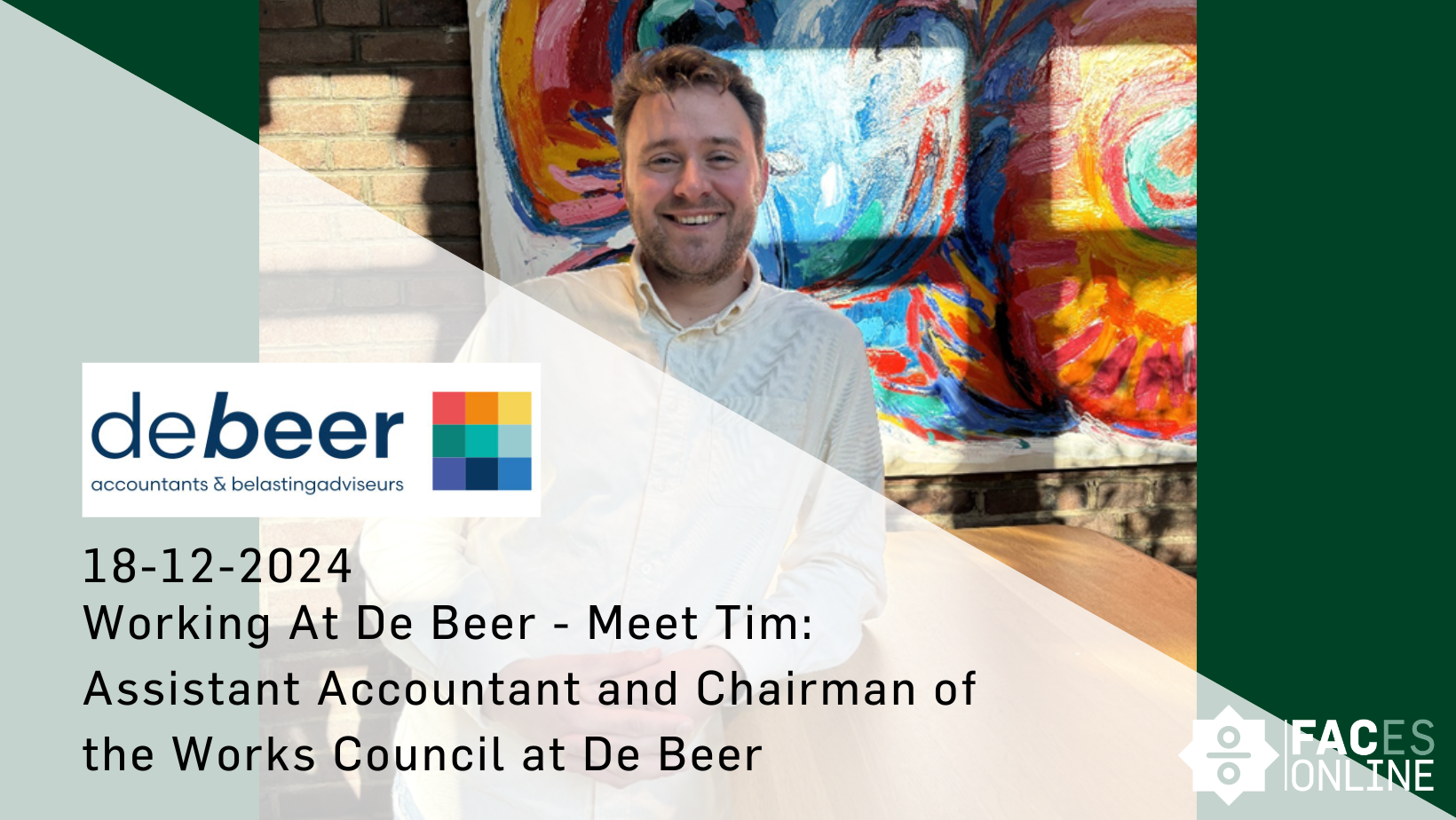
Working At De Beer – Meet Tim: Assistant Accountant and Chairman of the Works Council at De Beer
Tim Steketee (30) has been working at De Beer for a year and a half and will soon be moving into his new house in Hilvarenbeek, which he is currently renovating extensively. With his broad interests and energetic approach, he shares why he feels completely at home at De Beer and how he combines his role as Assistant Accountant with that of Chairman of the Works Council. What made you want to work at De Beer? “Through my hockey club in Hilvarenbeek, I had already heard many positive stories about De Beer. What immediately attracted me was the personal atmosphere and working in a smaller office. At my previous employer, the focus was mainly on growth, which didn’t quite fit what I was looking for. I particularly appreciate a work environment with short lines of communication and the freedom to find my own way. At De Beer, I really feel seen, both by colleagues and by clients. That personal and involved atmosphere makes a big difference for me.” How do you combine your work with your role in the Works Council? “Combining my work as an Assistant Accountant with my role as Chairman of the Works Council is going well. In my job, I am active daily in the Audit team, where I perform audits for various clients. I get enough time and space to contribute to the council and shape it further with my colleagues at De Beer. Although we are still in the start-up phase with the Works Council, the goal is to become an equal partner in discussions with management. We act as a link between employees and the board, ensuring that everyone has a voice. While many accountants are analytical and structured according to the DISC test, I belong more to the ‘red’ category: I am action-oriented and like to take the lead. This fits well with my role as chairman.” What do you like most about De Beer’s clients? “The client base at De Beer is really a breath of fresh air for me. The focus here is on local SMEs, mainly in Tilburg and the surrounding area. Most clients are within cycling distance, which creates an accessible atmosphere. At larger firms, you often work for big companies and only perform audits as an accountant. At De Beer, I can mean more and really support clients. This way, I add more value and work with clients who suit me well.” How do you experience the collaboration with your colleagues? “The collaboration here is good, especially thanks to the open culture. You can walk into anyone’s office, regardless of the team or your position. Within the Audit team, the lines of communication are short, and we are often on the same page, which makes collaboration efficient. You can easily switch with other departments, and if it gets too busy, you just say so. People really listen. Besides work, there are plenty of informal moments. Regular drinks are organized, and recently we went paddleboarding with the team. These activities make the atmosphere even more enjoyable.” What makes working at De Beer special for you? “At De Beer, I have a lot of freedom to divide my time between my Post-Master’s degree to become a Registered Accountant and the renovation of my house. Practical matters, such as working hours and the possibility to work from home, can be filled in flexibly. I greatly appreciate that flexibility and understanding of personal priorities. We work in small teams with experienced colleagues, so we continuously learn from each other. The culture is flat and open; you have all the space to find your own way and grow. If you have an idea or want to achieve something, you get the chance to explore and put it into practice. You are not just a number here and do more than just tick off tasks. That combination of an informal atmosphere and room for personal development makes De Beer special for me.”

Financial tips for the start of the academic year
The start of the academic year is an excellent time to get your finances back in order. In this article we discuss some tips to strengthen your financial basis, this is done through the following topics: Budgeting Saving Investing Book tips Podcast tips Budgeting The easiest way to saving is spending less money. This is difficult for many students and this is of course understandable. But without realizing it, you spend a lot of money on things that are not really necessary. A handy way to do something about this is to use budget software. This allows you to see exactly what you spend a lot of money on and which subscriptions you pay for that you don’t actually need. Banks such as ING and ABN AMRO offer this software through their app, but other free apps include: Dyme iBilly MijnGeldzaken Huishoudboekje Saving Most students will not have much money left over, but it is useful to try to set aside some money every month. For example, to use for large purchases, such as a phone or laptop. Or to make sure you have enough money to go on vacation. Additionally, putting some money aside every month ensures that you get into the habit of saving—a habit you will thank yourself for later. Nowadays, interest rates are higher again, which means you earn more money on the amount in your savings account. A disadvantage of this higher interest rate is, of course, that the interest on your student loan is also higher… But if we focus on the interest, we see that for the major banks (ING, ABN AMRO, and Rabobank), it is around 1.5%. This is already a lot more than you received a few years ago, but at other institutions, you can get a much higher interest rate. For example, at Bunq, a Dutch internet bank, it is 3.36%. You can also place your savings with an investment company. At these companies, you currently receive the highest interest rates. For example, TradeRepublic offers 3.75%, and Trading212 even offers 4.2%. If you decide to place your savings in an account with an investment company like TradeRepublic or Trading212, it is, of course, important to know about the safety of your savings. A high interest rate is of little use if you lose all your savings in the event of a bankruptcy. Fortunately, this is well regulated. For instance, TradeRepublic is covered by the German deposit guarantee scheme. This scheme guarantees that your savings up to €100,000 are safe in case of a bankruptcy. So, if something happens, you will get your savings back up to €100,000. With Trading212, it’s a slightly different story: here, your savings are protected up to €20,000 by the Cypriot Investors Compensation Fund. This is because you are not really saving with Trading212, but placing your money in a money market fund (MMF). Check the following website for current interest rates: https://www.actuelerentestanden.nl/sparen/hoogste-spaarrente.asp Investing Once you have saved some money, it is wise to start investing with a small amount. Even if you can only spare a small sum, it is good to develop this habit. When it comes to investing, the earlier you start, the greater the returns you can achieve in the future. Most of the returns in your investment portfolio are generated from the money you invest in the first few years. This effect is well illustrated in the following video by Visual Capitalist: The Benefits of Investing Early in Life. But why should you invest? Simply put, investing allows you to invest in companies that then share the profits they earn with you. Suppose you own a 1% share in a company, and that company earns 100 euros. Then 1 euro of that profit is essentially yours. Of course, investing comes with risks because investments can fluctuate significantly, and if you invest in just one company, there is a higher risk of losing your money. A good way to mitigate this risk is to invest in a diversified ETF (Exchange Traded Fund). A good example of this is the MSCI World ETF. This is a basket of stocks that invests in many different countries and sectors. For example, this ETF invests in Apple but also in Heineken and ASML. To start investing, you can look at the following Dutch brokers: Bux DeGiro TradeRepublic Trading212 eToro Make sure to do a lot of your own research before you start investing. At some brokers, it is even possible to start with fictional money. Book tips A tip is also to read books on these subjects, so you not only start thinking more about the ideas and concepts but also gain access to in-depth explanations and practical examples that help you better understand and apply the material in your own life. Examples of such books are: Rich Dad Poor Dad (Robert Kiyosaki) I Will Teach You To Be Rich (Ramit Sethi) The Psychology of Money (Morgan Housel) Atomic Habits (James Clear) Money Master The Game (Tony Robbins) “Rich Dad Poor Dad” talks about the lessons Robert Kiyosaki learned from his “rich dad” (the father of his best friend) and his “poor dad” (his biological father). The book discusses the differences in mindset and financial habits between the rich and the poor and emphasizes the importance of financial education, investments, and building assets to achieve financial independence. “I Will Teach You To Be Rich” offers a practical guide to building wealth without too much self-denial. Ramit Sethi discusses topics such as saving, investing, paying off debts, and smart spending. It includes a 6-week plan to achieve financial freedom, focusing on automating finances and investing in yourself. “The Psychology of Money” explores the emotional and psychological aspects of money and investing. Morgan Housel highlights how human behaviors, habits, and emotions influence financial decisions. The book contains 19 short stories that describe the various ways people think about money, wealth, and success and provides insights on how to make better financial decisions. “Atomic Habits” presents
GameStop Saga: Unraveling the Dynamics of Short Squeezing and Retail Investor Influence
In early 2021, the financial world witnessed an extraordinary event that not only captured the attention of global audiences but also sparked widespread discussions about the dynamics of stock trading and the evolving influence of retail investors. The meteoric rise in the stock price of GameStop, a video game retailer facing business decline, unfolded through a market phenomenon known as a “short squeeze.” This article delves into the mechanics of short squeezing, examines the GameStop phenomenon, discusses the broader implications for the financial markets, and compares it to another similar event. Understanding Short Squeezing Short squeezing represents a complex but intriguing aspect of the stock market that stems from the practice of short selling. To fully understand short squeezing, it’s essential to delve into the nuances of how short selling works and how it can lead to dramatic shifts in stock prices. This detailed explanation not only demystifies one of the market’s most dramatic phenomena but also equips investors with knowledge of the risks and dynamics involved. The Mechanics of Short Selling Short selling is an investment strategy employed by traders who believe that a stock’s price is going to decrease. Initially, the investor borrows shares of the stock from a broker, committing to return these shares at a later date. Once these shares are borrowed, the investor sells them at the current market price, under the assumption that the stock will soon decline in value. The goal is to repurchase the shares later at a lower price. If the investor’s prediction is correct and the stock price drops, they can buy back the shares at this reduced price, return them to the lender (the broker), and keep the difference in price as profit, minus any fees or interest paid to the broker for the loan of the shares. The Risks of Short Selling The strategy of short selling carries substantial risks, especially if the stock’s price moves contrary to the trader’s expectations. If the stock price begins to rise after the shares have been sold, the potential losses can escalate quickly. Short sellers might be forced to repurchase shares at a higher price to cover their positions and prevent further losses. This scenario can occur due to various factors such as positive news about the company or changes in market sentiment that drive the stock’s price up unexpectedly. The Dynamics of a Short Squeeze A short squeeze happens when the rising price of a stock compels short sellers to buy back shares to cover their positions. This need to buy back shares can happen suddenly and en masse if a significant number of traders need to exit their short positions due to rising prices. The increased buying activity, in turn, drives the price up even further. During a short squeeze, the price of the stock can rise sharply in a very short time, as was notably seen in the GameStop case. The dynamics were intensified by a large number of retail investors and traders on platforms like Reddit who recognized that the stock was heavily shorted. They began buying up shares and options, which reduced the number of available shares and pushed prices up, forcing short sellers to buy back at progressively higher prices to cover their short positions. The GameStop Phenomenon GameStop, a well-known retail chain that once thrived by selling video games and related merchandise, faced significant challenges as the retail landscape evolved. With the advent of digital distribution and shifts in consumer preferences towards online shopping, GameStop’s business model became increasingly unsustainable. By 2020, these challenges had led to a steady decline in sales, casting doubts on the company’s future viability. Amidst these struggles, GameStop caught the attention of institutional investors, who saw the company’s declining fortunes as an opportunity for profit through short selling. Betting on the company’s continued decline, these investors began shorting the stock extensively. By the end of the year, GameStop was among the most shorted stocks in the market, with over 100% of its available shares being borrowed and sold by those betting against it. This overextension in short positions set the stage for a dramatic financial phenomenon. The situation took a surprising turn when users of the Reddit forum r/wallstreetbets started to take notice of GameStop’s heavily shorted status. Many in this online community, comprising mainly retail investors, recognized a unique opportunity to influence the stock’s price. Motivated by a mix of profit potential and a desire to challenge the dominance of institutional investors, they started buying GameStop shares in large quantities. This coordinated buying effort began to drive the stock’s price up rapidly. As the price of GameStop shares started to climb, the pressure on short sellers intensified. The rising prices represented not just unrealized losses but an escalating threat to their financial positions. Hedge funds and other institutional investors who had bet heavily against GameStop found themselves in a precarious situation. The higher the stock went, the more money they lost, creating a sense of urgency to limit losses. Compelled by the mounting financial pressure, these short sellers began to buy back shares to cover their positions. However, since so many shares had been shorted, the demand for GameStop stock sharply increased as these investors scrambled to repurchase them. This surge in buying further accelerated the increase in stock price, creating a feedback loop that drove the price even higher. This dynamic resulted in an explosive increase in GameStop’s stock value, which soared from about $17 per share at the start of January 2021 to nearly $350 per share by the end of the month. The rapid rise was unprecedented and highlighted a significant shift in market dynamics, where retail investors collectively could exert substantial influence over the stock market, challenging established financial institutions. The GameStop saga not only reshaped the fortunes of the company but also sparked a broader discussion about market practices, the power of collective retail investing, and the potential need for regulatory changes. It demonstrated how modern trading platforms and social media could
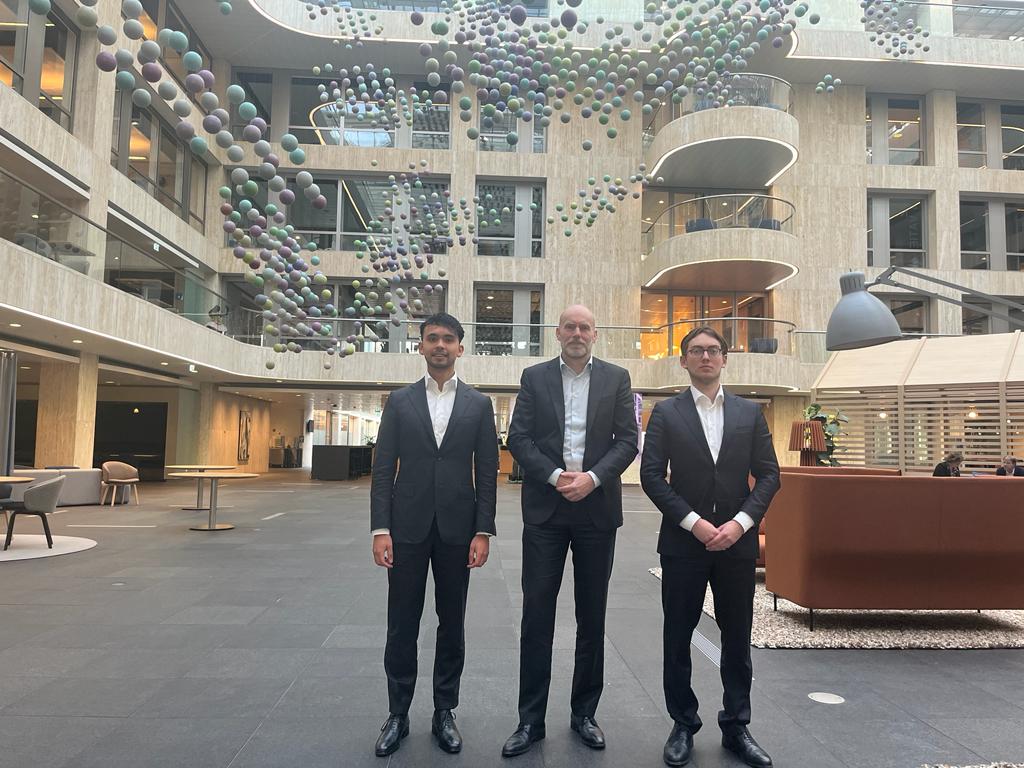
Interview René Berenschot – Executive Director at Aegon Asset Management
Aegon Asset Management is Aegon’s asset manager and offers a wide range of investment services. The company is committed to sustainable investment solutions and integrates environmental, social and governance considerations into its investment process. Aegon Asset Management has offices in Europe, the US and Asia and employs around 1,200 people. Assets under management and advice amount to around EUR 280 billion. Aegon Asset Management’s clients are mainly pension funds, insurance companies, banks, asset managers, family offices and foundations. What did you study and how did you come to this choice? I followed several studies and developed my interest in equity investing as early as secondary school. My choice of study was more or less already made during that school period. I started at Havo and then chose the banking and insurance differentiation at HEAO. After completing that, I entered military service, which was compulsory at the time. After my service, I started applying for jobs and looked for a job in an industry that appealed to me, such as equity investing or asset management. It was a challenging time then and quite difficult to find work. My first job was at Van der Hoop Effektenbank, a bank that no longer exists. There were as many as 1,500 applicants for the position I applied for, and in the end, only two trainees were hired. During my career, I did several courses, including the VBA (Association of Investment Analysts) course. That may not be as well-known now, but you probably know the CFA training. The VBA is the Dutch variant, more focused on Dutch/European laws and regulations. CFA is more international and mainly focused on the US. I also studied Business Administration and Financial Law at Erasmus University. What had you done compared to the other 1,500 men to be chosen? I don’t think there was anything special about my approach. As they always say, just be yourself. But of course, I prepared well for it. In military service, I was given space and time to conduct job interviews. In the team I was on, all the guys had college or university degrees. They were all applying for jobs and it was not always smooth, but you could learn a lot from each other, for example how to write a good cover letter. That made it easier to get through the first round. After several interviews at different companies, you also became more adept at interviewing Did you benefit a lot from the financial law course in your career? I apply daily what I learned during financial law course. Financial law is about financial supervision, risk management, compliance, and everything around it. It is a good background, especially if you work with clients, but of course, it depends on your interests and the position you hold. If you focus on portfolio management, for example, you might need it a little less. Would you recommend students to do the CFA? Because in the Master Finance at Tilburg University, you can choose to do a CFA track. If you really want to go in the direction of asset management, it seems that it is mostly valued in the ‘front office’ (such as portfolio management and similar functions). I can imagine that if you are an accountant working for an asset manager, a CFA is not that relevant. But if your focus is really on the front office, then a VBA or CFA definitely have added value. I remember that for my position at a previous employer, Van Lanschot, it was even mandatory. It was not then a matter of ‘it’s handy if you have it’, but really a requirement that someone had to have a CFA or VBA certification. What else has your career looked like? I started at Van der Hoop Effektenbank where I worked for eight years. I held various positions there; started as a trainee, and then you look around a bit in different departments. Then I did analyst work for a short time. After that, I did advisory work for private clients, asset management for institutional clients, and eventually became responsible for asset management for private clients. After that, I joined Kempen Capital Management. Now you have Van Lanschot Kempen, but back then Kempen was still independent. I then joined Van Lanschot. At the time Van Lanschot Kempen took over, I also got an offer to work at BNG Bank in The Hague (Bank Nederlandse Gemeenten). BNG Bank only provides services to parties serving the public interest such as municipalities, provinces and housing associations. It is one of the largest banks in the Netherlands with a balance sheet total of over €100 billion. At the time, BNG wanted to start an asset management company. Previously, companies such as Vattenfall (Nuon), Eneco and Essent were mainly owned by municipalities and provinces. Then came the liberalisation wave and those companies had to be sold. And BNG bank knew that market well and so the logical idea arose ”let’s start an asset management company” to manage the funds that became available. Well, I thought that was a very nice challenge and it worked out very nicely. Because from scratch, assets under management have grown to around €6 billion. Then a.s.r. came along. BNG Bank wanted to return to its core business and divest asset management, whereas a.s.r. wanted to set up asset management for third parties. Because a.s.r. did not yet have the infrastructure in place, BNG Asset Management was bought. Then at the end of 2022, it was announced that Aegon Netherlands was sold to a.s.r., leaving all of Aegon’s other businesses outside; such as Aegon USA, Aegon Asset Management, etc. Aegon Asset Management has a real ambition to grow further. They invest a lot in new teams, products, services and systems. For example, Aladdin (front office system for portfolio management, risk management etc.) was recently purchased from BlackRock and is currently being implemented. Part of the a.s.r. transaction was that a number of investment teams (and the associated assets under

A canal house or a tulip after all?
For the Dutch version, click here. Disclaimer: This article does not contain investment advice and only aims to inform and entertain. This article discusses the very first economic bubble. For this we go back to the golden age (17th century). Originally, tulips did not originate from Holland at all, as many believe. They came to the Netherlands through the trade that the Netherlands conducted with Asia. Because of this, tulips were also seen as luxury goods. During this period, the Netherlands was very prosperous, thanks to this international trade, and interest in flowers increased tremendously. During the golden age, status was very important; to increase it, people bought expensive items, including tulips. The Library of Economics and Liberty wrote the following about this: “It was deemed a proof of bad taste in any man of fortune to be without a collection of [tulips].” Partly because of this, the demand, and eventually the price, only continued to rise. Because demand was so high, starting in 1636 it was possible to trade in tulips through the Amsterdam Stock Exchange. In 1637, the tulip price reached its peak; one tulip bulb had the same value as a canal house in Amsterdam. It was also possible to trade in options tulips. Disadvantages of tulips First of all, tulips are particularly fragile and must be grown carefully. Because there was a lot of money to be made in the tulip trade, many growers arose. These growers learned sophisticated techniques to promote the cultivation of tulips. There was even a technique discovered to make a tulip have different colors. These were rarer and therefore worth more money. In addition, tulips did not contain an intrinsic value, which shares do. The intrinsic value of a stock can be calculated by reducing the company’s total assets by its total liabilities and then dividing this by the number of shares outstanding. This can be used to calculate whether a stock is overvalued or undervalued. This method is used by many experts, including Warren Buffett. “What goes up must come down.” Eventually, the tulip bubble burst at the end of 1637. People began trading in tulips using leverage; this involves investors borrowing money to realize returns. These investors often had other debts that they hoped to pay off by making possible high returns on the tulips. When investors were forced to sell tulips to pay other debts, the market began to collapse. So as investors borrowed money to speculate in tulips, this happened very quickly and eventually the bubble burst. What seemed like an easy way to get rich ended in failure for many. Relevance to the present Although the tulip bubble burst almost 400 years ago, the event is still very relevant today. For example, Bitcoin today is regularly compared to this tulip mania. The price of the cryptocurrency is volatile and, like tulips, indeed lacks intrinsic value. In both 2017 and 2021, the value of the cryptocurrency rose unprecedentedly hard only to fall again at least as hard. There are a number of similarities between tulips and Bitcoin. According to Pichet, E (2017) and Taskinsoy, J (2019), both tulips and Bitcoin were only used to speculate. Individuals purchased tulips for the sole purpose of selling it for a higher amount without making rational considerations, the same was true for Bitcoin. Still, there are some differences. First, Bitcoin is scarce, which cannot be said about tulips, which can be grown at any time. In addition, the cryptocurrency is based on the Blockchain. Conclusion The likelihood of a similar bubble occurring in the future will always remain significantly high. People will continue to strive for high status and therefore are looking for a quick way to make money. Thanks to the advent of the Internet, bubbles form a lot faster and as long as people continue to act irrationally, bubbles will continue to form. There are some wise lessons investors can take away from this bubble: Always remain rational. As discussed, financial bubbles occur because people make irrational decisions and, as a result, begin to speculate in investments that they themselves do not understand. As a result, individuals can react emotionally to price changes and subsequently lose a lot of money. Be less concerned with status and don’t compare yourself to others. Instead, it is better to focus on your own (financial) situation. If an investment seems too good to be true, it probably is. Don’t just borrow money to invest. This makes an investment unnecessarily risky and can have negative consequences as the tulip bubble shows. Sources Hayes, A (2022), Tulipmania: About the Dutch Tulip Bulb Market Bubble. Retrieved from https://www.investopedia.com/terms/d/dutch_tulip_bulb_market_bubble.asp Is geschiedenis (nd), De tulpengekte tijdens de gouden eeuw. Retrieved from https://isgeschiedenis.nl/nieuws/de-tulpengekte-tijdens-de-gouden-eeuw Pichet, E (2017), The Conversation, Bitcoin: speculative bubble or future value?, Retrieved from https://www.researchgate.net/publication/324660599_Bitcoin_Speculative_Bubble_or_Future_Value Taskinsoy, J (2019), Bitcoin: The Longest Running Mania – Tulips of the 21st Century, Retrieved from https://www.researchgate.net/publication/338009334_Bitcoin_The_Longest_Running_Mania_-Tulips_of_the_21st_Century
