

For the Dutch version, click here The step from studying to working is a big one. You have to get used to working hours and obligations, learn a lot and gain new experiences. That was no different for Femke de Boer when she started working at Deloitte Audit over a year ago. Still, she thought it was not so bad. Thanks to the pleasant guidance of experienced colleagues, but also because Femke already knew the office very well from her board experience at study association Asset | Accounting & Finance. “During my master Accountancy I was a board member External Affairs at our study association in Tilburg”, Femke explains. “A position in which I was responsible for acquiring partners, maintaining contact with existing partners, setting up events and recruiting students for those events. A tough task, but the perfect way to get to know the finance and accountancy firms up close. In addition, I applied for a business course from Deloitte at the end of 2017. We went to Budapest with a select group of 25 students and Deloitte employees. An amazing experience and again a great way to get to know the office.” Femke obviously made a well-considered choice to work at Deloitte. “In accountancy, apart from the size and type of clients, the work doesn’t differ much from office to office. It is therefore all the more important that you experience whether a company suits you. Colleagues are a big part of your job. If it doesn’t click, it can make your work boring or obnoxious. I therefore mainly made the choice for Deloitte based on the people. This is a place where I can be myself. Of course, the other offices are also good employers, but Deloitte suits me.” It turned out to be an excellent choice. Femke is now a second-year staff member at Deloitte Audit and very enthusiastic about it. “I therefore mainly made the choice for Deloitte based on the people.” My work is very broad, Femke explains. “From auditing the annual accounts to testing internal control. You get to know the process and the customers from A to Z. Very educative. In addition, like my colleagues, I follow the postmaster to become a chartered accountant. I now learn to link theory and practice. The step is from studying to working is a big one. Also for me. Fortunately, as a starter at Deloitte you get good guidance from experienced colleagues. He or she walks you through your work and explains why we do the things we do. You simply have to learn to understand why you have to perform these checks as an accountant. Time and space is made for your postmaster and there is always someone who can and will help you if you have any questions.” Because Femke enjoyed the guidance of her colleagues, she herself also started looking for ways to assist others. “Everyone who is promoted will coach a colleague. For me that will take a short while, which is why I recently asked recruitment if I can already contribute. I now guide students who are making the choice for an employer. A lot of fun to do. Of course, I would like to persuade them to come and work at Deloitte, but the main thing is to be transparent. I am very positive about Deloitte as an employer. But the point is that a company has to suit you. That is why I advise everyone to do as much research as possible into the different employers. Go to the events of your study association and get to know the companies. It cannot be done from a flyer at the University Library, you really have to experience it. It takes a little effort, but wouldn’t it be a shame if after years of study you did not discover your optimal future employer just because you did not put in the extra effort?”
Interview with the NBA
For the Dutch version, click here Krenar Berisha is a self-employed auditor and an ambassador of the NBA. In this interview, Krenar tells us about his experiences in the audit practice and how important the NBA is for auditors. Can you tell us something about yourself? I am Krenar Berisha, born and raised in the most beautiful town of Noord-Brabant: Tilburg. Despite the fact that many (former) colleagues have tried to convince me that there are more beautiful cities in Brabant (especially colleagues who live in Breda), they haven’t been able to convince me. I started my student career at VMBO, then moved on to HAVO, and finally started HBO Accountancy at Avans University of Applied Sciences in Breda. In my final year of study and during my orientation phase, I came in contact with Baker Tilly in Breda through a (former) fellow student. Because of the positive stories about Baker Tilly, I became enthusiastic and started working there at the end of 2016. At the same time, I started the pre-master Accountancy at Nyenrode. After my first year at Baker Tilly, I decided to make the switch to KPMG. KPMG, a so-called big four office, is active in the highest segment of the market, which offers a lot of challenges. This challenge finally made me decide to make the switch. In addition to the challenges that an office such as KPMG offers, I also found the personal guidance very pleasant. In your early years, you will receive intensive guidance so that you get to know the profession well. In addition to my job and studies, I have also carried outside activities in recent years and I have been an ambassador for the NBA since 2019. After a few years at KPMG, I decided to start working as a self-employed person. Entrepreneurship has always been my ambition. This eventually made me decide to continue as a self-employed person. I also had the ambition to start working as a teacher. Since last summer I have been a teacher at the Fontys University of Applied Sciences in Eindhoven. I do this in combination with my current work at the municipality of Roosendaal and GR de Bevelanden. Many vacancies in our sector nowadays require extracurricular activities such as a board year, did you do something like this besides your studies? No. I did not perform any relevant curricular activities during my studies. A tip I can give here is: start setting up a network. A study association such as Asset can be of great value here. You can build up a network, which you can benefit from during your career. A tip I would like to give you is to use LinkedIn. This is a social media platform to maintain your business contacts/network. You just told me that you are an ambassador of the NBA, can you tell me something about the NBA? The NBA is the Dutch Professional Organization of Auditors. There are currently more than 22,000 chartered accountants in the Netherlands. These are both Auditors (RA) and Accountant-administration consultants (AA). They are all registered in the register of the NBA. This organization promotes the professional practice of the accountant. They do this by, among other things, drawing up rules of conduct, testing the accountants’ knowledge, and providing education. At the end of the practical training, there is a final exam in which the ability to act as a novice professional is tested. However, before you can complete the practical training to become an auditor, you first need to complete your theoretical training as a Chartered Accountant. With our ambassadorship, we try to make the profession attractive for students of higher vocational education (HAVO/VWO) and students of higher vocational education (HBO/WO) in their first or second year. We try to introduce students to the accountancy profession at an early age. As ambassadors of the NBA, I have given guest lectures and made promotional videos. We do this with the NBA Impact Challenge: a case in which the young people will advise a starting DJ as an auditor. Furthermore, I expect the profession to look completely different again in 10 years’ time, especially looking at current technologies and developments. The field of accountancy is very broad, which allows you to grow in all directions in the financial world. This is also something we want to demonstrate with the NBA Impact Challenge. You don’t often see that people of immigrant background are engaged in the accountancy profession, then it’s certainly nice that you volunteer with the NBA to show that side of things. That is (still) true. Nowadays you notice that, especially in the suburbs, the target group of immigration background is getting bigger and bigger. There is a new generation emerging with many different backgrounds. But regardless of background or origin, applies to everyone: you just have to do your stinking best, and then you’ll get there. Personally, you will never see me use my background as an excuse. I will always do my best and this can only work to your advantage. To what extent does the NBA give you the freedom to fill in the ambassadorship? We get a lot of freedom. The general idea from the NBA is: ‘you have been students and know what students think and want to know, so engage in dialogue with the students and show them what you think of the accounting profession. The NBA thinks along with you about the activities in an advisory role, but apart from that, we have the freedom to fill in the ambassadorship. Our goal is to give a clear and honest opinion about a day in the life of the auditor. Do you think the NBA has an essential role in sketching an accurate picture of the accountancy profession, or do you think the Big4 should play a greater role in this? Of course the NBA, as the professional organization of accountants and auditors, is indispensable to the profession. However, every auditor, whether registered or working, has

Working at HLB Nederland
For the Dutch version, click here My name is Adisa Berberovic and I have been working at HLB Van Daal for 10 years, currently as External Accountant & IT-Auditor in our Audit department. How did I end up here and how did my dreams come about? I would like to tell you in this article! A few years ago I started my career in accountancy at one of the larger Big4 and Big5 offices. Here I had an instructive and challenging period and also laid a good technical foundation within the auditing practice. After a few years, I decided to switch to a SME+ office. One of the decisive factors for me was more flexibility, both in work/life balance and in the activities, plus the opportunity to gain experience with a wide variety of clients and to quickly get to the table with policymakers. This gave me the ultimate challenge. A broad portfolio and international companies offer many opportunities At the audit practice at HLB Van Daal, I had the opportunity to enter into discussions with a wide range of large and medium-sized companies, both in the Netherlands and internationally. Our broad portfolio brings me to companies in many different sectors, from the public sector to large SMEs and international companies. Through the use of broad expertise, personal attention, and quick contact with the ultimate policymakers, we get to know all aspects of the company to the core. In addition, we value stable team building and a long-term relationship with our audit clients, which enables us to personally see the company grow and develop over the years. “I am optimally supported in guarding a healthy balance and at the same time the realization of my goals.” HLB Van Daal is committed to personal development and drives HLB Van Daal devotes a great deal of attention to the development of personal ambitions and qualities. As a member of the audit team, I have discovered that I have an affinity with the developments in automation and digital transformation at our clients and the ever-increasing importance of data and data analysis in the accountant’s audit approach. This has not gone unnoticed and, in addition to the study accountancy, I have been given the opportunity to follow a master’s degree in IT auditing. HLB gives me enough room to realize this ambition. The combination of both studies, work, a social life, and my family was tough. From HLB this remained well under the attention and I am optimally supported in guarding a healthy balance and at the same time the realization of my goals. Since the completion of my studies, I have dedicated myself to the development and design of our IT audit practice. We are constantly working on this further development and professionalization. The IT audit and data analysis play a major role in this. I am currently responsible for the coordination, management of the IT audit department, and further strengthening of our audit practice in the form of a data analysis team. HLB Van Daal gives me every opportunity to build on the future.
Big Data: the future of business intelligence
For the Dutch version, click here Big Data is a concept that is passing by more and more often. The exponential growth of data has made it increasingly difficult for organizations to identify and analyze the information they collect and utilize. As a result, an increasing number of organizations are paying attention to data warehousing and data-analysis tools, this decreases the number of hours that employees spend making reports in the long run. An additional advantage of this is that companies can react to events more rapidly and have a better comprehension of business results. But what is Big Data? Which powerful data analysis tools already existed now and what are the characteristics and differences between the two largest players in the market in terms of data analysis? Big Data It is called Big Data when you are working with one or more datasets that are too vast to be used and maintained with regular database management systems. At least, that is one of the definitions. Especially the term ‘Big’ is a concept on which there is no set in stone definition. Some believe that all data that no longer fits on a single PC is covered by the concept of Big Data, while others think that data does not become Big until multiple levels of servers are transcended. The similarity that can be found is that Big Data describes a size of data. Dimitri Tokmetzis, author of De Correspondent, indicated at the end of 2013 that Big Data more often does not describe a size, but a development. “This is because it contains two components. First of all, computer technology: the increasingly sophisticated hardware and software that allows you to collect, edit and store more data. The second component is the statistics that make it possible to find meaning in a collection of loose data”. Tokmetzis argues that the world is going to be full of sensor gates, cameras, telephones and measuring equipment that continuously register everything and store data, which we then store again can use. “The digital world and the physical world are becoming more and more one body and Data is the blood,” according to the Correspondent of Surveillance & Technology [1]. Data Analysis Tool: Power BI But what resources are available to really give value to all the saved data? In this article we discuss two of them. The first data analysis tool that will be explained is Microsoft Power BI. Power BI is strategically used to convert raw data into understandable insights using visual graphs and dashboards. This enables users to generate compelling reports and share the current state of the business. This gives users of Power BI more insight into the activities undertaken and achieved performances, allowing them to make informed decisions based on real data. In addition, they can use Power BI to take advantage of huge amounts of data while other platforms struggle to do so. Power BI has impressive compression capabilities that make it possible to analyze and visualize data that cannot be opened in Excel. Moreover, you can transform data in Power BI in the way you want, such as adding columns, creating relationships between different data sources and the creation of the so-called ‘measures’ in which you can make certain that values calculate in specific ways. The tool is so powerful that Power BI itself can do the analysis why the turnover of the past month lags behind the budget [2]. Data analysis tool: Tableau “Harness the power of your data. Unleash the potential of your people. Choose the analytics platform that disrupted the world of business intelligence. Choose Tableau.”, is the slogan that readers first read when visiting Tableau’s website [3]. Tableau is a powerful and fast-growing data visualization tool that helps to simplify raw data. The nice thing about Tableau software is that it is not overly technical or requires any kind of programming knowledge required to use it. In addition, the created visuals and dashboards can be viewed and understood by professionals at every level in an organization. Even non-technical users can make adjustments to dashboards [4]. The best features of Tableau are: 1. Data Blending: allows you to link multiple data sources together, by finding common fields. An example of this is the column article number in the data sources ‘items sold’ and ‘stock items’. 2. Real-time analysis: this option allows users to quickly analyze and understand dynamic data. This is especially useful when the speed of updating data is very high. 3. Collaboration: data analysis should not be an isolating task; therefore, Tableau is built for cooperation. Team members can share data, create follow-up questions and easily forward visualizations to others who can extract value from the data [5]. Power BI vs Tableau The world of data visualization and analysis is fast growing and every day there are new entrants. at. Ease of use, power, brand recognition and price are important concepts that Power BI and Tableau currently possess to stay ahead of the market. Power BI uses the existing Microsoft systems such as Azure, SQL and Excel to data visualizations to build. Power BI therefore has the edge for people who work with Microsoft products. It is also a good and inexpensive option for startups that need data visualisation but do not have much extra capital. Also, Power BI is cheaper than Tableau, especially if an organization has already invested heavily in Microsoft software. Power BI has a desktop, service and a mobile version. Usually you need all three versions when a dashboard is made, but it is quite easy to understand how this works. In addition, you can retrieve data from different sources easily. The whole tool is built to speed up time of visualizations and it gives even the most novice users access to powerful data analysis and discovery without much prior knowledge. The real time data processing ensures that organizations can respond directly to changes that occur in the displayed data analysis. Tableau specializes in creating beautiful visualizations,
Audit in space: The new space race and its opportunities for auditors
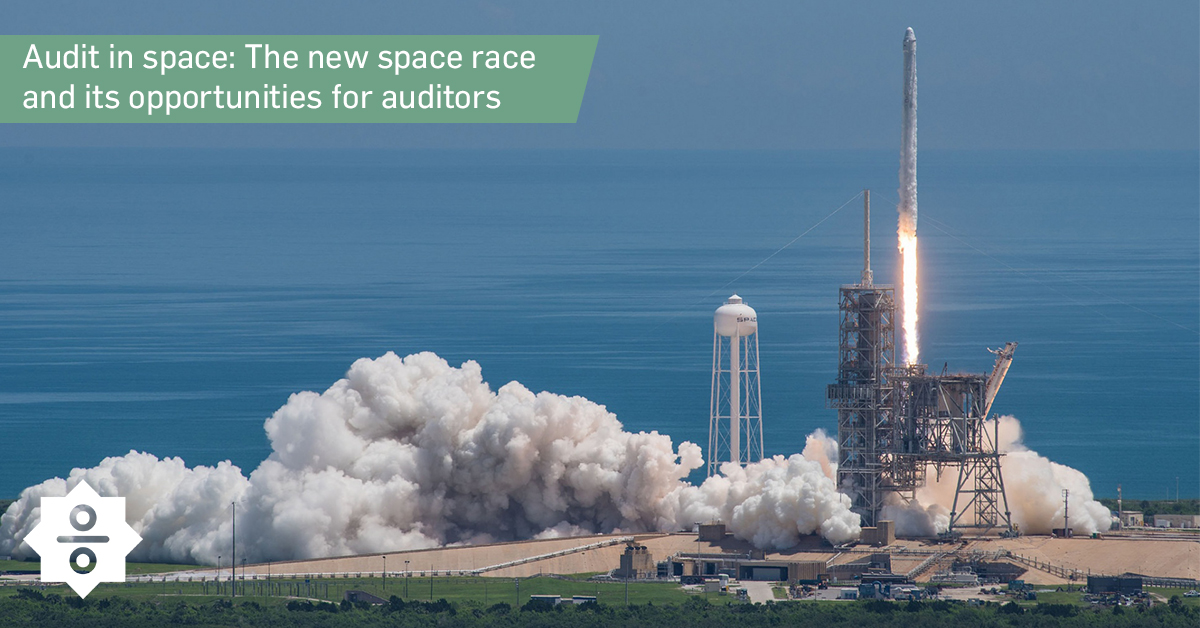
For the Dutch version, click here Over the last couple of years, more and more private entities are getting involved in the space industry. The commercialization hereof, new interests from different countries, and further innovation are spurring on new demand to explore the space industry. This demand only keeps increasing while the resources in space are limited. Because of this, a new space race is set to be taking form [1]. The emergence of this industry not only brings opportunities for new technologies, but it will also have a large impact on other industries such as accounting, taxation, and finance, to name a few [2]. Within all these industries an interesting one to look at is the auditing industry. One of the main roles an auditor is known for, is to independently give an opinion about whether companies’ financial statements are constructed with a certain level of confidence, according to the standards that it should follow. The combination of auditing and the space industry leads us to multiple questions. How will auditing look like in the future space industry; what obstacles does it face; and how likely is it that an auditor of today, with no prior experience in the space industry, will have to audit a space company in the future? But first of all, is there demand for audit in space? The current space industry is said to be worth around $330 billion USD. In addition to that, the future growth rate is expected to be immense. Bank of America predicts that in 30 years this industry will be worth $3 trillion USD [3]. This figure is a result from many different sub-industries in the space industry. Aside from the popular resupply missions to the International Space Station (ISS), other sub-industries have also been around for some time and new ones are still being born. A current large sub-industry is the transportation business for satellites and other devices. This business segment uses rocket launches to take care of transportation for the satellite and communications industry [4]. This is currently dominated for U.S. launches by SpaceX (founded by Elon Musk) and United Launch Alliance (a joint venture between Boeing and Lockheed Martin) [5]. Next to this, some new markets are; space tourism (Virgin Galactic founded by Richard Branson and Blue Origin of Jeff Bezos), space manufacturing, the creation of new space stations, and mining in space [6] [7] [8]. “If future investors are willing to invest in the mining of asteroids, how would they know with certainty that these asteroids exist if most people do not even own a telescope?” All of these ambitious projects cannot happen without facing some hurdles. To be able to bring these projects to life would require a large amount of capital from investors, and a lot of trust from clients. An important thing for investors would be to have as much trustworthy information as possible about a firm, before making an investment. Also clients such as governments from different countries would want to be sure that they are dealing with a responsible company. Both of these challenges can use an auditor to help solve them. So the auditing profession does seem to have opportunities in space commerce. Now that we know there are opportunities, what challenges can we expect these opportunities to bring with them? How do large distances and audit independence play a role in this setting? Firstly, a great challenge for auditors is that they are not able to easily conduct work physically in space (yet). This is due to the high costs that this incurs [9]. If future investors are willing to invest in the mining of asteroids, how would they know with certainty that these asteroids exist if most people do not even own a telescope? Since we cannot see these asteroids in person, there could be discussions whether to treat these asteroids as a non-physical asset in the audit process. Thus, the auditor would not be present to see the asset personally. The feat of auditing non-physical assets is a challenging one, and cases such as the Wirecard fraud can certainly prove this [10]. “ Just one launch may be the decisive factor of a space company being very successful or disappearing for good.” Secondly, the audit independence will also be a great complexity, because there are not many people with industry specific knowledge in the space industry [11]. Thus, it will be hard to find someone to independently judge certain operations and who does not work for the same company. When it comes to counting inventory in space it will be expensive to send an independent auditor to do this in the first years. Because of this, more reliance will have to be put on modern technology and the integrity of astronauts. However, to get more confidence in this situation in the future, more accurate sensors and technology would have to be developed to count the assets and inventories in space. This will lead to a greater reliance on highly technical instruments that auditors will have to trust and audit as well. This will in return also push auditors to expand their knowledge in areas outside of their current field. What role does the risk factor play when auditing in space? If there was one thing that makes the space industry so different from an accounting perspective, it would be the amount of risks that it carries. Some consider it to be the riskiest and most difficult industry to operate in [12]. Just one launch may be the decisive factor of a space company being very successful or disappearing for good [13]. Also, just one small error with a bolt can lead to a whole rocket exploding [14]. This brings even more challenges for the audit industry to tackle. Because of the high risks, quality control is of utmost importance. To have a good overview of quality control a good internal control needs to be in place. This will prevent unauthorized personnel from making unauthorized actions and minimizing mistakes. Besides
MSc Accountancy: Master File vs. Thesis – what’s the difference?
For the Dutch version, click here Over the years there have been many debates about whether a thesis at the end of a graduate’s education actually helps him/her in becoming a better employee in practice. Many have argued that a thesis can improve the skill set of the student and enhance his/her capabilities, while others have argued that it adds no extra value to what they will eventually end up doing. This has been the case in the accounting sector. Tilburg University has responded to this by taking a different path than other universities when it comes to writing a thesis. They have looked to improve the link between students and their future job. This has led the MSc Accountancy at Tilburg University to introduce the MSc File Accountancy, better known as the Master File, to replace the thesis of the graduate accounting students since the academic year of 2019-2020. Master File You might ask yourself, what is the Master File; and what makes it so special? The Master File is a more practice-oriented thesis but with a clear academic basis, and consists of three parts, namely a Business Application, a Replication Study and a Research Note. The Business Application focuses on a real-life problem experienced by a selected company. This company is then given advice through the use of published academic research of which the findings are applied to your individual case. Hence, this covers more of the ‘literature research’ that you would have ought to do in a ‘regular’ accountancy thesis. In the Replication Study students have to select an already published research paper which they will have to replicate with a well-motivated variation in the context and/or time of the study. This part of the Master File is meant to cover and train your data analytics skills which are tested in the latter part of a regular thesis. The Research Note, the third report, approximates a traditional thesis as most of us know. However, it has a shorter length than the traditional thesis as it is meant to be briefer. The goal of the Research Note is for the student to come up with a creative idea for a new research and to develop a plan on how this would be executed. Hence, the entire research should not be conducted, but the plan should be substantiated with literature research and the student should assess the appropriate data analytics that ought to be used. These three components form together the Master File. The first two components each weigh 25% of the final grade and the third component weighs 50% of the final grade. Furthermore, it is important to mention that each component links to a different field within accounting. For example, you can conduct your Business Application in the setting of Management Accounting; your Replication Study in the setting of Financial Accounting; and your Research Note in the setting of Auditing. Main Differences Nevertheless, after conducting all three components, it is hard to try to find a clear difference between a regular thesis and the Master File. The main differences lie in the context that it is given in and in the skills that they focus on. The Business Application brings you in direct contact with the practical world as students will have to solve a real-life problem solely based on academic literature. This makes it clear that the Business Application pushes students to get in direct contact with the practical world, which is not the case for the regular thesis. The Replication Study focuses more on the replication of a study as to where a regular accountancy thesis would at least need an add-on and a clear contribution to the academic field and/or the practical field. As for the Research Note, since you are not conducting an entire thesis, with that meaning that the execution of empirical tests are limited, (though they must be planned out), the main difference lies in the execution of the project. Pros and Cons After having interviewed several students¹ that have completed the new Master File and other students that have completed the ‘old thesis’, they have named several pros and cons to the new Master File towards the ‘old’ thesis. One pro that has often been accredited by the interviewees was the set-up of the Master File. Most students can agree that conducting the Business Application and the Replication Study before the Research Note has helped them a lot. The reason for this is because they were able to apply the skills that they have learned in the first two components of the Master File on to the third component. Next, students were keen to mention that they appreciated the more practice-oriented setting that the Master File has brought. “Furthermore, almost every student interviewed also mentioned that a big pro was having to learn three different accounting subjects against just one.” Furthermore, almost every student interviewed also mentioned that a big pro was having to learn three different accounting subjects against just one. This contributes to a broader knowledge within the field of Accountancy and has also contributed to increasing their expertise in all three areas as opposed to just one. Also, one student conducting the ‘old thesis’ mentioned that she was particularly jealous of the students following the new Master File. “The skills that they have gained while conducting the Replication Study was much more profound than mine. I felt like they really had less obstacles when conducting the Research Note compared to me when I was conducting my ‘old’ thesis”. Lastly, some students really liked the idea of spreading the workload over the entire year. However, this also contributes to a con of the Master File since not all students really appreciated this. “Having your workload spread-out throughout the entire year may have its benefits, but it can sometimes get really busy when you have to follow your regular courses next to it.” Moreover, students have mentioned that they would have appreciated more guidance during their second assignment, which was
