

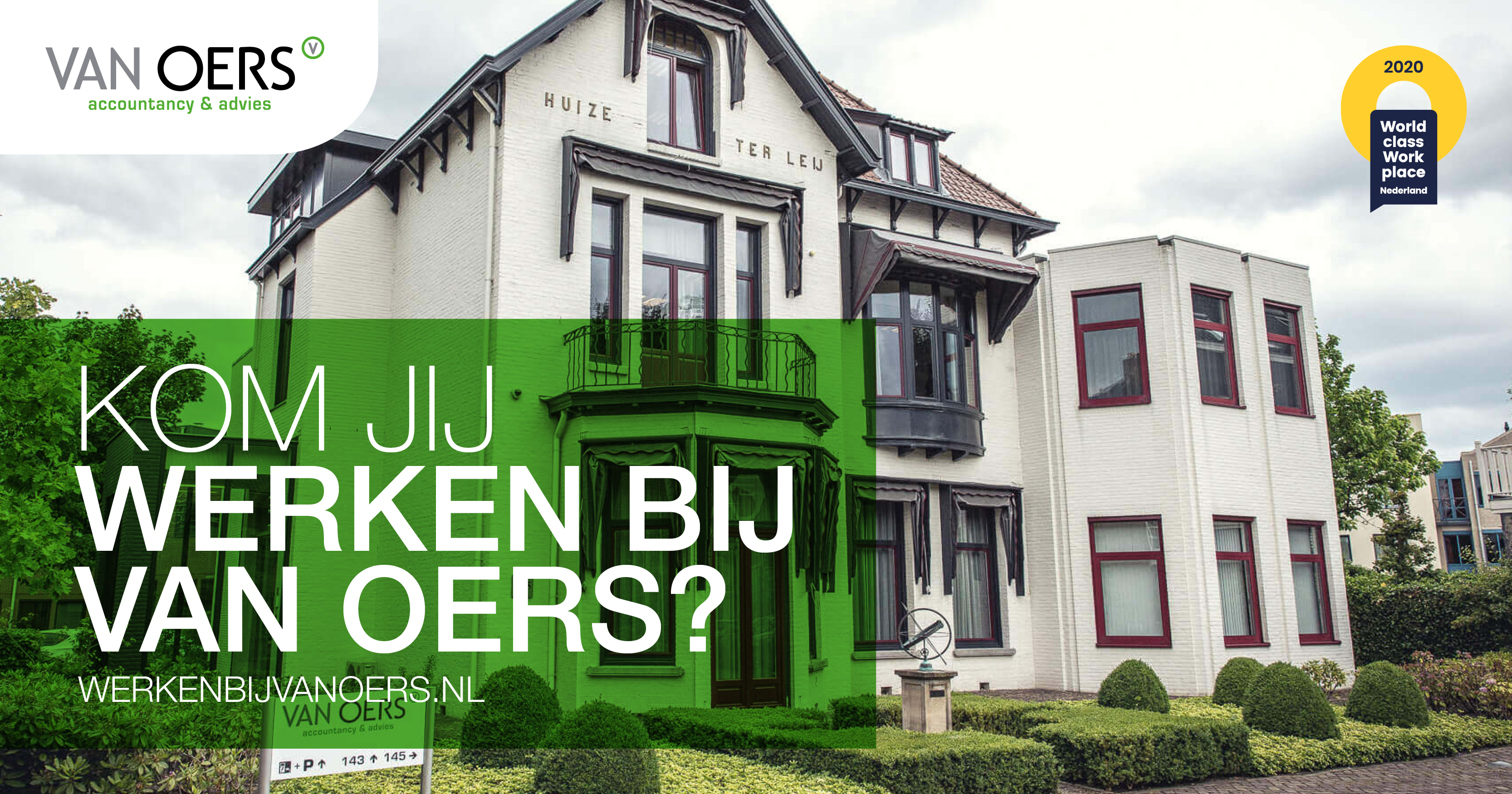
For the Dutch version, click here Who am I? Let me briefly introduce myself. My name is Edward van Dijk. I am 29 years old and live in Breda. In 2009 I chose to study Business Economics at Tilburg University. I found the versatility of the program an advantage, as it allowed me to choose many different directions. In the subsequent master’s, I decided to study Accountancy, but I also wanted to gain practical experience. I therefore chose to follow the master and post-master program at Nyenrode Business University. I hope to complete the final phase of the post-master program very soon! The packed lecture halls with often hundreds of fellow students remain to be a vivid memory for me. As will the 8-week study blocks, which in three years covered every imaginable subject within economics, business economics, and fiscal economics. This gave me a broad theoretical basis. Of course, I also found time for fun during my student years. My best memory of my time in Tilburg is the study trip to Brazil with 20 fellow students, organized by Asset. As one of the lucky ones, I had the opportunity to go to Rio de Janeiro and Sao Paolo. These super cities made a big impression on me. I believe the study tour is still being organized and I highly recommend it! Van Oers Then along came van Oers. In mid 2019 I decided to transfer to the audit department of Van Oers in Breda. This is a well-known accounting firm in West Brabant, consisting of five offices. I felt at home immediately. Van Oers has a very professional look and feel, along with a personal approach. I immediately liked the approach to professionalism and the investment in the growth of (young) professionals, the most important parts of the audit field. In addition, the client portfolio really appealed to me. Van Oers serves both SME clients as well as large for-profit companies in a wide range of sectors, which is also nicely explained on the website. For my own development, I was looking for diversity in my client portfolio. In consultation with Van Oers I was offered diversity, which provides me with many challenges in my daily work. Working at Van Oers Van Oers currently has over 380 employees working in the various disciplines that Van Oers offers. In my department, I work with approximately 65 colleagues, a number that is still growing. In the field of Auditing & Assurance, our department is one of the largest in the region. The work as an auditor mainly consists of auditing financial statements of companies subject to audit. “Due to the good organization and the growth I am experiencing in my own development, I am still satisfied with the choice I made.” To make it concrete, it is best to explain how a regular day for me looks like. As a Senior Staff member, I manage the team members and report to the manager of the assignment. The assignments vary. I sometimes work with three colleagues together on a project, but I also have assignments with 8 colleagues. The work itself is diverse but can be roughly divided into interim and balance sheet audits. During the interim audits in autumn, we focus mainly on gaining insight into the company and testing the internal controls. During the balance sheet audit, we anticipate on the identified risk factors, by analyzing the figures and verifying the information presented in the financial statements. My own role consists of going over the tasks for each item or part of the audit with a Staff member, reviewing the work performed, performing the most complex tasks, and communicating the status and findings to the manager. The project is thus carried out together, in which each team member has his own share. Van Oers believes that involvement is extremely important. Informal activities are always announced with great enthusiasm. An example of a fun activity is the annual employee event, The Voice, which is a popular gathering among all Van Oers employees. In addition, my own Audit department often organizes activities for the entire team, such as a quiz or a (digital) escape room. Because Van Oers also considers quality to be extremely important, I often see my colleagues at seminars. In short, we work very hard. Due to the good organization and the growth I am experiencing in my own development, I am still satisfied with the choice I made. Corona I can’t help not to mention the COVID-19 crisis time at the time of writing this interview. I work mainly remotely, that is, at home at the dinner table. Van Oers has provided me with all the tools to work effectively remotely. This has been effortless. Daily phone calls, but especially switching with colleagues and customers via Microsoft Teams is my fixed daily rhythm. Because I currently work, eat and sit in one place for almost the entire working day, I almost always exercise for an hour after work. This, in turn, is a big advantage: no more travel time and therefore more flexibility! My advice I have always had a good sense of numbers. Economics, management & organization, and math were always my favorite subjects in high school. I must admit that I had a hard time making a choice in my studies. The choice for a somewhat broader preliminary education was for me a great outcome to discover several directions in the financial world. I soon discovered that I was most interested in the “behavior” of organizations. Why do organizations, and especially the people in these organizations, make the choices that lead to success? A company is more than numbers! The accountancy branch fits in nicely with this! My advice: First of all, I recommend that you enjoy your student life. Cliché, but this period flies by. Before you start your career, my advice is to get a better understanding of where your interests and ambitions lie. What is the ideal job for you and

Back to secondary school with the educational post-master in Business Economics
For the Dutch version, click here Consultant, financial analyst, auditor, and controller. This is a small selection of the career perspectives you could think of with the master accountancy and the master finance. However, one profession that is not often mentioned is teacher, while the graduates of both master’s programs can be trained within one year to become a teacher of Business Economics (formerly Management & Organisation) at secondary school. Every year, enthusiastic students start this post-master program at Tilburg University, despite the poor image of the teaching profession. Remarks such as “You’re already on holiday?” or “A real man doesn’t become a teacher after all” do not help. What motivates future teachers to choose to teach, how do they experience the training program to become a teacher and what does it mean to be a teacher? You can read more about this in this article. The choice For this article, I spoke with Simone van Oosterhout, Frank Verstraten, and Wim Maas, all three choices for the educational post-master’s program to teach Business Economics at Tilburg University. Simone previously worked as an assistant accountant but chose to pursue her long-cherished wish of becoming a teacher. She is currently in the second semester of the program. Frank obtained his Master’s degree in Finance and worked in the business world for several years, but noticed that an office job did not make him happy. Therefore, he decided to switch to education, as this had previously suited him well as a tutor during his student days. Since 2019, Frank works at a secondary school as a business economics teacher. We know Wim as a university lecturer at Tilburg University. During his master Accountancy, he was looking for an alternative career for the often touted Big Four. By giving tutorials during his student years, he already knew that he liked teaching. Following this, he stumbled upon the teacher training program. After completing the course, he worked in a secondary school for one year before making the switch to university education. The program Students with a business economics background can make the transition to secondary school education through Tilburg University’s Teacher of Preparatory Higher Education in Management and Organisation program. A bachelor’s and master’s degree in business economics will automatically qualify you for this one-year post-master’s program. In the post-master’s program, students are trained to become first-degree qualified teachers of business economics at secondary schools. First-degree teaching qualification in Dutch education means that you are legally qualified to teach senior classes at HAVO and VWO level. In addition, with the first-degree diploma for business economics, you may also teach economic subjects in the second-degree domain, which includes practical education, vmbo, mbo, and the junior classes of havo and vwo. “You are in front of the class from the very first week. You find out right away if it’s something for you. The program is entirely in Dutch and consists of both subjects and an internship [1]. It trains you to be a so-called “starter competent teacher”. Simone explains what this means: “You shouldn’t have the illusion that you will be a perfect teacher after the program, but it does prepare you to stand independently in front of the classroom.” In total, you spend 15 ECTS on didactic subjects, 12 ECTS on didactic research and 33 ECTS as a trainee at a secondary school. The didactic subjects are divided into two parts. On the one hand, students are taught ‘Course Didactics’, which focuses on how to best explain business concepts to students and how to stimulate students’ understanding in addition to a theoretical explanation. In addition, students follow the course ‘General Didactics’, which is taught together with the other teacher training programs of Tilburg University. This course deals with general didactic topics, such as class management, motivation theories, and testing. Finally, in small groups, students research the field of teaching methods. After all, it is and remains a university education. Together, these subjects fill one to two days a week. The rest of the week you do an internship at a secondary school. Teaching Your internship at a secondary school starts simultaneously with the post-master and takes place three to four days a week. The secondary school is assigned to you in consultation with the training coordinator. Once at school, you are soon in front of the class, Simone, Frank, and Wim tell us. Frank experienced his internship as very instructive: “You have to work for hours and accept that you are going to make many mistakes. Eventually, these mistakes are what you learn the most from”. Wim also agrees with the usefulness of the internship: “You are in front of the class from the very first week. You find out right away if it’s something for you. Fortunately, this proved to be the case for Simone, Frank, and Wim. All three concluded that they enjoyed teaching very much during their internship. They emphasize that it is the connection and dynamics with the students that make teaching fun. Frank explains that within the structure of the lesson and with a good atmosphere, there is room to fool around with the students. On the other hand, Wim also found it fun to delve more deeply into the content with his students. To dive into the content, Simone says, it can be useful to have worked in the business world for a couple of years before taking the teacher training course. She feels that her work experience enables her to explain certain concepts to her students better because she has seen them in practice. While Wim has made a transition to higher education, Frank and Simone see themselves continuing to work at a secondary school in the future. Besides teaching the subject of Business Economics, Simone hopes to become a mentor of a class in the future. Frank has already made this happen and is currently a mentor of 4 vwo. Furthermore, he arranges everything concerning the profile assignments of students and organizes a study trip to
Controlling – Accounting’s long lost brother
For the Dutch version, click here For the accountancy students among us, it’s a familiar ritual by now; as soon as the future comes up, the majority of students hear the all-too-familiar song: first, complete the master’s program Accountancy, then start the postmaster CPA while at the same time, starting to work for example at Deloitte, EY, KPMG or PwC. There is, of course, nothing wrong with this road. After all, the CPA title is very valuable and as long as people have not been replaced by technology, we will also need enough inflow into the audit practice, and the financial sector in general. In addition, working in auditing can also be fun, provided that this is where your interests lie. The demand for the CPA title is therefore growing every year. However, the ever-growing demand for CPA students also has a downside: when people talk about accountancy these days, we only think about Chartered Accountants. However, there is another branch within accountancy; Controlling. What exactly does a controller do? Generally, a controller assists the board or management in understanding and maintaining the financial affairs of a company. The controller oversees a company’s finance department and often leads this team as well. The controller also deals with financial planning and reporting for the benefit of management. Simply put, a controller is concerned with the quality of the entire financial process and ensures that the results and planning are optimally communicated to management, in order to support decision-making. For a career as a controller, you generally don’t need additional training like a CPA. However, these courses do exist. The executive master: Register Controller (RC). If you complete this program, you will be listed in the NBA register, just like a CPA, as an additional quality stamp on your resume. Why RC or CPA? The big question now, of course, is why anyone should choose RC or CPA. One is no better than the other. Both have extensive knowledge of financial data, and both are post-master educated. So the difference does not lie in the level of education. In my opinion, it will mostly be where your interests lie. Of course, your interests lie in finance, otherwise, you wouldn’t even think about throwing yourself into the world of financials. The big difference is whether you like to evaluate a company internally or externally. As a controller, internally you will be mostly concerned with the processes within the finance department and steering for growth and results. As an accountant in the audit practice, you will mainly focus on the correctness of the external reporting and compliance with laws and regulations. The question is therefore what you yourself find most interesting. It’s worth noting that there is a trend where we see a lot of chartered accountants choosing to switch to a controlling position in the business world after a number of years in the audit field. For example, many controllers and CFOs at large Dutch companies used to be CPAs. Think of the CFOs of Adyen, ASML, and Unilever. For those students who already know that they have the ambition to eventually hold a position as CFO: there is also another path than becoming a CPA. The road to RC is about as long, but if we are to believe the universities, you are slightly better prepared for the position you will eventually hold. Boxes The advice I would like to give current and future Accountancy students: do not immediately put yourself into the box of the chartered accountant. Of course, it’s a good profession with good prospects, but there are many other interesting jobs that are just as well suited to financial education. In my opinion, that is also the beauty of training in financial disciplines; at the basis, we all understand financial matters, and eventually, you can end up in plenty of amazing places. Even without a CPA title, you have a degree in your pocket that guarantees your ability to critically think in a certain field. And that piece of paper will get you there.
Working at EY
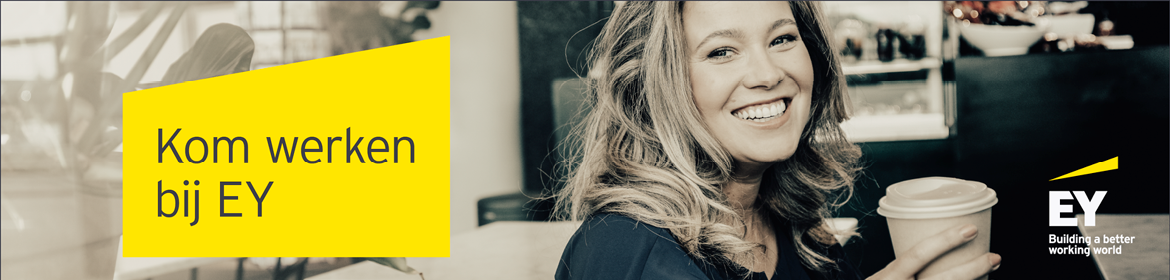
For the Dutch version, click here What is it like to start working at an accountancy firm in a time in which everything is online and working from home is the standard? In this article, Daniek Veldhuis will tell about her experience as a first-year staff member at EY. Who am I? To begin, I will shortly tell something about myself. My name is Daniek Veldhuis, I am 22 years old and I live in Tilburg. After obtaining my VWO diploma in 2015, I decided to make the move to the student city Tilburg. From 2015 to 2018, I studied Business Economics and after completing this bachelor, I continued with the master Accountancy at Tilburg University. Next to my studies, I was a board member at the study association Asset | Accounting & Finance. As such, I got the change to organize network events together with my fellow board- and committee members. These network events were organized for, among others, several accountancy firms,. Due to this, I was able to get a good idea of the various Big-4 offices and eventually make an informed choice to apply for a job at EY. Why EY? You might wonder which factors contributed to my choice for EY. First of all, I quickly decided for myself that I wanted to start at one of the Big-4 offices. For the many possibilities, but also the international aspect appealed to me. Another factor that was important to me was a good match with my colleagues. The actual work at the different accountancy firms does not differ much, which makes the social aspect even more meaningful. Working at EY During my master, I first did a thesis internship at EY in Eindhoven. During such an internship, you will have the opportunity to write your thesis at the office. As such, you can already experience the ins and outs and the atmosphere on a normal working day at the office. My thesis internship started in February, but unfortunately we quickly had to work from home due to the COVID-19 crisis. Fortunately, fear that this would cause less contact with colleagues was not necessary. At the beginning, all thesis interns were assigned a buddy group and mentor and we had a weekly contact moment with this buddy group during the duration of the internship.. Despite the special circumstances, I enjoyed this time so much that I started at EY Eindhoven as a Staff Audit last September. The first two weeks consisted of an introduction period with all the other starters from the same region in which we covered different cases to prepare us for the work to come, but also several informal activities were organized to create a good relationship with my fellow starters. “The activities as a Staff Audit differ throughout the year, from testing internal controls to analyzing the figures in the annual report.” After the introduction weeks, it was time to really get to work. A big step, but you will be guided in this process as well as possible and in the case of any questions, you can always contact your personally assigned coach.. None of my colleagues will have exactly the same working day. This mainly depends on everyone’s client package. My client package consists of different types of clients, including one large client from the United States that I have been working on for most of the time so far. The activities as a Staff Audit differ throughout the year, from testing internal controls to analyzing the figures in the annual report. You work on this together with the team, at the EY office or at the clients site. This year, it has been different and I have spent most of the year working from home. This is very different from what I had imagined my first year at EY to be, but we all try to make the best of it. Where you would normally meet in a meeting room with your senior to discuss something, this is now all done via Teams. Furthermore, we now have virtual work sessions to re-create the feeling of a normal working environment. All team members will join the session, so we can also get an idea of what the other team members are working on. Besides all the hard work, there is, of course, also time for other fun activities. Unfortunately, this year, events like the Christmas drink or ski trip could not take place, but online activities are organized as much as possible, with the entire region or within the team you are working with that week. For example, two colleagues of mine organized a Carnival pub quiz for the entire team a few weeks ago. In short, my first year has been an eventful year so far and different than expected, but precisely because of the way EY has approach this situation, I am still happy with the choice I made.
Working together with the FIOD: what is the role of the accountant in beating corruption?
For the Dutch version, click here How corrupt are the Netherlands? Transparency International addresses this question annually and publishes the Transparency International corruption index, based on interviews with experts and business people in relevant countries. In the most recent evaluation the Netherlands scores reasonably well, with an eighth place in the top ten least corrupt countries [1]. Nevertheless, we in the Netherlands must remain critical. Although corruption has been largely eradicated in our own country, Dutch companies are repeatedly guilty of bribery abroad. The OECD Working Group on Bribery, the organization responsible for monitoring and reporting on the anti-corruption efforts of participating countries, concludes that companies or individuals in the Netherlands rarely go to court and the number of foreign bribery cases that are concluded with sanctions is relatively low [2]. Furthermore, the Netherlands lacks a legal framework for self-reporting, making it difficult for companies to assess the consequences of reporting internal corruption practices, leading to uncertainty and reluctance. However, the OECD Working Group on Bribery also mentions positive developments in the fight against corruption. One of these is the establishment of the Anti-Corruption Center (ACC) in 2016, a unit within the Fiscal Intelligence and Investigation Service (FIOD) aimed at combating corruption in the form of official and non-official bribery abroad and non-official bribery in the Netherlands. In addition to conducting corruption investigations, the ACC focuses on sharing knowledge in the area of corruption, entering into cooperation with various parties and professional groups, and increasing awareness of corruption and identifying it by means of ‘Awareness-raising-activities’. I spoke with Desiree van der Hoorn, chartered accountant and project leader at ACC, about how this unit operates, why they could really use the help of accountants in reporting signals of corruption, and the pilot project between the NBA, FIOD, and accountants. How does reporting of corruption signals work? The ACC starts a corruption investigation after receiving one or more signals, coming from different sources. These signals can come from the other government departments such as the tax authorities, revelations from whistleblowers in the media, such as the Panama papers and Luanda leaks, but also from reports by accountants. Accountants are part of the so-called gatekeepers, public and private organizations that, on the basis of the Money Laundering and Terrorist Financing (Prevention) Act (Wet ter voorkoming van witwassen en financieren van terrorisme, Wwft), are legally obliged to report unusual transactions that they identify to the Financial Intelligence Unit-Nederland (FIU-Nederland). Other examples of gatekeepers are institutions such as banks, trust offices and payment service providers, but also lawyers, appraisers and civil-law notaries. For accountants, both subjective and objective indicators have been developed for reporting unusual transactions. For example, a transaction of €10,000 or more paid in cash, checks, or prepaid cards must be reported at all times. After reporting the unusual transaction, FIU-the Netherlands can declare the transaction suspicious, after which it becomes available to the investigative, intelligence and security services. Reports by accountants A total of 2,462,973 unusual transactions were reported to FIU by the various institutions and professional groups in 2019, of which 3,424 were reported by accountants [3]. This represents a small portion of the total number of reports, although it should be noted that payment service providers, mostly through the objective indicators made over 1.9 million reports. Despite the small number, these reports are very valuable to FIU-Netherlands and FIOD/ACC, according to van der Hoorn. “An accountant is much closer to a company and has a good idea of what happens within a company, what is usual, but also what is unusual. In addition, before the accountant makes a report, some things are done. At large accounting firms, several consultations often take place prior to a report. This means that several experts have already had a look at the case and the transaction has been analyzed in detail. As a result, the reports that are made are often of high quality”. “If you look at the relationship with your client, then it is logical that you want to keep it good. But ‘keep it good’ to me would also mean good in terms of content, so you also want a client to act with integrity and that you, as an accountant, can put him on that integrity track, insofar as he is not already on it.” The considerations of reporting Despite this, accountants remain reluctant to report signs of corruption and the investigative services are seen more as the enemy than as a party to cooperate with. How can this be? In addition to his social responsibility in judging the truthfulness of the financial statements, the accountant also has a direct responsibility to the client. This combination can create a conflict of interest that hinders reporting. However, this does not outweigh the fact that failing to report an unusual transaction or reporting it too late is punishable by law. It can be punishable by substantial fines [4, 5], but an accountant can also be held liable under criminal or disciplinary law. In addition, van der Hoorn believes that if an accountant acts correctly, he will not easily find himself in a situation with major dilemmas or risks. “Despite the fact that, as an accountant, you are not allowed to tell your client that you have reported an unusual transaction to FIU-Netherlands, you do want to discuss the problem you have found with the client. Together with the client you want to resolve the issue, prevent it from happening again in the future, and possibly discuss the extent to which it makes sense to deal with the past and actively report the bribery yourself, so-called self-reporting. If you’re in such an open relationship with your client, you don’t actually get to a point where the risk is effectuated at all. “ In addition, conflicts of interest are often mentioned as a possible reason for not reporting an unusual transaction, but according to van der Hoorn, an accountant acting in the interests of his client would want to raise precisely possible corruption
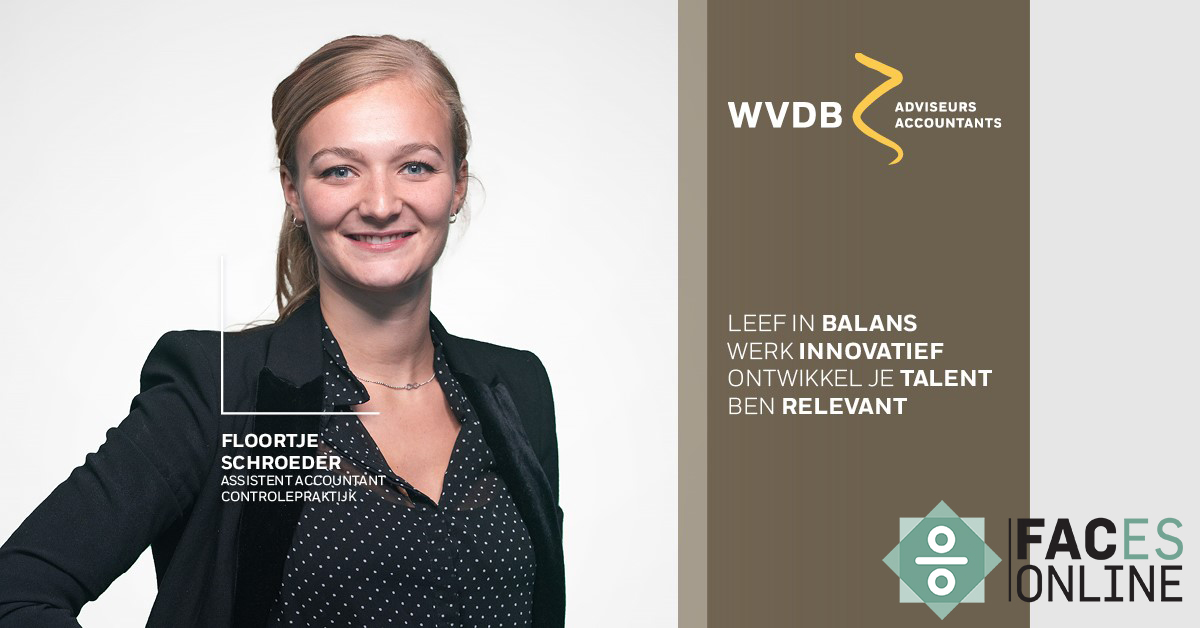
Working at WVDB
For the Dutch version, click here Who is Floortje Schroeder? My name is Floortje Schroeder and I am 23 years old. I was born in Tilburg and have lived in ‘s- Hertogenbosch since I was 11 years old. After high school, I started the hbo study Business Economics/Accountancy at Avans University in ‘s-Hertogenbosch. I completed this program in 2018. Since I wanted to study in the city where I come from, I chose to follow the Pre-Master Accountancy at Tilburg University. After completing the Pre-Master I started the Master Accountancy and consequently, I started the Post-Master Accountancy at Tilburg University in September 2020. My path to WVDB My path to WVDB started in 2016 when I signed up for the ‘practice route’. The practice route was a part of my hbo Accountancy studies at Avans Hogeschool and allowed students to get acquainted with the audit practice. To be able to participate in the practical route, a choice of an accountancy firm had to be made. The choice consisted of a Big 4 firm and WVDB. My preference went to WVDB because I believe I fit better in an organization where the lines are short and therefore everyone in the department knows each other and works with each other. In addition, I saw that a medium-sized organization would offer me the opportunity to be given responsibilities and to grow more quickly. WVDB caught my attention because it is a multidisciplinary office where different disciplines work together and because WVDB has a diverse client portfolio. The practical route brought me to WVDB as a junior assistant accountant. The practical route had a duration of 1.5 years where I worked 4 days as a junior assistant accountant at WVDB and followed my studies on Fridays. This allowed me to get an early idea of how everything works in practice. During my working period as a junior assistant accountant, WVDB introduced me to the accountancy profession. They gave me the opportunity to carry out various activities for both the compilation and the audit practice. In this way, WVDB gave me the opportunity during this period to get an idea of the practice and to develop myself. As a result, it was easier for me to make my choices regarding a follow-up study (AA / RA). “During this interim period, I started as a working student in the audit practice at WVDB. Working a few days a week during my studies allowed me to apply all the theoretical knowledge I had gained during my studies and to maintain and expand my practical knowledge.” After finishing the Pre-Master, an interim period follows, and then the Master Accountancy starts. During this interim period, I started as a working student in the audit practice at WVDB. Working a few days a week during my studies allowed me to apply all the theoretical knowledge I had gained during my studies and to maintain and expand my practical knowledge. This gave me an advantage over my fellow students in terms of practical experience. Because of the above, after completing my Master’s in Accountancy it was not difficult to choose where I wanted to work. WVDB has given me the opportunity to gain practical knowledge and develop myself during both my hbo and my Master’s studies. I have always found this time to be very pleasant. Because of this, I chose to stay at WVDB and I started as an assistant accountant audit practice at WVDB on September 1, 2020. My role and activities I have now been working as an assistant accountant for the audit practice at WVDB for several months. I have benefited greatly from the knowledge I have acquired during the practical training and my work-study, as I can now work independently. As an assistant, I am involved in carrying out audit assignments for various clients. WVDB has a very diverse client portfolio, which allows me to gain experience with the different sizes of clients and the sectors in which they operate. The diversity of the work with different clients and the cooperation with multiple disciplines make it challenging to work at WVDB. In addition, there is room for guidance, management, personal development, lots of customer contact and every team member is ready to help each other. There is also a friendly informal atmosphere at WVDB where it is pleasant for everyone to work. Usually, staff parties and outings are also the focus. However, due to COVID-19, these have not been able to physically take place this past year. Of course, WVDB would not be WVDB if we did not replace these outings with virtual ones. We now have the virtual after work drinks on friday, the control practice pub quiz, and the (Christmas) bingo! What do I want to give you? What I would like to pass on to you is that if you have the opportunity to take an early look at the practice to grab this chance. It facilitates your (study) choices in the future, gives you a head start on your fellow students, ensures your personal development, provides extra preparation for the start of your career and WVDB is open to help you with this! I would also like to suggest you take a good look around and see which office suits you best. Go and have coffee at different offices and talk to starting employees so that they can share their experiences with you. This will give you a taste of the atmosphere at different offices. Don’t follow the most popular route, follow your own route!
