


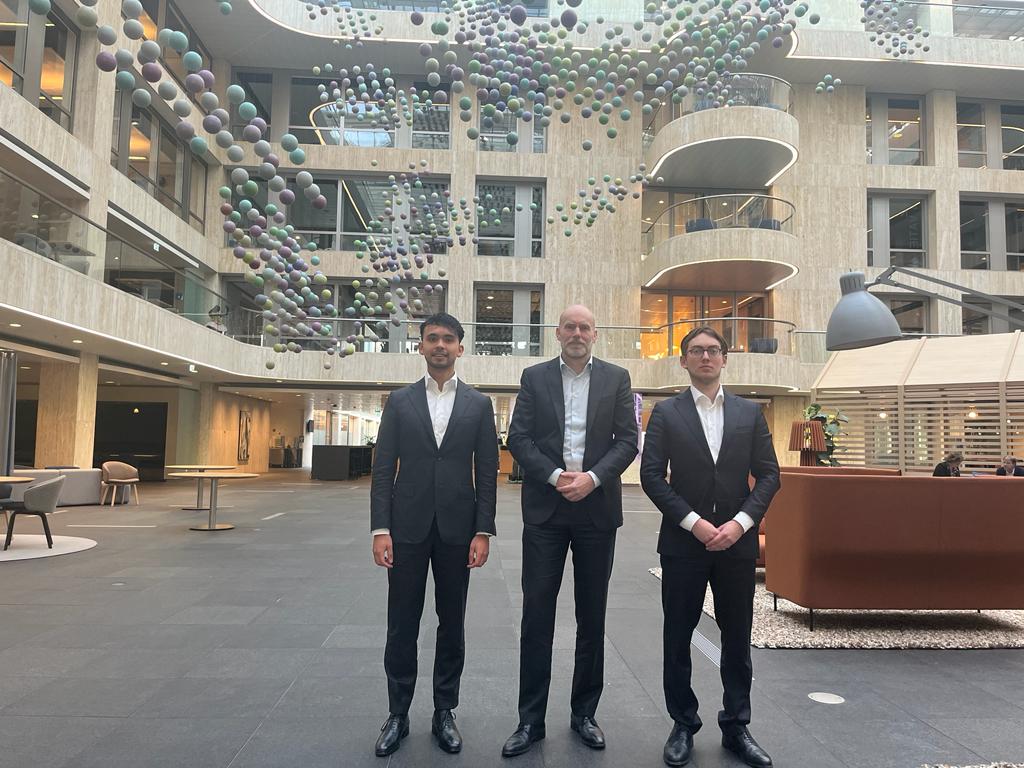
Aegon Asset Management is Aegon’s asset manager and offers a wide range of investment services. The company is committed to sustainable investment solutions and integrates environmental, social and governance considerations into its investment process. Aegon Asset Management has offices in Europe, the US and Asia and employs around 1,200 people. Assets under management and advice amount to around EUR 280 billion. Aegon Asset Management’s clients are mainly pension funds, insurance companies, banks, asset managers, family offices and foundations. What did you study and how did you come to this choice? I followed several studies and developed my interest in equity investing as early as secondary school. My choice of study was more or less already made during that school period. I started at Havo and then chose the banking and insurance differentiation at HEAO. After completing that, I entered military service, which was compulsory at the time. After my service, I started applying for jobs and looked for a job in an industry that appealed to me, such as equity investing or asset management. It was a challenging time then and quite difficult to find work. My first job was at Van der Hoop Effektenbank, a bank that no longer exists. There were as many as 1,500 applicants for the position I applied for, and in the end, only two trainees were hired. During my career, I did several courses, including the VBA (Association of Investment Analysts) course. That may not be as well-known now, but you probably know the CFA training. The VBA is the Dutch variant, more focused on Dutch/European laws and regulations. CFA is more international and mainly focused on the US. I also studied Business Administration and Financial Law at Erasmus University. What had you done compared to the other 1,500 men to be chosen? I don’t think there was anything special about my approach. As they always say, just be yourself. But of course, I prepared well for it. In military service, I was given space and time to conduct job interviews. In the team I was on, all the guys had college or university degrees. They were all applying for jobs and it was not always smooth, but you could learn a lot from each other, for example how to write a good cover letter. That made it easier to get through the first round. After several interviews at different companies, you also became more adept at interviewing Did you benefit a lot from the financial law course in your career? I apply daily what I learned during financial law course. Financial law is about financial supervision, risk management, compliance, and everything around it. It is a good background, especially if you work with clients, but of course, it depends on your interests and the position you hold. If you focus on portfolio management, for example, you might need it a little less. Would you recommend students to do the CFA? Because in the Master Finance at Tilburg University, you can choose to do a CFA track. If you really want to go in the direction of asset management, it seems that it is mostly valued in the ‘front office’ (such as portfolio management and similar functions). I can imagine that if you are an accountant working for an asset manager, a CFA is not that relevant. But if your focus is really on the front office, then a VBA or CFA definitely have added value. I remember that for my position at a previous employer, Van Lanschot, it was even mandatory. It was not then a matter of ‘it’s handy if you have it’, but really a requirement that someone had to have a CFA or VBA certification. What else has your career looked like? I started at Van der Hoop Effektenbank where I worked for eight years. I held various positions there; started as a trainee, and then you look around a bit in different departments. Then I did analyst work for a short time. After that, I did advisory work for private clients, asset management for institutional clients, and eventually became responsible for asset management for private clients. After that, I joined Kempen Capital Management. Now you have Van Lanschot Kempen, but back then Kempen was still independent. I then joined Van Lanschot. At the time Van Lanschot Kempen took over, I also got an offer to work at BNG Bank in The Hague (Bank Nederlandse Gemeenten). BNG Bank only provides services to parties serving the public interest such as municipalities, provinces and housing associations. It is one of the largest banks in the Netherlands with a balance sheet total of over €100 billion. At the time, BNG wanted to start an asset management company. Previously, companies such as Vattenfall (Nuon), Eneco and Essent were mainly owned by municipalities and provinces. Then came the liberalisation wave and those companies had to be sold. And BNG bank knew that market well and so the logical idea arose ”let’s start an asset management company” to manage the funds that became available. Well, I thought that was a very nice challenge and it worked out very nicely. Because from scratch, assets under management have grown to around €6 billion. Then a.s.r. came along. BNG Bank wanted to return to its core business and divest asset management, whereas a.s.r. wanted to set up asset management for third parties. Because a.s.r. did not yet have the infrastructure in place, BNG Asset Management was bought. Then at the end of 2022, it was announced that Aegon Netherlands was sold to a.s.r., leaving all of Aegon’s other businesses outside; such as Aegon USA, Aegon Asset Management, etc. Aegon Asset Management has a real ambition to grow further. They invest a lot in new teams, products, services and systems. For example, Aladdin (front office system for portfolio management, risk management etc.) was recently purchased from BlackRock and is currently being implemented. Part of the a.s.r. transaction was that a number of investment teams (and the associated assets under

The different career paths in asset management, investment banking and private equity
For the Dutch version, click here. After obtaining a finance master’s degree or equivalent, you can pursue various different ‘front office’ careers in investment banking, asset management or private equity. Those terms might seem new to you, but don’t worry, this article aims to define these terms and explain what each career entails. First of all, being able to tell the difference between various careers and additionally, being able to define what role you specifically like, will make you stand out during a recruitment interview. If you know all roles and the differences, you probably know the workload and skill requirements you need for the job you are applying for and such you can figure out and explain why you fit a particular role. Asset management Asset management might be the most familiar role known to students that are interested in investing capital. Asset management is a crucial part of finance where professionals, known as asset managers, help people and organizations make the most of their investments. The main goal is to help clients achieve their financial goals by growing or preserving their investment portfolios. Think of asset managers as the experts who guide clients in making smart investment choices that suit their risk profile. These experts work with all sorts of clients, like high-net-worth individuals, big corporations, pension funds, sovereign wealth funds and more. They have to create investment plans that fit each client’s unique situation and what they want to achieve. Asset managers deal with different types of investments, like stocks or shares, bonds, real estate and other financial assets. They have to pick the right mix of investments based on what the client wants and how much risk they’re comfortable with. It’s like creating a recipe that balances getting good returns while taking an appropriate amount of risk. In a nutshell, asset management is a complex field where experts use their knowledge of money and markets to help clients make more money with their investments. They need to be really smart and experienced to handle all the twists and turns of the financial world while helping clients make the best choices for their money. This guide gives you a taste of what asset management is all about and encourages you to learn more about it if you’re curious. Roles Asset management is a big area with various jobs that need different skills and knowledge. Some of the most common jobs in asset management are: Portfolio Manager, Research Analyst, Trader, Risk Manager, Compliance Officer, Operations Specialist. Portfolio Manager A portfolio manager in asset management supervises a collection of assets for clients to maximize returns while minimizing risk. They make investment choices, track market trends, and adjust the portfolio to meet client goals. Effective portfolio managers need strong financial market knowledge, analytical skills, and quick decision-making abilities. They also manage client relationships, communicate strategies, and work with analysts and traders for data-driven decisions. Overall, they play a vital role in helping clients achieve financial goals by making smart investment decisions and managing their assets. Trader A trader in asset management executes trades to maximize returns and reduce risks for clients. They collaborate closely with portfolio managers and research analysts to find and implement investment strategies. Traders understand financial markets, analysing trends and news to spot opportunities. They possess strong technical skills and manage trade-related risks by monitoring positions and using hedging strategies. Traders might specialize in specific asset classes, like stocks, bonds or derivatives, often while working within a team. The role is fast-paced and high-pressure, but also rewarding for those interested in financial markets and investments. Research Analyst (Equity, Bonds, Commodities etc.) A research analyst in asset management conducts research and analysis on different financial securities to find investment opportunities and suggest actions to portfolio managers or clients. They collaborate with the investment team to understand market trends and use tools like financial statements and news sources for data analysis. They assess company-specific details like financial ratios and management quality to evaluate stock or bond value. Their findings are shared through reports with buy, hold, or sell recommendations for review. The analyst also keeps updated on industry news, meets company representatives, attends events, and connects with experts to gather insights. Overall, they play a crucial role by providing vital research to guide smart investment choices. Risk Manager A risk manager in asset management identifies, measures, and handles risks associated with the firm’s investments. Their main job is to make sure the firm’s investments match the risk levels clients are comfortable with and to prevent exposing clients to unnecessary risks. The risk manager works closely with portfolio managers to ensure investment strategies fit clients’ risk preferences. They also keep an eye on market trends and regulations to ensure the firm follows the rules. Overall, the risk manager is crucial in making sure the firm’s investments align with clients’ risk preferences, safeguarding assets, and maintaining client trust. Operations Specialist In asset management, operations professionals handle the behind-the-scenes tasks that support investment management. They manage processes like trade settlement, cash handling, fund accounting, and reconciliations. Working with investment experts, they ensure trades are done accurately and settled on time. The specifics of their role can vary based on the firm and services offered, like handling trade confirmations or client reporting. Operations is crucial for accurate records, risk reduction, and efficiency improvement through process automation, which cuts costs and enhances performance. Compliance Officer A compliance officer in asset management ensures that the firm follows the legal and industry rules. They follow KYC and AML policies for onboarding new clients and check up on them every once in a while. They also create and enforce policies to keep the firm compliant with laws and regulations. This includes internal audits, reviewing marketing materials, and monitoring trading. Additionally they make sure employees know and follow the rules and report any violations to regulators. Besides external rules, they also enforce internal ethics and conduct policies to protect the firm’s reputation. In short, compliance officers make
Finance Expedition 2022: Looking back
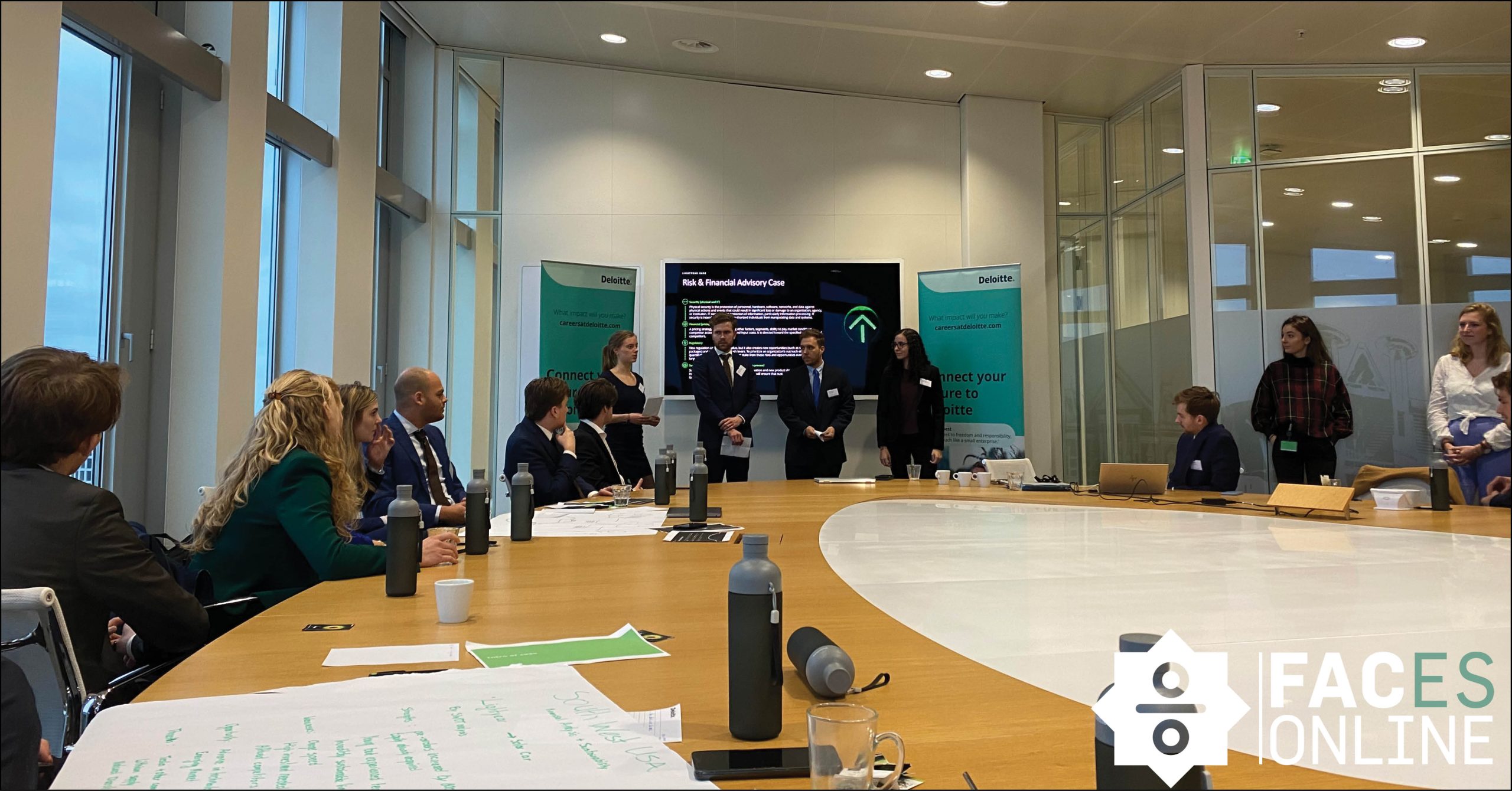
For the Dutch version, click here. After 2 years when we had to organize the Finance Expedition online because of Covid-19, this year it was finally time again. On November 7 we left for Amsterdam again for the Finance Expedition. Over a period of 3 days, 24 students visit 2 companies each day within a particular pillar of Finance. This event is organized by Asset|Accounting & Finance in cooperation with Asset|Econometrics Ready with all the goodie-bags, suitcases and healthy excitement, the committee was waiting at the back of the station. Gradually the students arrived and well on time we left, in the beautiful Willem II bus, for Amsterdam! Once we arrived at the Holiday Inn on the Zuid-as, there was, after everyone had quietly gone to their rooms, the opportunity for the enthusiasts to have a drink in the bar to get to know each other better. Unfortunately, we had to go to bed fairly early because the wake-up call was set for 7 o’clock. Day 1 On Tuesday, November 8, we visited BDO and Oaklins, both specializing in the Mergers and Acquisitions branch within Corporate Finance. First up in the morning was BDO. Upon arrival at the office we were welcomed by the staff and were immediately pampered with coffee, tea and a little sweet. The program started with a short introduction about BDO and the opportunities that students have within BDO. After this, we were given a case in which we, as BDO employees within the Due Diligence process, had to determine the EBITDA (Earnings Before Interest Taxes Depreciation Amortization) of a sizeable company as best we could. At the conclusion, each group had to present their thought process and final EBITDA. The morning ended with a delicious lunch that presented the opportunity to personally interact with BDO employees. After lunch we had to quickly move on to Oaklins. Thanks to a grumpy bus driver who didn’t want to wait 10 seconds for us, we arrived at Oaklins 5 minutes late. Fortunately, no problem. Again we were welcomed with coffee and tea at Oaklins and after a short presentation about Oaklins as a company we started the 2nd case of the day. In this case, we as participants had to advise some employees of Oaklins whether or not they should take over a company in the travel industry. For this, we were given an extensive information memorandum and the opportunity to speak with both the “CEO of the company” and an “industry expert”. We had 1.5 hours to arrive at our advice. After a presentation in which everyone pitched their advice, it was time for dinner. Oaklins had arranged sushi and after dinner took us to ‘De Blauwe Engel’, a cafe on the Zuid-as where we enjoyed a small drink with some of the employees. Day 2 On Wednesday, November 9, as usual the alarm clock went off at 7 a.m. and this time we visited ING and a.s.r., this day was all about Asset Management. Arriving at the ING headquarters at the Bijlmer, we were given an introductory presentation on the future and vision of ING as a bank mainly within the Netherlands. ING discussed the case in the whole group and it consisted of analyzing a loan process that ING had provided to a transporter of fresh vegetables. We discussed the case with 2 employees who actually participated in this process and we covered the whole loan process, from initial application to, unfortunately, eventual bankruptcy. After the case, we also got a presentation from the CIO (Chief Investment Officer) of ING, he explained to us how portfolios are selected and built. After all the very interesting presentations, we unfortunately had very little time for lunch that ING had arranged. Although we had to eat quickly, it was again very tasty and in no time we were on our way to a.s.r. in Utrecht “The event was created to give students a bridge between theory from undergraduate school, what companies are actually doing with that knowledge and how it is applied.” Arriving at a.s.r., most people noticed one thing: how big the office is! Truly a huge, and beautiful office with a lot of glass allowing a lot of natural light to enter. During the introductory presentation we were shown the rich history of a.s.r. as an insurer. Also discussed was their recent acquisition and future vision of Aegon. After a short coffee break, it was time for the case. We were divided into groups and were given the task to even-out a.s.r.’s balance sheet during a variety of times of economic uncertainty. A news event was shown affecting an asset and/or liability and it was up to us to manage our insurance, equity and real estate portfolio in such a way that we as a.s.r. continued to make a profit. I thought it was a very original case as it combined Asset Management in the setting of a trading game often played at Market Makers at in-house days. After the case, it was time for drinks and pizza! Day 3 The last day had arrived and once again we were out of bed early! Thursday, November 10 was all about Risk Management, we visited RiskQuest in the morning and Deloitte in the afternoon. Arriving in the beautiful canals of Amsterdam, the relatively small office of RiskQuest was located in a beautiful canal house. After an introductory presentation, we were given a short tour of the office. The highlight was the office of one of the partners. In the ceiling of his office were several beautiful paintings from the time of Rembrandt, together with the beautiful view over the Amsterdam canals and the enormously comfortable office chairs. I am amazed that people still get work done! During the case, we were divided into groups and pretended to be employees of RiskQuest hired by a Luxembourg bank to recalibrate their Probability of Default Model. We then had to present our findings and a new credit risk model.
Interview with Roderick Munsters – Former CEO of Robeco
For the Dutch version, click here Roderick Munsters may not be a born but raised Brabander who studied at the University of Tilburg from 1981 to 1988. Besides following his MSc. Business Economics and the MSc. Finance at TIAS, Roderick was very active in his student days at T.S.C. St. Olof and Dispuut Kongsi. Currently, Roderick holds several supervisory positions at large international companies. He is married to Marjoanne Munsters and together they have two children, Mart and Milou. What were your plans right after graduating from Tilburg University? Did you know right away that you wanted to go into the financial world? At the start of my studies, I did not yet know in what sector I wanted to work. The jobs were not easy to come by then. I graduated in the investment subject of securitization, in which you make debt securities marketable. At the time, this was a very unknown subject in the Netherlands. I started my career at Esso Benelux in Breda. In retrospect, this did not quite fit with what I was looking for. Via Piet Duffhues of the university, I came into contact with Interpolis. I started there at the department fixed-interest value. At Interpolis, we applied a value arbitrage strategy that was very successful. Later, I became responsible for Interpolis’ capital markets department. In 1997, when I had been working at Interpolis for eight years, the entire investment business was transferred to Robeco. I then made the switch to PGGM and became Chief Investment Officer there. This was a nice step for me towards the pension world How did you experience the switch from insurance to a pension fund? I did not find the step from an insurer to a pension fund to be a huge one. I did find the step from departmental director to Board of Trustees a big one. I went from managing a team to managing an entire business unit. I was 33 at the time and therefore still relatively young, but I was lucky that PGGM CEO Dick de Beus took me under his wing. The main task as CIO at PGGM was to modernize the investment strategy and create more in-house management. We wanted to grow in portfolios with a link to real returns, such as private equity, commodities, and inflation-linked products. As PGGM (healthcare pension fund), we worked a lot with ABP/APG (government pension fund). It was a very exciting time, in which I was given a lot of room to excel with my whole team. After eight years at PGGM, I was asked to succeed Jean Frijns as CIO at APG. I enjoyed working here for five years, after which I was asked to become the CEO of Robeco Group. A common thread in my career is that the people around me have always been very important. At Robeco, for example, I had a very professional and outspoken chairman of the Supervisory Board alongside me in Dick Verbeek, from whom I learned a lot. A major challenge in my career was the sale of Robeco by Rabobank to Orix, a large Japanese financial services provider. For me, it was very important that Robeco, in the interest of both clients and employees, was sold as one company and that there would be no break-up. Fortunately, this also succeeded. Robeco is still doing well and has continued to grow because they have some good investment strategies. They have not grown further through mergers and acquisitions, which was Orix’s initial intention. I left Robeco two years after the sale. I then became CEO of French Edmond de Rothschild Asset Management. What was it like working for a French asset manager? It was very different working at Robeco, not so much because Edmond de Rothschild is French, but because it is a family business focused on managing French institutional money as well as the assets of wealthy families. It is a well-known name worldwide, so much of it is under a magnifying glass. My main intention was to have the investors of Edmond de Rothschild’s bank in Switzerland cooperate much more with the head office in Paris. This was eventually implemented. SRI is currently becoming an increasingly important factor in the investment world. How did you guys deal with this in the past? Is this in line with how it is now? From the end of the 1990s, I have been focusing on sustainability at both PGGM and APG and took the first steps to include sustainability as a criterion in investment decisions. Sustainable investment is becoming an increasingly relevant and well-known subject. There are actually two reasons for this. Society wants consumer money to be handled responsibly, but sustainability factors also have a major impact on a company’s financials. As a company, you can be fined for emissions and customers will turn away if, for example, child labor is used. This change also brings opportunities for companies, such as the new market for renewable energy. In practice, you also see that administrators are increasingly concerned with sustainable business, as also outlined in the Sustainable Development Goals of the United Nations. I personally think that the government could and should play a more active role in making the business community and financial sector even more sustainable, for example by pricing CO2 emissions. I expect that a business model based on sustainable entrepreneurship will emerge for many countries in the long term. The corona pandemic has drastically changed the way we work for over a year. How do you deal with this? It’s perfectly doable to work from home and most companies are now well equipped for it. I normally work abroad, so I save a lot of travel time. However, I also look forward to meeting people again. This brings energy, new ideas, and insights, from which you can learn a lot. Video conferencing is practical and this will definitely continue, but I hope and expect that many meetings will go back to physical. You have been a
High pay for asset managers makes the world poorer
Many asset managers don’t invest their own money. They invest the money of mutual funds, banks, insurance companies or pension funds. In those cases asset managers are typically rewarded with pay-for-performance schemes (bonuses), which are meant to incentive asset managers to outperform the market. As the substantial bonuses are added to an already impressive base salary, the job of asset manager is among the best paid world-wide. On the face of it, this all makes sense, as it is both extremely difficult to outperform the market and extremely lucrative if it is pulled off. The promise of outperforming the market is then the sole justification for the generous remuneration of asset managers. If asset managers could not beat the market, then the only thing they basically would have to do is diversifying their portfolio to avoid idiosyncratic risks. That certainly requires some training and experience, but it is essentially a clerk’s job, and could be paid accordingly. “Even if some asset managers individually outperform the market that does not necessarily imply that bonuses are good for society at large.” The crux of the matter is that the average investor can’t outperform the market –for the market is the average investor. Collectively investors are thus not adding value. The gain of one investor is the loss of another, so asset management is ultimately a zero-sum game. In fact, collectively asset management is a losing game, as the average return minus costs is by construction lower than the market return (which equals the average return). Society as a whole loses, just like gamblers collectively loose (though individual gamblers may become incredibly rich). Now, it is sometimes claimed that a societal benefit of asset management is its so called price discovery function. By constantly trading shares and bonds, the “correct” price of securities is determined. There is something to that, but not that much. Share and bond markets are second-hand markets. The trading of securities does not provide companies with new capital. One could then argue that the price discovery function helps determining the “correct” price in case companies issue new shares or bonds. But it is unclear why that is helpful. In any other market, the price for a good or service is determined in the market itself where supply meets demand. Non-financial markets function without second hand markets signalling prices to the original market. Of course it still makes sense for individual mutual funds, pension funds and banks to reward investors who beat the market –who wouldn’t want to become incredibly rich. But collectively large bonuses make the world poorer. Gambling’s number one rule is that in the end the house always wins. In financial markets asset managers always win, as they receive extreme salaries for a clerk’s job.
Interview Erik-Jan van Bergen
What did you study and what has your career been like so far? I studied Business Econometrics with great pleasure in Tilburg from 1986 to 1991, when the university was still called the Catholic University of Brabant. I still encounter the benefits. After my studies I started working for Nationale Nederlanden, at the Securities and Loans department, in The Hague from 1991 to 2004. Here I had a number of different functions over the years, which always had to do with asset management. Then I started working at Citigroup, a major U.S. bank, in London. This was again in the field of asset management. I stayed there for five years. In 2009 I returned with my family to The Netherlands and started in my current position as Director of Investments at SNS REAAL. What is asset management exactly? Asset management is the management of money by investing it. If you do not need your money in daily business for a longer period of time, you need to do something with it. Actually, you are going to store it in order to use it later on again. You can put it in a savings account, which is a very simple form of investing. What is more complicated, is investing your money in bonds, equities, hedge funds and the like. How has your interest in asset management originated? I have always liked investing a lot. I still remember those days that I had to cycle ten kilometers to elementary school. In winter, when I got home from school, I was always reading the newspaper well on the warm radiator and I saw all those stock price numbers. For me, investing is a kind of game in which you can measure yourself relative to others to see who is ending up as the best and the brightest. I have liked this since childhood already. What does a typical day look like for you? On a typical day I go out of bed around half past six, and then I always try to make breakfast for my family. I really enjoy this and I find it very important. At half past seven I get on my bike to Den Bosch Central Station, where I catch a train to Utrecht. While travelling by train, I try to read the Financial Times. That is what I particularly like about my job, that you will find at least three things related to asset management on every page. I arrive in Utrecht around half past eight, and then I always try to have one hour of no meetings, so that I can have a look at what is happening exactly in the markets. Thereafter, I am usually in meetings until five o’clock. In these meetings a lot of things are tuned with clients and other people within the company, such that Asset Management is running smoothly. It is usually quiet again around five o’clock, and with a bit of luck I am back home at seven. What does SNS REAAL Asset Management look like exactly? We manage three sorts of money. The first is money received from an insurer, for instance when a small entrepreneur insures his pension with an insurance company. This money is taken together, which we call insurance money. Insurance money should serve as pensions in twenty to forty years from now, and in the meantime we have to invest it in a way that the small entrepreneur can enjoy a carefree retirement later on. The second sort of money is received from investment funds. Bank and insurer customers put money in the funds, which is managed by Asset Management. An example is the Nederlandse Aandelenfonds, which only contains equities that are listed on the AEX. We also manage an American equities fund, containing equities listed in the S&P 500. The horizon with which we invest the money from investment funds is long-term, but we have to take into account that it could be short-term as well. Third, we have got money from pension funds who outsource a part of their asset management to us. Sometimes we manage their complete investment money, sometimes only part of it. In total, SNS manages about 45 billion euros. SNS is in the top ten in The Netherlands, if you consider the size of assets under management. How do you earn your profits? We do this by hiring smart people and making structured investments. We believe that ‘behavioral finance’ theories often work very well. Due to the fact that many other investors exhibit herd behavior, we often manage to recognize systematic behavioral patterns and make use of this in a clever way. This allows us to make an extra return. We do not make purely use of science. All in all, investing is partly science and partly discipline, and the interplay herein is very important. We also find it very important that you know well what you do not know. For example, we also manage U.S. equity portfolios. We choose not to follow the U.S. market from Utrecht, but to outsource this to a U.S. equity manager who is good at his job. What was the nationalization process of SNS like? This was a long process. SNS is one of the Dutch system banks. Eventually, it was decided to nationalize. This was a very difficult process, because a bank is not intended to be state-owned. It is therefore the intention to regain our independence quickly. The root cause of the problem was that we did an acquisition of Property Finance seven years ago, which went the wrong way. For us it is important that the nationalization has not changed anything for our customers. In the entire industry banks face the same problem: customer trust must be recovered. Trust comes on foot and leaves on horseback. The most important thing we have to do now is be very humble, repair our mistakes and listen very carefully to what can be improved. It may take several years before we will
